

← Back to History of the Republic
Bjelica / Wikimedia Commons · CC BY-SA 4.0 ↗ Athlete library · Football
Can Bartu: One international, two sports
Can Bartu’s international appearances in both football and basketball make his story larger than a single discipline.
Career landmark · 1962Fenerbahçe · Italy · Türkiye
Bjelica, 24 August 2023: Fenerbahçe’s Kadıköy stadium at the FC Twente match. This supplies club and venue context, not Can Bartu’s portrait or the ground during his playing career. Resized Commons version; no additional crop.
At a glance
- Discipline
- Football
- Role / event
- Footballer and basketball player
- Landmark
- Two-sport international
An international in two different games
Can Bartu occupies an unusual place in Turkish sporting history because football and basketball both belong to his senior competitive identity. His sporting life at Fenerbahçe began with basketball before Fikret Arıcan encouraged him to play football as well. UEFA’s career portrait recognises him as an international in both sports. That is more than enjoying a second game recreationally: he met the distinct demands of two team structures, two rhythms and two systems of decision-making. His basketball background should therefore remain visible inside the football biography. It also offers a concrete example of how a multi-sport club could open more than one route for a developing athlete.
↑ Back to dossier contentsItaly and the 1962 European final
Bartu moved to Fiorentina in 1961 and also represented Venezia and Lazio during his Italian years. On 10 May 1962 he appeared against Atlético Madrid in the Cup Winners’ Cup final, becoming the first Turkish footballer to play in a major European club final. The first match in Glasgow finished 1–1. By the time the replay took place months later, he had been loaned to Venezia; the two matches should not be treated as identical episodes in his career. His return to Fenerbahçe in 1967 brought that overseas experience back to İstanbul. The enduring nickname Sinyor remains the most recognisable expression of his Italian connection.
↑ Back to dossier contentsTouch, movement and seeing teammates
UEFA describes Bartu as a technically gifted midfielder with excellent touch who could operate on either wing. Attacking midfield and wide positions demand awareness of the ball, defenders and teammates at the same time. There is a useful comparison with basketball’s passing angles and use of space, although it would be too simple to claim that every skill transfers automatically between sports. What makes Bartu distinctive is that he competed in both worlds. His career demonstrates that sporting education concerns more than repeating an isolated movement: recognising changing situations and choosing an action that helps the team are essential parts of the performance.
↑ Back to dossier contentsClub memory and a European ambassador
Bartu’s appearance in Galatasaray colours during the shirt exchange at Metin Oktay’s 1969 testimonial remains a memorable gesture of respect between rivals. After playing, journalism and television commentary kept him involved in the public conversation about football. UEFA selected him as ambassador for the 2009 UEFA Cup final in İstanbul, reconnecting his European playing history with the city’s sporting culture. Bartu died on 11 April 2019. His legacy thus includes the basketball court, a continental football final, Fenerbahçe’s identity and the later work of interpreting sport for an audience. Each chapter shows a different way in which an athlete can contribute to a game’s shared life.
↑ Back to dossier contentsBjelica, 24 August 2023: Fenerbahçe’s Kadıköy stadium at the FC Twente match. This supplies club and venue context, not Can Bartu’s portrait or the ground during his playing career. Resized Commons version; no additional crop. Bjelica / Wikimedia Commons · CC BY-SA 4.0
More stories in this discipline

Basketball
Alperen Şengün
A big who combines scoring, rebounding and passing in one hub role, leading Türkiye to a EuroBasket final and earning two NBA All-Star selections.
Detailed career dossier Brief biography and historical context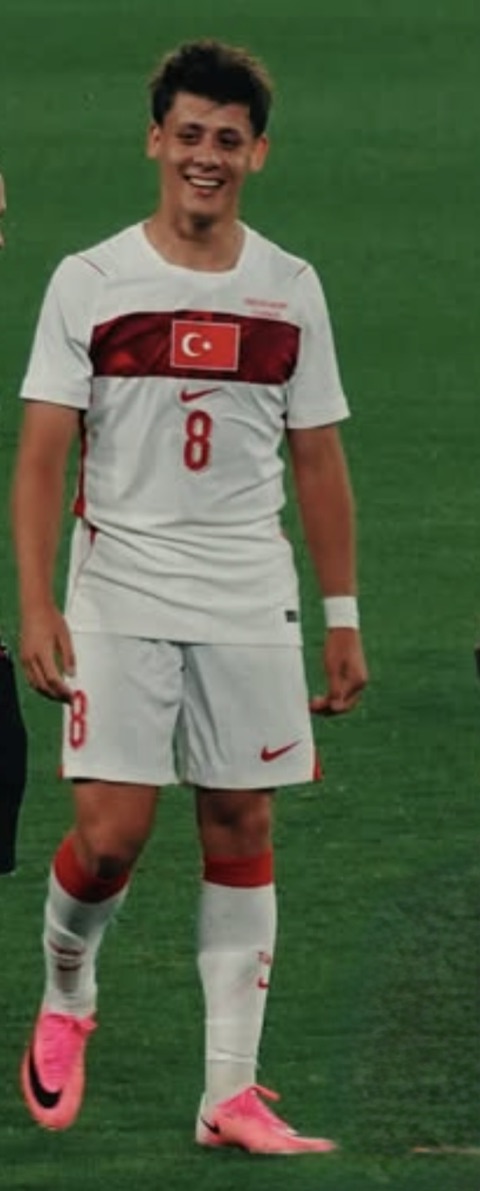
Football
Arda Güler
Arda Güler’s path from Ankara to Real Madrid illustrates the transition into elite international club football.
Detailed career dossier Brief biography and historical context
Basketball
Cedi Osman
A route from youth national teams to the NBA and EuroBasket 2025 silver, joining transition play with wing defence.
Detailed career dossier Brief biography and historical context
Basketball
Ersan İlyasova
Ersan İlyasova was a versatile forward on Türkiye’s team that reached the 2010 World Championship final.
Detailed career dossier Brief biography and historical contextDocuments and sources4 sources
Official reference points used to verify the chronology and interpretive frame on this page.
- Can Bartu — career and results record ↗TFF
Source consulted for the biography and competition context. Checked: 13 September 2026.
- Can Bartu — career and results record ↗Anadolu Ajansı
Source consulted for the biography and competition context. Checked: 13 September 2026.
- Can Bartu: Europe and a two-sport career ↗UEFA
Official federation account of the club pathway, European final and two-sport career.
- Ambassador for the 2009 UEFA Cup final ↗UEFA
Official federation account of the club pathway, European final and two-sport career.