Counting gold medals alone leaves out the institutions that made Turkish Olympic participation possible and the important milestones that produced no podium. The Republic’s journey opens with Paris 1924, although Olympic ideas had earlier connections in the country. This dossier distinguishes participation from medals, women’s visibility from sporting breadth, and the Summer Games from the separate winter pathway.
- The Republic’s first Summer Games
- Paris 1924
- First gold
- Yaşar Erkan · Berlin 1936
- First women’s participation
- Halet Çambel and Suat Fetgeri Aşeni · 1936
Paris 1924: experience is part of history
Paris 1924 was the first Olympics entered by the Republic. Its delegation competed in football, wrestling and other sports without winning a medal. Encountering international standards nevertheless provided experience relevant to coaching knowledge and the development of sporting institutions.
No medal does not mean no historical value. Early experiences help explain how later success became possible. Equally, initial participation should not become an automatic story of progress: every subsequent edition brought different resources, opportunities and opponents rather than a guaranteed step upwards.
Back to contents1936: medals and women’s participation together
In Berlin, Ahmet Kireççi won freestyle wrestling bronze and Yaşar Erkan Greco-Roman gold. The first medal and first championship arrived at the same Games through different results.
Fencers Halet Çambel and Suat Fetgeri Aşeni also became the first women to represent Türkiye at an Olympics in Berlin. Their participation matters beyond whether they won medals. Access to sport and an international stage is a historical milestone in women’s sporting lives in its own right.
Back to contentsFrom wrestling to weightlifting
Wrestling became a powerful centre of the early medal tradition. Naim Süleymanoğlu’s Olympic golds in 1988, 1992 and 1996 reveal continuity in another sport and generation. Expanding into different disciplines did not erase earlier traditions; it enlarged the medal map through other forms of expertise.
Winning at three separate Games differs from earning several medals at a single edition. Weight categories in lifting and styles and divisions in wrestling are integral to their results. Comparisons without these details conceal the technical skills and competition structures through which the achievements were made.
Back to contentsWhy the Winter Games have their own history
Turkish Winter Olympic participation extends to Garmisch-Partenkirchen in 1936. The skiing delegation’s experience should not be squeezed into the same account as that year’s Berlin medals. Snow conditions, facilities, seasonal preparation and access to international races create a distinct development path.
Winter sport is not merely a missing extension of a summer medal total. Continuity, participation and racing experience deserve attention too. Youth Games are also a separate age-based competition, not equivalent to an adult Olympic title; their development conditions require their own interpretation.
Back to contentsTokyo and Paris widen the sporting map
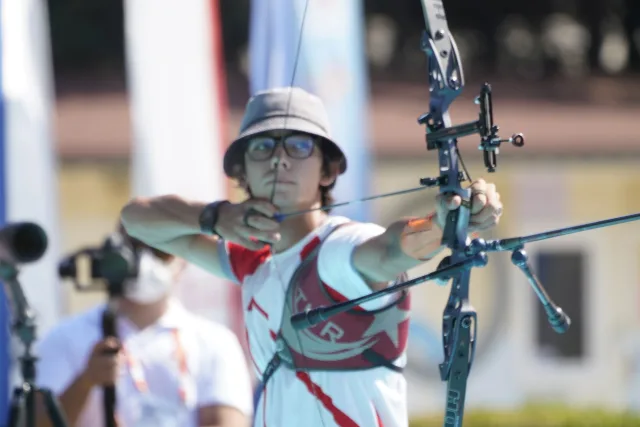
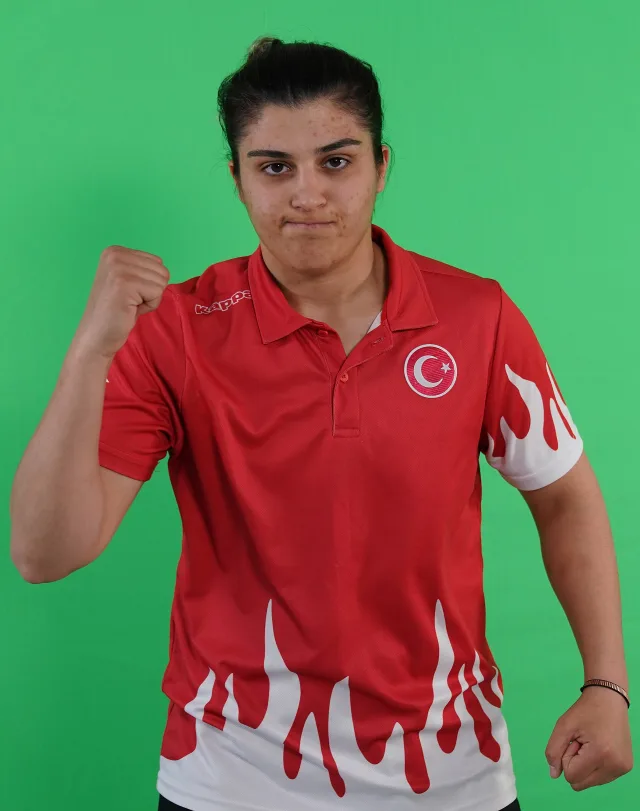
Mete Gazoz’s archery and Busenaz Sürmeneli’s boxing golds at Tokyo 2020, held in 2021, brought different technical traditions into view. Türkiye won eight medals in Paris 2024: three silver and five bronze, with no gold. This is the report for one completed edition, not a live overall total.
Mixed shooting silver and men’s team archery bronze highlighted team formats within sports often understood as individual. Separating individual and team medals makes an athlete’s contribution clearer. Rather than reducing every discipline to a single medal figure, consider finalists and the depth of participation as well.
Back to contentsConnecting chronology with biographies
Separate dossiers on Naim, Hamza Yerlikaya, Yasemin Adar, Gazoz and the women boxers connect broad historical headings to specific careers. İbrahim Çolak’s world title is important too, but world gold must not be renamed Olympic gold. Competition names preserve accuracy within an accomplished biography.
Begin with the 1936 portrait and the first medal generation, then watch the two lifting disciplines in Naim’s official footage. Finally compare the Tokyo and Paris dossiers. Chronology then becomes a means of understanding changing sporting environments rather than a sequence of years to memorise.
Back to contentsA timeline of life, work and history
- 1924
The Republic’s first Games
Paris participation supplied international experience and an organisational starting point before medals arrived.
- 1936
First medals and women pioneers
Kireççi and Erkan reached the podium while Çambel and Fetgeri Aşeni opened women’s participation.
- 1988–1996
Naim’s three Olympic golds
Titles at three different editions represent continuity across years in weightlifting.
- 2024
The Paris balance sheet
Türkiye finished with three silver and five bronze medals; individual and team results retain separate records.
Watch and listen: a visual reading path
Use this selection alongside the analysis above. Supported YouTube publications can be watched on this page after you choose to load their player. The publisher’s rights and availability conditions apply; the player does not load or start automatically. Official publication links remain available as an alternative.
Olympics
Naim Süleymanoğlu’s Olympic medal lifts
Read the weightlifting era through official Olympic footage and connect medal history with technique.
Choosing to load the player connects to YouTube and shares technical data such as your IP address with Google. Autoplay is off. This choice does not change your cookie preferences. The publisher may restrict regional access or embedding; the official link below provides an alternative.
Questions and explanations
Why is Tokyo 2020 discussed under 2021?
The official edition name was retained, but the pandemic postponed competition to 2021. Both the calendar year and tournament name are needed for accurate dating.
Is a world title an Olympic title?
No. World championships, European championships and the Olympics are separate competitions. An athlete’s achievements can be read together without changing their organisation names.
Did Türkiye win gold in Paris 2024?
TMOK’s report for those Games records three silver and five bronze medals, with no gold. This describes only the dated results of Paris 2024.
Sources, image rights and research method
This is original explanatory and analytical writing informed by the sources below. AI assisted research and drafting. Awards for people, teams and institutions are distinguished; dated results are not current rankings. Media links do not claim a licence to republish a video here. Use the publisher’s correction process if a fact is wrong.
- TMOK · Turkish participation in the Summer Games ↗ Source check: 2026-10-03
- TMOK · Halet Çambel and Suat Fetgeri Aşeni ↗ Source check: 2026-10-03
- TMOK · Winter Olympic history ↗ Source check: 2026-10-03
- IWF · Naim Süleymanoğlu’s three Olympic titles ↗ Source check: 2026-10-03
- TMOK · Paris 2024 report ↗ Source check: 2026-10-03