

← Back to History of the Republic
Cobija / Wikimedia Commons · CC0 1.0 ↗ Organization · first stop
Arrival in Samsun
19 May was not a battle beginning in a single instant; it was the threshold where official authority met conditions in Anatolia and a new political course began to form.
19 May 1919Samsun
Cobija, 22 June 2014: the modern Bandırma replica at its former Canik site, not the original vessel or the 1919 landing. CC0 1.0.
At a glance
- Departure
- 16 May 1919
- Vessel
- Bandırma
- Arrival
- 19 May 1919
- Assignment
- 9th Army Inspector
After the armistice: the crisis behind the port
The story of 19 May 1919 begins before the ship reached Samsun. The Armistice of Mudros, signed on 30 October 1918, brought military demobilisation, control of weapons and an expanding Allied presence at strategic places. These changes affected government authority as well as everyday security. Discussions in Istanbul preceded the move to Anatolia. İzmir's Greek occupation began on 15 May, just before departure.
Samsun's Black Sea port linked the sea passage with contacts in the interior. Calling it the proclamation of the Republic would erase the Ottoman institutions within which the journey began. Its historical importance lies in explaining how a limited official assignment became part of a different political project, not in giving everyone in May 1919 advance knowledge of the eventual outcome.
↑ Back to dossier contentsThe appointment of 30 April: authority and a changing purpose
Mustafa Kemal was appointed Ninth Army Troops Inspector on 30 April 1919. An inspectorate was more than command of a single garrison: it supplied a framework for supervision and contact with military units and civilian authorities. The official responsibilities concerned public order, the collection of arms and ammunition under the armistice, and action against movements opposed to the government. This office should not be confused with the later national commander-in-chief appointment.
The consequences of that authority were not identical to the intentions of those who granted it. Mustafa Kemal used the available communications and command relationships to build connections for resistance to occupation. Activities initially conducted through official channels increasingly conflicted with Istanbul's expectations. That distinction avoids two misleading shortcuts: that the Ottoman government openly sent him to establish a republic, or that every later political decision was already complete when he landed. The appointment created room for action; the break with the existing institutional framework developed afterwards.
↑ Back to dossier contents16–19 May: Bandırma and the people doing the work
Bandırma left Istanbul on 16 May 1919, and Mustafa Kemal's party reached Samsun on 19 May. A solitary-hero narrative leaves the other workers out of the voyage. The Samsun provincial culture directorate's personnel account includes Refet Bey, Kâzım Dirik, Hüsrev Gerede and the doctor Refik Saydam. Their responsibilities were not interchangeable: corps command, staff work, intelligence and medical duties required different kinds of experience.
A commemorative list of companions is also not necessarily a full passenger-and-crew manifest. Its number of names should not be turned into a definitive count of everyone aboard without checking what the list covers. The voyage needs no unverified story of a dramatic pursuit or attempted sinking to make it significant. Explaining a journey's significance is different from adding suspense to its narrative; the question is what the evidence allows us to conclude. Bandırma was the means of that passage and, later, a particularly powerful object of national remembrance.
↑ Back to dossier contentsThe first Samsun days: information, contacts and a report
ATAM's biography records telegrams sent to the grand vizier on 20 May after initial information was gathered. Such a document can show both how Mustafa Kemal assessed the situation and how he presented his arguments to an official audience in Istanbul.
An administrative report is not a neutral camera. Its assignment, addressee and political context matter, and a single report cannot speak for every Muslim or Christian civilian in a region. Reading the historical actor's assessment is different from treating it as a complete account of civilian experience. This distinction gives the episode more depth than a simple arrival-and-victory sequence. On 25 May he moved to Havza, ending the brief Samsun phase while carrying its contacts and assessments into a wider effort at political organisation.
↑ Back to dossier contentsFrom the coast to the interior: communications and participation
Reading a document requires more than listing its demands. Commanders needed to reach one another; local meetings needed ways to address the government and foreign representatives; objections expressed in different places needed a shared political language. Separating a message's sender, recipient and requested action helps us think about how communication could turn information into decisions.
Local Defence of Rights organisations and civilian participation should not be imagined as an already finished nationwide structure awaiting a single order. The congresses brought these initiatives into a shared representative framework. Mustafa Kemal's leadership was central to bringing those relationships together, but leadership does not make every other contribution disappear. Reading the work of staff officers, local officials and organised civilians alongside his own explains how a political movement acquired practical means of communication and decision-making.
↑ Back to dossier contentsHavza: protest and civilian safety
In TBMM's published Fifteenth Corps copy, the circular bears 28 May and the page foot also shows 29 May.
It calls for meetings and protest telegrams. It requires order and forbids hostility towards Christian civilians; an instruction does not establish compliance.
↑ Back to dossier contentsAmasya and the congresses: the outcome was not settled in a day
MSB's chronology dates the move to Amasya to 11 or 12 June 1919; neither day is preferred here. The Amasya circular, issued on 22 June, connected independence to the people's resolve and decision and made the congress process more explicit. Official inspection and reporting were giving way to a broader search for representative political authority. This continuation helps explain why the Samsun arrival became such an important starting point.
Resignation from military service on 8–9 July marked a new threshold beyond the authority of the original appointment. Erzurum and Sivas pursued representation through separate congress agendas. Parliament opened in Ankara on 23 April 1920; the Republic was proclaimed on 29 October 1923. Keeping those stages separate does not diminish 19 May. It places that date within the actual sequence of organisation, representation, war and state formation.
↑ Back to dossier contentsEvent, narrative and image: reading Nutuk and commemorations
Nutuk begins its account with Samsun, an important clue to the place of 19 May in republican memory. But it is not a diary written at the landing. Mustafa Kemal delivered this retrospective political account on 15–20 October 1927. Its documents need to be considered alongside the explanatory framework of the speech. Reading a telegram produced during an event and reading the later organisation of that event into a political narrative are complementary, not identical, exercises.
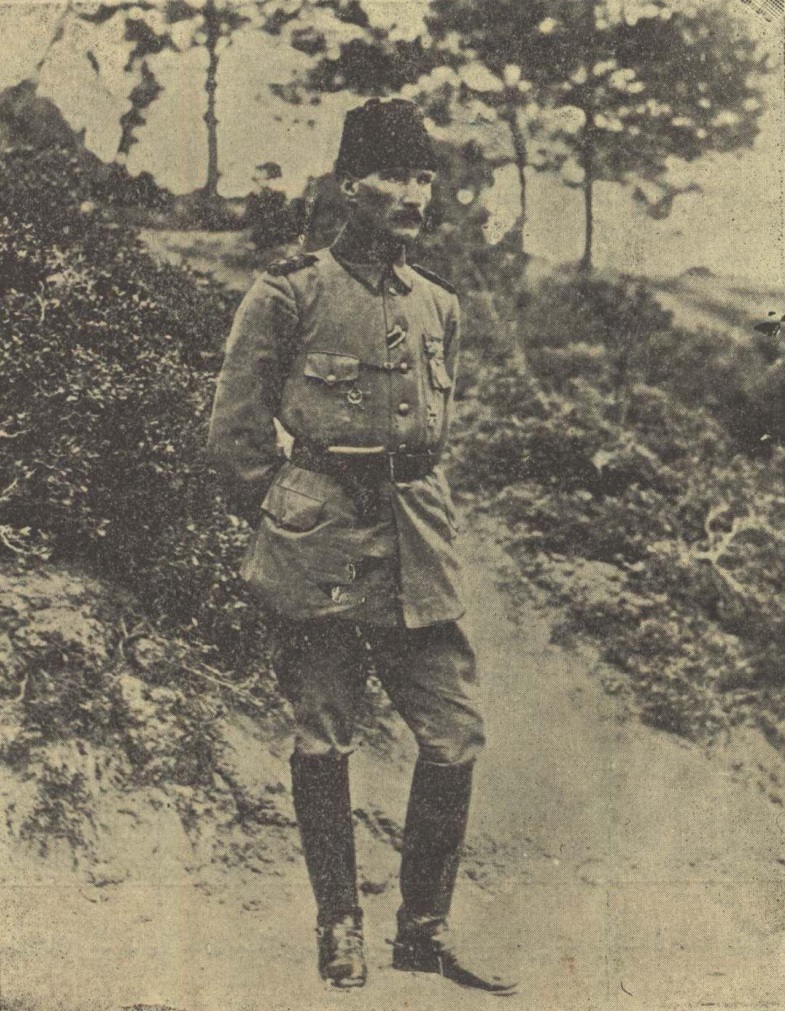
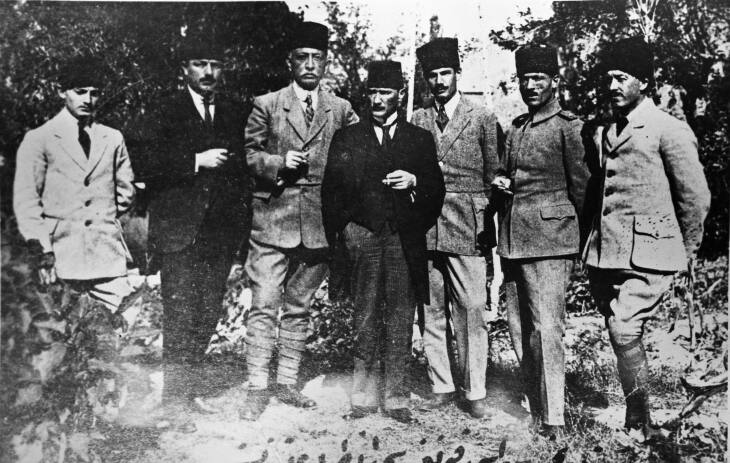
Images require the same attention to date and type. A commemorative reenactment of the landing is not a photograph taken during the voyage, and a modern museum replica is not the 1919 vessel. The dates and types stated in captions help distinguish commemoration from documentary evidence. This is not merely a technical issue: asking what an image shows, when it was made and what it can actually establish is part of understanding history.
↑ Back to dossier contentsReading Bandırma today: original ship, replica and relocation
Samsun's official museum account states that the original Bandırma was dismantled in 1925. The museum ship is a later replica. It can help visitors think about the voyage's scale and spatial setting, but not every detail on its deck can be assumed to be an original object from 1919. Documents, models, figures and subsequently arranged exhibition spaces are different kinds of evidence and interpretation.
On 13 July 2026, Samsun Metropolitan Municipality announced the replica's relocation to İstiklal Meydanı–Kurtuluş Yolu. An old photograph or museum page therefore cannot, by itself, confirm today's visitor address. Current access, admission and opening arrangements should be checked against official museum and municipal notices. A visit becomes a more useful historical enquiry when the commemorative setting is read alongside dated documents, with reconstruction kept distinct from original evidence.
↑ Back to dossier contentsRead the turning points together
- 30 October 1918
Armistice of Mudros
Reading the armistice terms before the mission instructions helps explain which problems an administrative document was written to address.
- 30 April 1919
Inspectorate appointment
Read an appointment by asking who granted its authority and for what purpose. A later change in outcome does not rewrite the original instructions.
- 16 May 1919
Departure from Istanbul
Reading the departure within its political setting puts the voyage in context rather than treating it only as a route.
- 19 May 1919
Arrival at Samsun
Mustafa Kemal and his party reached Samsun. The date became the symbolic beginning of the National Struggle, not the date on which the Republic was formally proclaimed.
- 20 May 1919
Initial telegrams to the grand vizier
Ask who received a report and why it was written. Reading its assessment is not the same as treating it as a complete account of civilian life.
- 25 May 1919
Move to Havza
The short Samsun phase was followed by a move into the interior. Havza became the setting for a new stage of local contacts and organised protest.
- 28 May 1919
Havza circular
The circular called for organised protest against occupation.
- 11 or 12 June 1919
Arrival at Amasya
Turning an uncertain day into a definite one does not make an account more reliable.
- 22 June 1919
Amasya circular
Independence was linked to the people's resolve and decision. The circular was a significant step from local objections towards a common political programme and a congress process.
- 8–9 July 1919
Departure from official duty and military service
An institutional title and an individual's political influence are not the same measure. Ask what supplied the basis of authority.
- 23 July–11 September 1919
Erzurum and Sivas congresses
Erzurum: 23 July–7 August. Sivas: 4–11 September. Do not read the two meetings as a single congress.
- 23 April 1920 / 29 October 1923
Parliament and Republic
Parliament opened in Ankara in 1920; the Republic was proclaimed in 1923. These institutional stages should not be collapsed into the day of arrival in 1919.
- 15–20 October 1927
Delivery of Nutuk
Mustafa Kemal presented his retrospective account, beginning with Samsun, at the party congress. The time of the speech differs from the dates of the events it describes.
- 13 July 2026
Relocation of the museum replica
The date of a photograph and today's visitor information are different kinds of evidence. Keep that distinction when examining how places of commemoration change.
Explore the archive and documentary context
TRT Haber
TRT Haber · The journey that began in Samsun, a century later
TRT Haber's centenary account, published on 19 May 2019, is not continuous footage of the 1919 landing. This link opens the official broadcaster's public watch page.
Watch the official publication ↗Supported YouTube publications can be watched here by choosing to load their player. Videos are not copied onto our server. Interpret archive images alongside their production date and the narrator’s perspective; the official publication link remains as an alternative.
Questions and historical distinctions
What was Mustafa Kemal's official assignment at Samsun?
He was appointed Ninth Army Troops Inspector. It was not authority to establish a republic. Reading the mandate and subsequent organisation separately helps distinguish an office's powers from the historical consequences of their use.
Was the Republic proclaimed, or a war begun, on 19 May?
Neither: it marks the arrival at Samsun and the struggle's symbolic beginning. The later Parliament and Republic stages appear separately in the timeline. Reading an event alongside its commemoration, without treating the two as identical, avoids collapsing a long process into a single day.
Were Mustafa Kemal and his famous companions the only people aboard Bandırma?
No. Inspectorate staff and the ship's crew are different groups. The number of names in a commemorative list is not automatically a ship manifest. Ask whom a list includes, compare responsibilities and avoid producing an exact total that its source does not establish.
Is the pictured museum ship the original Bandırma, and where can it be visited?
No: it is a modern replica. The caption gives the photograph's date, and the visiting section explains the relocation. Check current official notices for access and address details before planning a visit. An exhibition, old admission price or reconstruction is not evidence of the original vessel or today's operating arrangements.
Archive note
Archive images for wider context

Cumhuriyet Atlas
Continue the story here
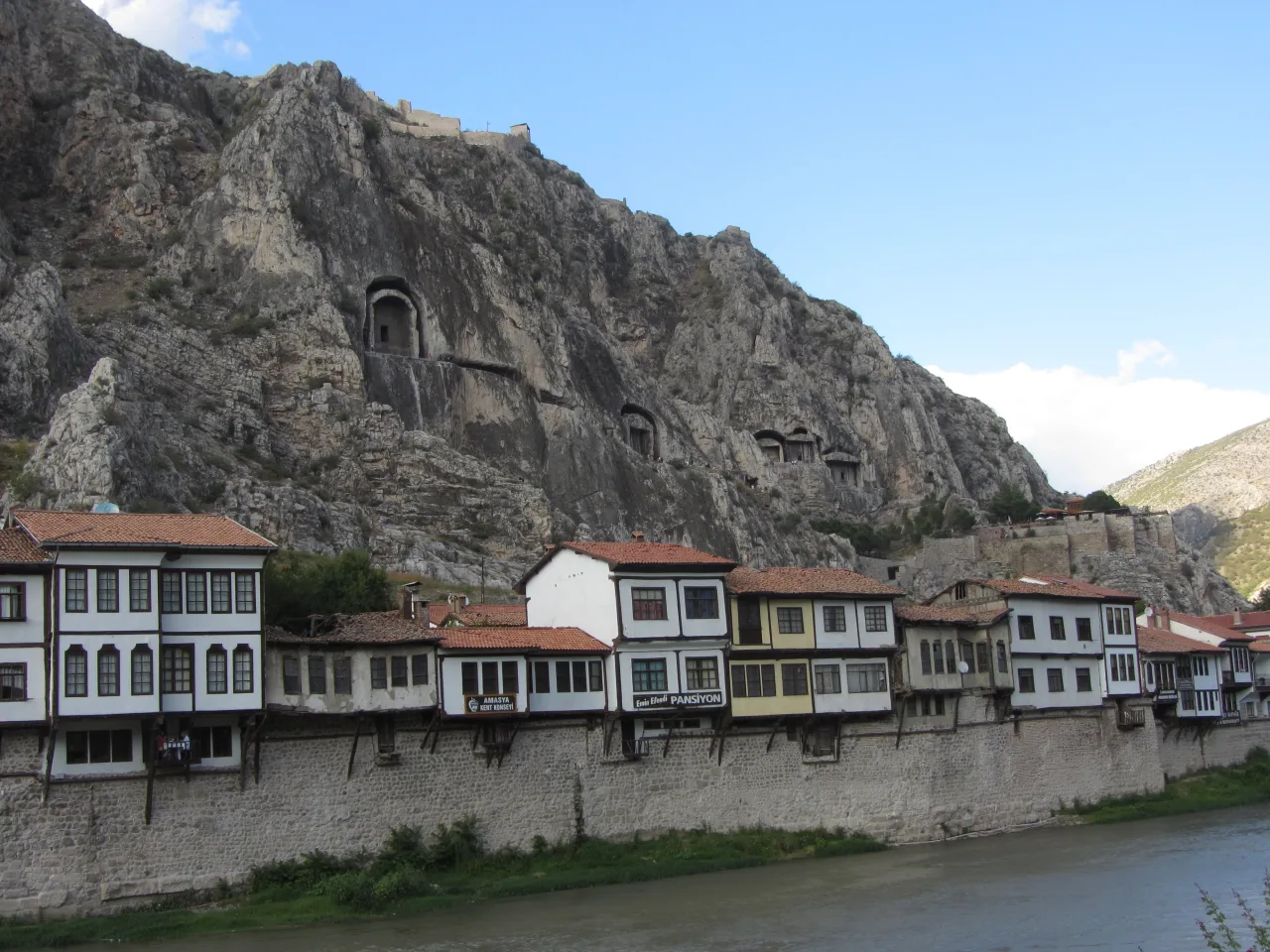
21—22 June 1919
The Amasya Circular
The programme that joined national sovereignty to the call for a general congress at Sivas.
Explore →
27 December 1919
The Representative Committee in Ankara
Ankara became the movement’s operational centre through rail, telegraph and proximity to the fronts.
Explore →
23 July—7 August 1919
The Erzurum Congress
A congress convened for the eastern provinces developed into a programme of national independence.
Explore →Documents and sources18 sources
Official reference points used to verify the chronology and interpretive frame on this page.
- Atatürk and Samsun ↗SAMSUN VALİLİĞİ
The inspectorate, Bandırma journey, and contacts in Samsun and Havza.
- Havza ↗SAMSUN BÜYÜKŞEHİR BELEDİYESİ
Historical setting of the Havza stage after Samsun.
- National Struggle period ↗MSB · ATATÜRK SİTESİ
Military chronology for İnönü, Sakarya and the Great Offensive.
- ATAM · Mondros Mütarekesi ↗ataturkansiklopedisi.gov.tr
- MSB · Atatürk kronolojisi ↗ata.msb.gov.tr
- ATAM · Ordu müfettişlikleri ↗ataturkansiklopedisi.gov.tr
- ATAM · Havza Genelgesi ↗ataturkansiklopedisi.gov.tr
- ATAM · Atatürk biyografisi ↗ataturkansiklopedisi.gov.tr
- TBMM · Havza belgesi ↗acikerisim.tbmm.gov.tr
- Samsun KTB · Yolculuktaki görevliler ↗samsun.ktb.gov.tr
- TTK Belleten · Müfettişlik talimatı ↗belleten.gov.tr
- ATAM Dergisi · Nutuk'un kaynakları ↗atamdergi.gov.tr
- TBMM · Parlamento tarihi ↗www.tbmm.gov.tr
- TBMM · Samsun yolculuğu ↗www.tbmm.gov.tr
- Samsun KTB · Bandırma Müzesi ↗samsun.ktb.gov.tr
- Samsun Belediyesi · 2026 taşınması ↗samsun.bel.tr
- Amasya Valiliği · Amasya Tamimi ↗www.amasya.gov.tr
- KTB · 1919 ↗www.ktb.gov.tr