
← Back to History of the Republic
Sport history · football
Great moments in Turkish football
Football became one of the Republic’s largest mass cultures. Historic Istanbul clubs, Anatolian teams, European nights and national-team tournaments created a language shared across generations.
1923—todayClubs · national team · world
At a glance
- Federation
- 1923
- UEFA Cup
- Galatasaray · 2000
- World Cup
- Third · 2002
- EURO 2008
- Semi-final
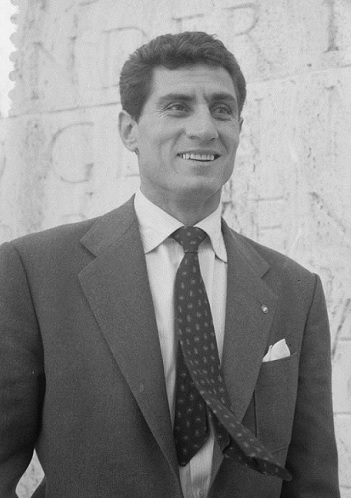
Eric Koch / Anefo — Nationaal Archief / Wikimedia Commons · Visual record and provenance ↗ · CC BY-SA 3.0 NL ↗ · Open the full-size visual ↗
From 1923 towards a national league
The Turkish Football Federation was established in 1923, and the national team played its first match against Romania that year. A club culture developing before the Republic gained a new framework of international representation and nationwide organisation. The longstanding rivalries of Galatasaray, Fenerbahçe and Beşiktaş became part of urban life and inherited support. The 1959 National League, the starting point of today's Süper Lig, brought clubs into a regular national competition. This does not mean football or championships began in Türkiye in 1959. Local leagues, earlier nationwide events and professionalisation are separate parts of the history. A useful account connects those changing structures without forcing them into one artificially uniform table.
↑ Back to dossier contentsCities and ambition beyond Istanbul
Football's mass appeal did not come only from Istanbul derbies. Trabzonspor's rise and Bursaspor's 2010 championship illustrate the connection between city identity and national competition. Bursaspor won the 2009–2010 league title, joining the four clubs that had previously achieved it. For local supporters, such moments connect stadiums, neighbourhoods, academies and shared civic memory rather than supplying only a result. Yet describing all football outside Istanbul through champions would also be incomplete. Lower leagues, amateur grounds and youth teams sustain the game's reach. Beneath the professional showcase, that continuing local network provides many future players with their first competitive environment and their earliest experience of belonging to a team.
↑ Back to dossier contentsTwo distinct European trophies in 2000
Galatasaray won the UEFA Cup on 17 May 2000 in Copenhagen, defeating Arsenal 4–1 on penalties after a goalless final. On 25 August in Monaco, the club beat Real Madrid 2–1 in the UEFA Super Cup, settled by Jardel's golden goal in extra time. These were separate competitions, not two stages of the same event. The UEFA Cup concluded a season-long tournament; the Super Cup brought different European champions together. Fatih Terim led the first triumph, while Mircea Lucescu coached the Super Cup team. The different responsibilities of Taffarel, Hagi, Popescu and Bülent Korkmaz demonstrate why the period cannot be explained only through goalscorers. Goalkeeping, defending and playmaking belong within the same memory.
↑ Back to dossier contentsThe national team's stages of 2002 and 2008
Türkiye's men's team finished third at the 2002 World Cup and reached the European Championship semi-finals in 2008. Recovering from two goals down to beat the Czech Republic 3–2 and equalising late against Croatia before winning a quarter-final shoot-out became defining Euro 2008 moments. Nihat Kahveci's goals against the Czechs, Semih Şentürk's equaliser against Croatia and Rüştü Reçber's penalty save placed different player roles within one story. Calling these matches only miracles overlooks tactical changes and the ability to remain competitive. A comeback requires effective decisions even as time runs out. Behind the emotional scenes preserved by supporters are specific actions performed on the pitch under considerable pressure.
↑ Back to dossier contentsFootball culture beyond trophies
Turkish football also includes player development, coaching, the women's game, refereeing and supporter culture. A match's significance is not always a trophy: a young player's first opportunity or a club's sustained provision of sporting facilities can carry another kind of value. To watch more deeply, follow off-ball runs, the defensive line's collective movement and the goalkeeper's role in beginning an attack. Healthy rivalry also means supporting one's club without degrading the identity of an opponent. This chronology celebrates major achievements while keeping football's shared public space and the biographies of different generations in view. It is an introduction to a broad culture, not a single club's claim to own the whole history.
↑ Back to dossier contentsArchive note
Archive images for wider context

Cumhuriyet Atlas
Continue the story here
2001—6 September 2026
Basketball, volleyball and team spirit
From the Twelve Giant Men and club trophies to consecutive European titles for the Sultans of the Net.
Explore → 2001—2026
Great teams of Turkish basketball
A collective rise from national-team finals to European trophies for women’s and men’s clubs.
Explore →
1999—6 September 2026
Turkish volleyball on the world stage
National-team titles and sustained European and world success by women’s clubs.
Explore →Documents and sources8 sources
Official reference points used to verify the chronology and interpretive frame on this page.
- Türkiye national football team history ↗TFF
Published by TFF: Türkiye national football team history. Supports the relevant historical result or event information.
- The national league's 1959 beginning ↗TFF
Published by TFF: The national league's 1959 beginning. Supports the relevant historical result or event information.
- Bursaspor's 2010 league championship ↗TFF
Published by TFF: Bursaspor's 2010 league championship. Supports the relevant historical result or event information.
- UEFA Cup final record 2000 ↗UEFA
Published by UEFA: UEFA Cup final record 2000. Supports the relevant historical result or event information.
- Super Cup final 2000 ↗UEFA
Published by UEFA: Super Cup final 2000. Supports the relevant historical result or event information.
- The top three at the 2002 World Cup ↗FIFA
Published by FIFA: The top three at the 2002 World Cup. Supports the relevant historical result or event information.
- Türkiye–Croatia Euro 2008 quarter-final ↗UEFA
Published by UEFA: Türkiye–Croatia Euro 2008 quarter-final. Supports the relevant historical result or event information.
- Türkiye–Czech Republic at Euro 2008 ↗UEFA
Published by UEFA: Türkiye–Czech Republic at Euro 2008. Supports the relevant historical result or event information.