
← Back to History of the Republic
The Republic continues · world and diplomacy
The Korean War: the Turkish Brigade and Cold War
The Korean War carried the Republic’s military and diplomatic history to an Asian battlefield. Understanding the Turkish Brigade requires attention to courage, multinational command, difficult terrain, supply and the human consequences of war.
25 June 1950—27 July 1953Korean Peninsula · Ankara
At a glance
- Decision
- 25 July 1950 · Cabinet
- First brigade commander
- Brigadier General Tahsin Yazıcı
- Command framework
- United Nations Command
- Armistice
- 27 July 1953

US Army Center of Military History / Wikimedia Commons · Visual record and provenance ↗ · Public domain · US federal government work ↗ · Open the full-size map ↗
1950: the UN appeal and Türkiye’s decision
North Korean forces attacked South Korea on 25 June 1950, beginning the war. The search for military assistance under the United Nations quickly presented the newly elected Democrat Party government with a major decision. On 25 July the cabinet decided to send a combat force. Foreign Minister Fuad Köprülü’s offer to the UN and the American acceptance on behalf of the unified command reveal the diplomatic mechanism of participation. This was involvement in a multinational conflict beyond the immediate defence of Türkiye’s borders. The domestic political and constitutional debate over the decision belongs to its history alongside international security arguments. An account limited to battlefield heroism can conceal the government decision, the allocation of authority and the responsibilities at the beginning of the deployment.
↑ Back to dossier contentsA brigade was more than its infantry
The first Turkish Brigade, commanded by Brigadier General Tahsin Yazıcı, arrived in Korea in autumn 1950. Service within United Nations Command relied on artillery, engineers, communications, transport, medical care and maintenance as well as infantry. Fighting far from home requires more than putting soldiers and rifles aboard a ship. Compatible ammunition, vehicle repairs, casualty evacuation, the transmission of orders and learning unfamiliar terrain all matter. Language and liaison officers become especially important in multinational operations: different units must understand the same order at the right moment. The brigade’s ability to operate independently should be understood through these supporting capabilities. Military history therefore includes the medic, driver, signaller and supply personnel behind a visible infantry action, rather than treating combat as an isolated act of courage.
↑ Back to dossier contentsKunu-ri: mountains, narrow roads and withdrawal
The large Chinese offensive in November 1950 reversed the UN forces’ advance in the north. The Turkish Brigade’s fighting around Kunu-ri occurred within that wider retreat. Steep slopes, passes, narrow roads and interrupted communications could rapidly change the position of small units. Holding ground mattered not only for the distance retained, but also for the time it allowed other forces to withdraw. The brigade’s resistance should not be represented as a simultaneous victory across the whole front: the UN army moved south and the Turkish formation suffered heavy losses. The US Army historical map on this page places the retreat of 29–30 November in its operational context. Published in a 1990 history, it is a retrospective map rather than a photograph taken during the battle. Its symbols and date range should be read before drawing conclusions.
↑ Back to dossier contentsKumyangjang-ni: an attack with combined support
The US unit citation for the Kumyangjang-ni action of 25–27 January 1951 names the Turkish Brigade alongside Company A of the 79th Tank Battalion, Company D of the 89th Medium Tank Battalion, and an antiaircraft platoon. The text of the document dated 11 July 1951 was reproduced in the Congressional Record on 27 February 1990.
This record helps readers recognise infantry work in close combat without separating it from combined support. Reaching a position, holding it and preparing a subsequent movement are distinct tasks. Rather than treating tanks, artillery and infantry as decoration in a list of heroic achievements, ask how their responsibilities complement one another: what supports movement, what protects a formation’s flank, and how are wounded personnel and supplies moved? A unit citation honours a particular action; it is not an operational diary explaining developments across the entire front.
The scale of the word victory matters. Taking a local objective and ending the war throughout the peninsula are different outcomes. Nor does completing an engagement remove the need for supply, communications and rest. Its historical significance becomes clearer when attention extends from the name of a captured hill to the work that makes an attack sustainable. This does not diminish courage. It makes visible the organisation within which courage is exercised.
↑ Back to dossier contentsJangseungcheon: protecting a withdrawal
At Jangseungcheon, northeast of Yeoncheon, on 22–23 April 1951, the brigade covered its artillery’s withdrawal during the Chinese Spring Offensive and retreated toward the Hantan River.
A delaying action does not necessarily mean stopping an opponent permanently. It can seek time for forces farther back to move while retaining contact and an exit for the covering force itself. Consider artillery as more than a gun barrel: ammunition, towing vehicles, communications and personnel must move together if support is to remain available from another position. The interpretive question here is not only how much ground was gained, but what could be brought out.
Covering an evacuation and conducting the wider withdrawal require a sequence. If every element leaves simultaneously, mutual protection can weaken; if a covering element stays too long, its own route may close. This is not a reconstructed timetable of orders for the engagement. It explains why the documented task required coordination. Withdrawal should not automatically be equated with disorder, nor delay with an attack. The outcome has to be considered alongside the force preserved and its capacity to undertake another task.
↑ Back to dossier contents1951–1953: from movement to position warfare
The January 1951 fighting around Kumyangjang-ni was an important stage as the Turkish formation reorganised and undertook offensive operations. In subsequent years the war increasingly involved established positions and outpost battles. A hill could matter far more than its size on a map because it controlled observation and routes of approach. Defending an outpost could provide time for the main line while exposing personnel to close artillery and infantry attacks. Turkish forces served through rotating brigades and commanders; the war was not fought by one unchanging body of men. Fighting in the final months before the 1953 armistice shows that approaching agreement at the negotiating table did not end the danger on the ground. Diplomatic progress and the immediate experience of a soldier could move at different speeds.
↑ Back to dossier contentsNevada and Vegas: the cost of an outpost
Fighting at the Nevada outposts northwest of Gorangpo began on the night of 28 May 1953. Counterattacks contested Vegas; the division ultimately authorised withdrawal from the outposts.
An outpost and the main defensive line do not perform identical roles. A small forward position can help observe approaches and meet an opponent early, while separation from the main force can complicate supply and casualty evacuation. Historical assessment therefore cannot stop at asking who held a hill at the end. Command must weigh the position’s usefulness against the cost of keeping a force there. A decision to leave does not automatically erase the value of the resistance that preceded it.
This section does not reproduce repeated-capture counts or casualty totals. Responsible comparison would require checking the reporting time, formations covered and categories of loss together. Particularly in night fighting, a place name may not describe the same state of control at every moment. Begin with the time span and the unit’s task, then consider its relationship with the wider defence. This framework helps explain why daily wartime danger can continue as an armistice approaches, without confusing a soldier’s immediate decisions with an outcome known only afterwards.
↑ Back to dossier contentsAn armistice was not a peace treaty
The Korean Armistice Agreement signed on 27 July 1953 halted large-scale hostilities; it was not a peace treaty. A military demarcation line, demilitarised zone and supervision arrangements were distinct from political reunification or a permanent settlement. Nor did the date mean that every Turkish service member returned home immediately. When reading loss figures, deaths in combat, later deaths from wounds, missing personnel and prisoners must not be treated as interchangeable categories. Totals published by different institutions can use different scopes. This chapter avoids a ranking of sacrifice based on unexplained headline numbers. Commemoration, cemetery records and veterans’ oral histories can instead restore individual names and experiences that vanish behind totals. Remembering a contribution need not reduce the Korean population’s own devastation to background scenery.
↑ Back to dossier contentsNATO, friendship and different kinds of memory
Türkiye joined NATO on 18 February 1952, after Turkish participation in Korea had begun. Describing the 1950 deployment as a NATO assignment therefore confuses chronology and command. Service in Korea and Türkiye’s orientation towards Western security institutions were connected, but membership cannot responsibly be reduced to a simple reward exchanged for fighting. Strategic geography, Soviet pressure and alliance diplomacy also belong in the explanation. Diplomatic relations with the Republic of Korea were established in 1957; the wartime experience became a powerful resource for later friendship. Veterans’ accounts illuminate that relationship at a personal level. A dramatised film or commemorative broadcast, however, is not the same kind of evidence as an operational diary or contemporary document. Keeping that distinction enriches remembrance rather than diminishing it.
↑ Back to dossier contentsKorean lives and humanitarian evidence
Korean civilians should not remain scenery in the accounts of foreign soldiers. ICRC archives document displaced families, escape by train, ruined streets and the need for relief through period photographs. Shelter, food and contact between separated people did not cease to matter when military operations stopped. Humanitarian work also faced limits: access, coordination and permission affected whom relief agencies could reach. An aid worker's observation in one location is not a complete record of the peninsula. Remembering Turkish service and making Korean losses visible are not competing objectives. Keeping both perspectives in view preserves the human scale of a war otherwise easily reduced to the movement of units on a map.
↑ Back to dossier contentsFrom 1951 to 2026: commemoration and operational evidence
Türkiye’s Ministry of Family and Social Services records the Kumyangjang-ni 75th-anniversary ceremony at Ankara’s monument to the Turks who fought in Korea on 25 January 2026. Wreath-laying, a silence and both countries’ national anthems formed part of the programme.
Keep the ceremony’s date beside, but separate from, the wartime action. A speech at a monument reveals choices about what and whom a community remembers. Establishing how fighting developed at a particular hour requires another kind of record. Distinguishing them does not devalue commemoration: its symbolic and human purpose differs from an operational report’s technical purpose.
Apply the same distinction to the veteran’s interview linked here. Identify when it was recorded, which experience the speaker describes and the broadcaster’s framing; then consider how another unit or a civilian might have possessed different information about the same event. A historical map represents relationships between place and movement, while period film carries moments within a camera’s limited field. A remembered voice, a map symbol and a recorded decision can all be valuable without any one representing everyone in the war. Reading them together leaves room for Turkish service and the lasting consequences experienced by Korean society.
↑ Back to dossier contentsRead the turning points together
- 1950 · June–July
War and the deployment decision
The attack of 25 June was followed by UN appeals. Türkiye’s cabinet decision on 25 July began the offer and preparations to send a combat force.
- 1950 · Autumn
Arrival on a distant front
The first brigade under Tahsin Yazıcı reached Korea. Adapting terrain knowledge, supply and communications to a multinational command was essential.
- 1950 · November
Fighting around Kunu-ri
The Chinese offensive forced a wider UN withdrawal. Turkish resistance occurred within that campaign, accompanied by heavy losses of people and equipment.
- 25–27 January 1951
Kumyangjang-ni
The unit citation records the Turkish Brigade together with attached American support elements.
- 22–23 April 1951
Jangseungcheon
Artillery withdrawal was covered; the formation moved back toward the Hantan.
- 1951–1952
Battles and an alliance
Kumyangjang-ni and later operations continued as Türkiye joined NATO on 18 February 1952. The first Korean deployment had preceded NATO membership.
- 28 May 1953
Nevada and Vegas
Night fighting, counterattacks and an eventual decision to withdraw.
- 1953–1957
An armistice and diplomatic relations
The armistice of 27 July 1953 halted large-scale fighting. Türkiye and the Republic of Korea established diplomatic relations in 1957.
- 25 January 2026
Commemoration in Ankara
Kumyangjang-ni’s 75th-anniversary ceremony: a later date in remembrance, not a battle.
Explore the archive and documentary context
TRT Haber
Korean War veteran Ali Rıza Yurtnaç’s recollections
This news video of 27 January 2024 records a veteran’s retrospective memory of Kumyangjang-ni. It is neither a live report from 1951 nor a neutral record of every event in the battle.
Watch the official publication ↗US National Archives / Wikimedia Commons
Korea archive film · 1–2 December 1950
The NARA 22359 metadata imported into Commons lists subjects concerning Pyongyang, Sunchon, Turks and aid at Hungnam, dated 1–2 December 1950. The description and filename do not identify every scene’s unit. This link is not a battle record authenticated by viewing individual scenes.
Watch the official publication ↗Supported YouTube publications can be watched here by choosing to load their player. Videos are not copied onto our server. Interpret archive images alongside their production date and the narrator’s perspective; the official publication link remains as an alternative.
Questions and historical distinctions
Did the Turkish Brigade fight on NATO’s behalf?
No. It served within United Nations Command. Participation began in 1950 and Türkiye joined NATO in 1952. A political connection between the two developments does not make them the same command structure.
Should Kunu-ri be presented only as an offensive victory?
No. The fighting formed part of the wider UN retreat under the Chinese offensive. Turkish resistance and delaying actions were important, but heavy losses and the campaign’s broader outcome also belong in the account.
Was a peace treaty signed in 1953?
The document was an armistice. It halted large-scale hostilities and established demarcation and supervision arrangements; it was not a comprehensive peace treaty settling the political dispute.
Does leaving an outpost make the earlier defence meaningless?
No. Its roles in observation, gaining time and preserving a force have to be assessed separately from who occupied it at the end. Nor is every withdrawal automatically a success. A one-word verdict is inadequate without considering the task, orders, supply and wider line.
Are a commemorative speech, a veteran’s interview and a citation the same evidence?
No. A ceremony records a community’s remembrance, an interview one person’s experience, and a citation institutional recognition of particular service. Read them together, but do not turn a speech into a complete operational report or one person’s memory into the whole formation’s shared observation.
Cumhuriyet Atlas
Continue the story here

1932—23 February 1945
The “peace at home” line and the Second World War
Continuity and distinction from the League, Balkan Entente, Montreux and Saadabad to the İnönü government’s wartime diplomacy.
Explore →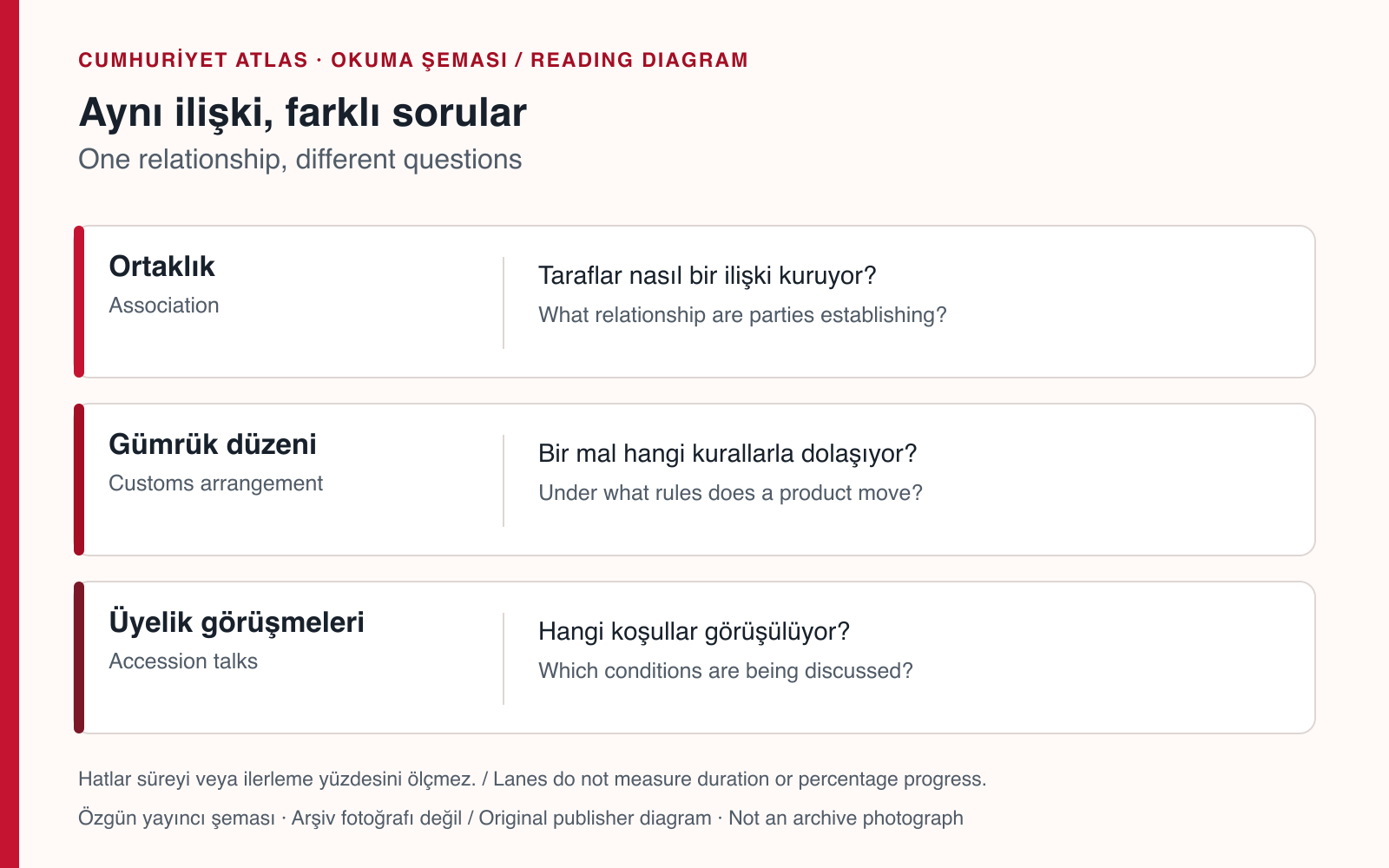
Association, trade and negotiating milestones
Türkiye–Europe relations: association, customs union and accession
Read three concepts without collapsing them into one: the stages of association, the limits of a trading arrangement and the workings of membership talks. Dates, documents and an original explanatory visual are presented together.
Explore →
15 July—16 August 1974
Cyprus in 1974: coup, military operation and diplomacy
From the coup of 15 July to Türkiye’s two-stage military operation, Geneva negotiations and the lasting human losses experienced by both communities.
Explore →Documents and sources12 sources
Official reference points used to verify the chronology and interpretive frame on this page.
- Turkish parliamentary history: the decision to send forces to Korea ↗TBMM · Kore kararı
Parliament’s publication on the cabinet decision and the diplomatic process in Türkiye.
- US Department of State: acceptance of Türkiye’s offer, 19 August 1950 ↗ABD · dönem belgesi
The acceptance on behalf of the unified command and documentary note on the UN offer.
- United Nations Command: Türkiye’s contribution ↗BM Komutanlığı · Türkiye
Arrival of the first brigade, its composition and the framework of service.
- Ministry of National Defence: papers of the tenth military history symposium ↗MSB · askerî tarih
Studies of the operational context at Kunu-ri, read with attention to evidence and the scale of the operation.
- Armistice negotiations, 1951–1953 ↗BM Komutanlığı · ateşkes
The military scope of the 1953 armistice and its distinction from a peace treaty.
- Türkiye and NATO: membership in 1952 ↗NATO · tarih
Alliance history documenting accession on 18 February 1952.
- Political relations between Türkiye and the Republic of Korea ↗Dışişleri · Kore Cumhuriyeti
Wartime memory and diplomatic relations established in 1957.
- Historical timeline: ICRC, the Geneva Conventions and Korea ↗ICRC · siviller ve arşiv
A humanitarian history using period archive records of displacement, destruction, relief and family links.
- ICRC action during the Korean War, 1950–1953 ↗ICRC · yardımın kapsamı
The ICRC archive and library's review of relief efforts and limitations on access.
- MPVA · Key Battles, Türkiye ↗www.mpva.go.kr
- US Army citation (1951), Congressional Record reprint (1990), p. 2769 ↗www.govinfo.gov
- Aile ve Sosyal Hizmetler Bakanlığı · 25 Ocak 2026 anması ↗www.aile.gov.tr