

← Back to History of the Republic
General Photographic Agency / Wikimedia Commons · Public domain ↗ Andımız · the Student Oath
Andımız: history, meaning and full text
“Türküm, doğruyum, çalışkanım”—“I am Turkish, honest and hardworking”—became associated with the start of the school day for generations. Understanding Andımız means exploring its values, identifying its author Reşit Galip, and distinguishing its 1933 origins from later versions.
Since 1933 · text and memoryTürkiye · education and public life
Two citizens study a poster of the new alphabet outside a municipal building, 22 November 1928.
At a glance
- Author
- Dr Reşit Galip
- First implementation decision
- 10 May 1933
- Common names
- Andımız · Student Oath
- Daily ceremony provision
- Repealed in 2013
1933 →
A timeline of Andımız
The writing of the text, its use in schools and the court proceedings are distinct events. Read the dates alongside their documentary context.
- 23 April 1933The writing story recorded in Afet İnan’s recollection
- 10–18 May 1933Decision 101 and implementation circular 1749/42
- 1972 · 1997Changes in the history of the text and its use
- 27 August 2003The Student Oath in Article 12 of the regulation
- 8 October 2013Repeal of the daily collective recitation provision
- 24 April 2018Eighth Chamber annulment: case 2013/11441, decision 2018/2317
- 4 February 2021Administrative Chambers Board reverses and remands
1933: composition and formal implementation are distinct
Dr Reşit Galip, then education minister, prepared the first version of Andımız. A composition story based on Afet İnan's recollection connects it with 23 April 1933; the formal school arrangements have a separate documentary trail in decision 101 of 10 May and circular 1749/42 of 18 May. A text's creation and institutional dissemination are therefore not the same event. A recollection supplies a narrated scene, while an administrative document establishes the basis of implementation. In the Republic's tenth year, education, shared citizenship and progress came together in a short school text. Beginning its story only with recent disputes would obscure this founding context and the different kinds of evidence through which it is known.
↑ Back to dossier contentsReşit Galip wrote it; Atatürk is addressed within it
Born in Rhodes in 1893, Reşit Galip worked as a physician and politician. His tenure as education minister ran from 19 September 1932 to 13 August 1933. The oath was a text he prepared, not a speech written by Atatürk. The address to Atatürk in the familiar later version makes the distinction between author and addressee particularly important. Preserving that distinction also makes other participants in the period's educational policy visible. Ministers, teachers, pupils and institutions performed different roles within a shared history. Attaching the text to a famous name is not enough to explain its influence: the educational understanding of its author and the way schools used it matter as well.
↑ Back to dossier contentsReading the values within a promise
The oath is built around a first-person promise about conduct. Honesty suggests consistency between words and actions; diligence concerns sustained effort rather than successful results alone. Protecting younger children and respecting elders brings relationships with others into the text. İlke can be explained as a guiding principle, and ülkü as an ideal to pursue. In this dossier's interpretation, making these ideas meaningful in a classroom requires more than asking pupils to repeat words. Students might discuss how admitting an error demonstrates honesty, or how helping someone illustrates solidarity. Such examples do not alter the historical text; they establish a thoughtful connection between its stated values and ordinary behaviour. Interpretation should remain distinguishable from the document itself.
↑ Back to dossier contentsWhich period does the complete text represent?
The initial version of 1933 is not entirely identical to the wording remembered by later generations. Changes in 1972 and 1997 belong to its history. The complete text shown here is the version of Article 12 of the 2003 Primary Education Institutions Regulation before repeal in 2013, reproduced on page nine of the 2021 Council of State judgment. Presenting that version in full does not make it a word-for-word copy of the original composition. Identifying dates and versions helps explain differences between readers' memories. People who learned the oath in different years may recall different expressions. Knowledge of revisions prevents those differences from immediately being treated as mistakes and makes the document easier to place historically.
↑ Back to dossier contentsSchool memory and different generational experiences
Collective recitation, short phrases and repeated school routines connected Andımız with many people's childhood memories. Memory is not uniform, however: people from different ages, schools and surroundings can remember the same practice with different feelings. A history page should explain the document's place without erasing that variety. Andımız is a student oath, the National Anthem a national song, the Address to Youth the conclusion to Nutuk, and the Tenth Anniversary Speech a commemorative address. Their shared republican connections do not eliminate differences in genre, author or date. Reading the four together reveals how public language works differently through poetry, political rhetoric and school ritual. Understanding these distinctions enriches their connections rather than weakening them.
↑ Back to dossier contents2013–2021: compulsory ceremony versus reading a text
The daily collective recitation provision was repealed on 8 October 2013. In the case followed here, the Council of State's Eighth Chamber annulled the change on 24 April 2018; the Administrative Chambers Board reversed and remanded on 4 February 2021. The majority emphasized administrative discretion over teaching methods, while dissents offered different reasoning. The dispute concerned compulsory daily collective practice, not a general prohibition on reading the text. This account is limited to the documented 2021 ruling. Legal proceedings belong within educational history, but they are not identical to it. The legal status of a practice and a text's place in cultural memory are different questions; a decision about one does not automatically determine the other.
↑ Back to dossier contentsOriginal Turkish text
Andımız — the Student Oath
Complete Turkish text: Article 12 of the 2003 regulation before repeal in 2013. Source: Council of State, case 2018/3533, decision 2021/192, p. 9. Wording and punctuation follow the document; line breaks are arranged for readability. This is not the identical original 1933 version.
Türküm, doğruyum, çalışkanım,
İlkem; küçüklerimi korumak, büyüklerimi saymak, yurdumu, milletimi özümden çok sevmektir.
Ülküm; yükselmek, ileri gitmektir.
Ey Büyük Atatürk! Açtığın yolda, gösterdiğin hedefe durmadan yürüyeceğime ant içerim.
Varlığım Türk varlığına armağan olsun.
Ne mutlu Türküm diyene!
Archive note
Archive images for wider context
Cumhuriyet Atlas
Continue the story here
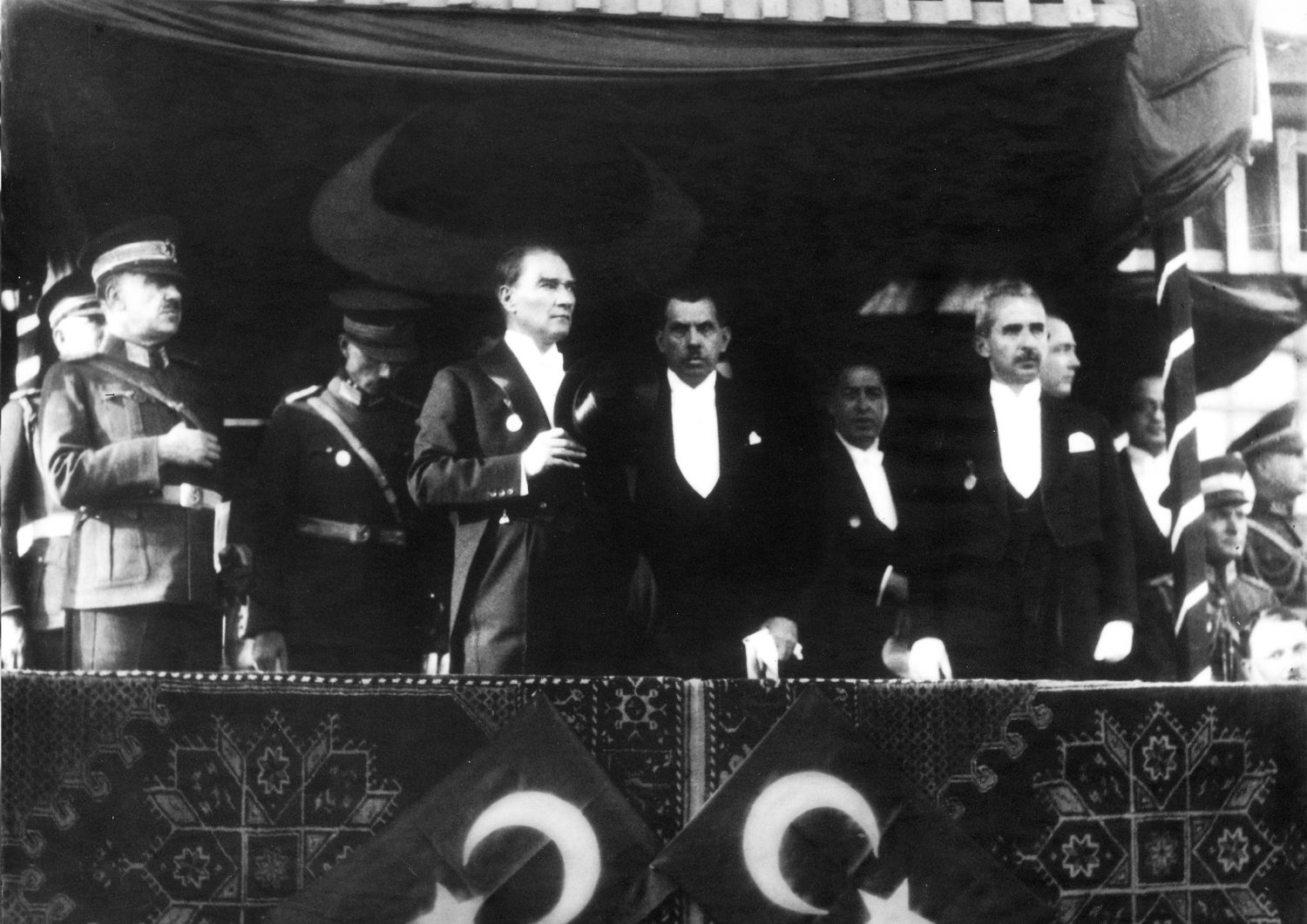
29 October 1933
The Tenth Anniversary Speech: achievements and work ahead
The original Turkish text and voice of the 1933 address: speed, science, culture, welfare, peace and unfinished progress.
Explore →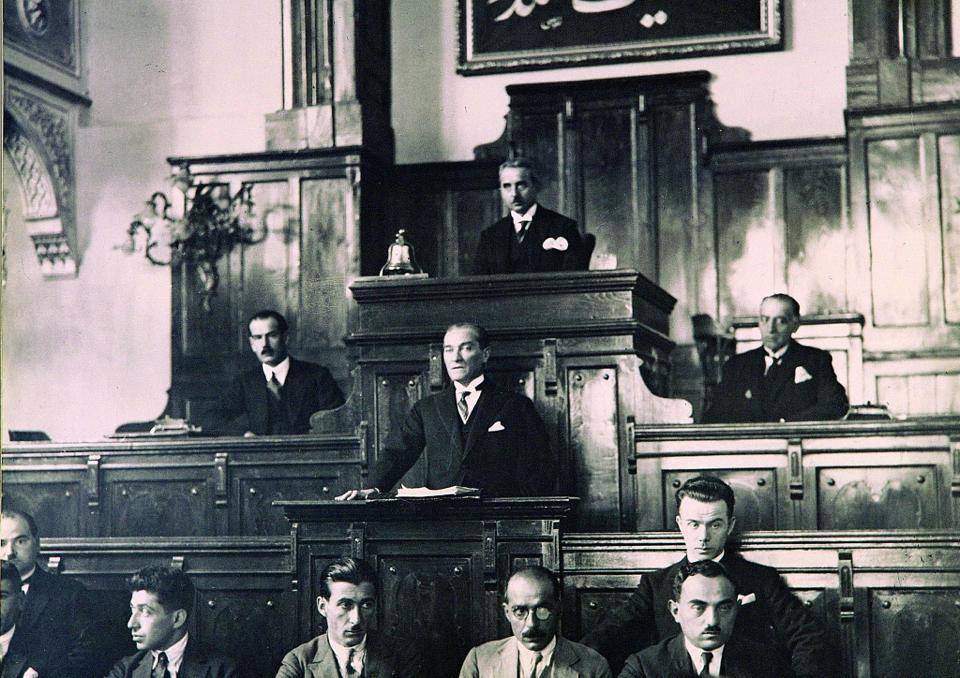
20 October 1927
The Address to Youth: responsibility for the Republic
The historical setting, link between independence and republic, and intergenerational responsibility in Nutuk’s closing text.
Explore →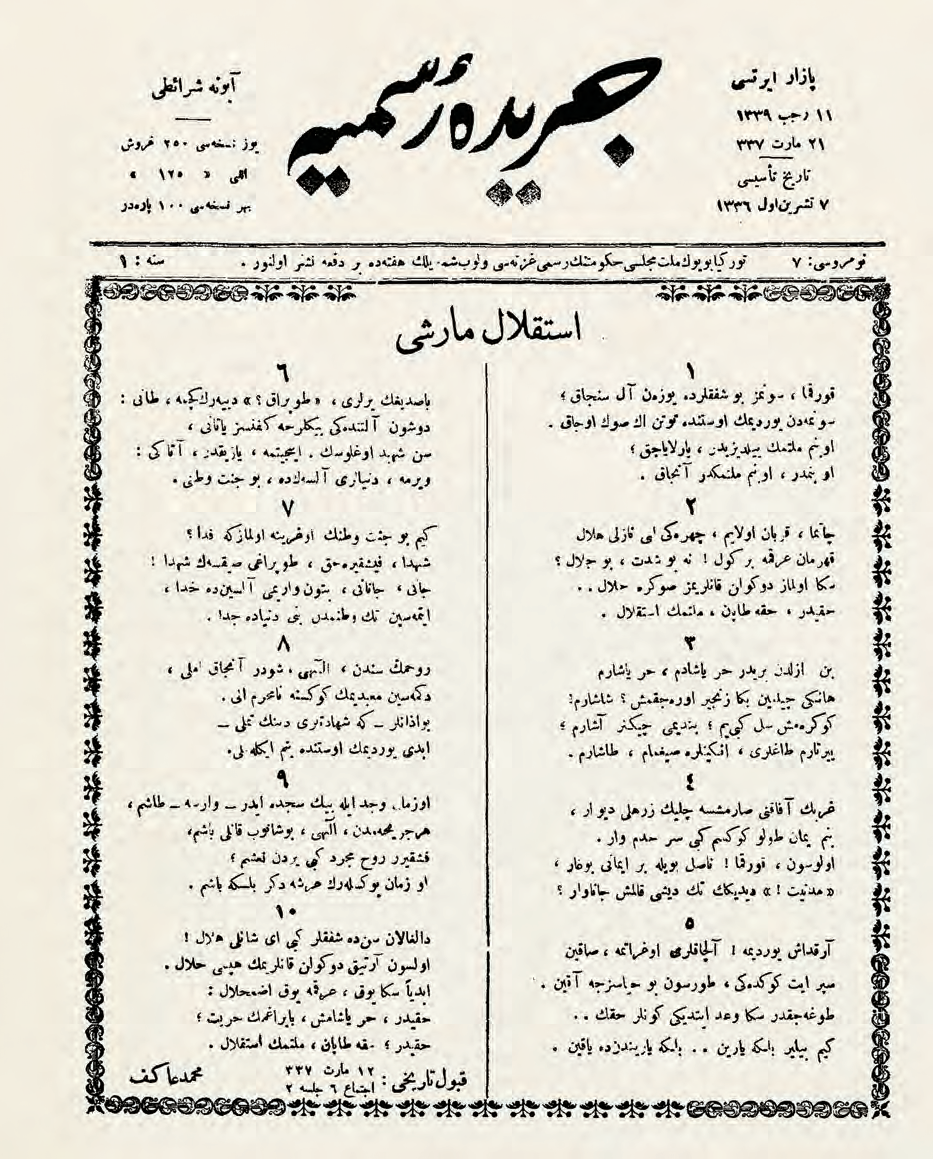
12 March 1921
The Turkish National Anthem: a nation’s shared voice
The wartime setting, central ideas, musical history and present meaning of the poem adopted as the anthem.
Explore →Cumhuriyet
See the story in motion
Selections from our channel. Watch, open a related dossier and keep exploring.
Explore the video library → 0:56
Culture & shared memory
The Student Oath: a voice in shared memory
A short Cumhuriyet channel video centred on the shared memory surrounding the Student Oath.
Watch & explore →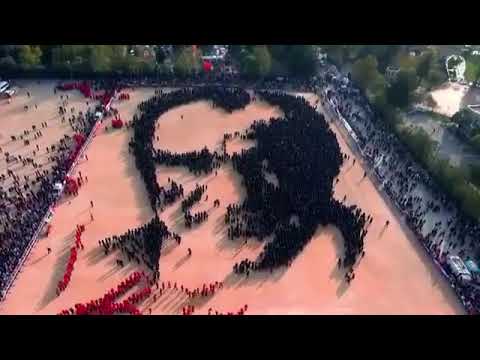 1:14
Culture & shared memory
The Student Oath: a short recording
Another short recording published under the Student Oath title, part of the education and shared-memory selection.
Watch & explore →Documents and sources4 sources
Official reference points used to verify the chronology and interpretive frame on this page.
- Student Oath: Council of State, case 2018/3533, decision 2021/192 ↗DANIŞTAY · BİRİNCİL BELGE
Decision of 4 February 2021. Regulatory history: p. 2; full text of repealed Article 12: p. 9; majority reasoning and disposition: pp. 12–13; dissenting opinions: pp. 15–21.
- Dr Reşit Galip and the writing of the Student Oath ↗MEB · DOKTOR REŞİT GALİP OKULU
A biography hosted by an MEB school, citing Afet İnan’s memoir for the 23 April 1933 account. That recollection is distinguished here from the formal implementation decision in May.
- Ministers of National Education through time ↗MİLLÎ EĞİTİM BAKANLIĞI
Reşit Galip’s ministerial tenure: 19 September 1932–13 August 1933.
- Reşit Galip's life and educational work ↗Atatürk Ansiklopedisi
The author's biography and relationship with republican educational institutions.