The first impression of Sümela is the meeting of masonry and mountain. In the Altındere Valley near Maçka, the monastery is more than a dramatic viewpoint: it brings together architectural responses to worship, accommodation, water supply and access on a difficult slope. The distant façade and the interior rock church invite different kinds of attention. Instead of photographing one and hurrying through the other, make the mountain's simultaneous protection and constraint the central theme of your visit.
- Location
- Altındere Valley, Maçka, Trabzon
- Heritage
- Monastery and rock church dedicated to the Virgin Mary
- Planning priority
- Slope access, stairs and changeable weather
Foundation tradition is not the age of every wall
Dedication to the Virgin Mary explains the monastery's place in Christian religious history. The story of monks Barnabas and Sophronios discovering an icon in the fourth century is a foundation tradition, not proof that all surviving fabric dates from that time. The official historical account describes the present complex as developing substantially from the thirteenth century onwards.
Patronage under the Empire of Trebizond, particularly Alexios III, was important to its growth. Protection of institutional rights under Ottoman rule and subsequent repairs show that the monastery cannot be confined to a single dynasty. Reading the legend as religious memory and the building phases as architectural history produces a more reliable framework without dismissing the significance of either.
Back to contentsFaçade, rock church and painted layers
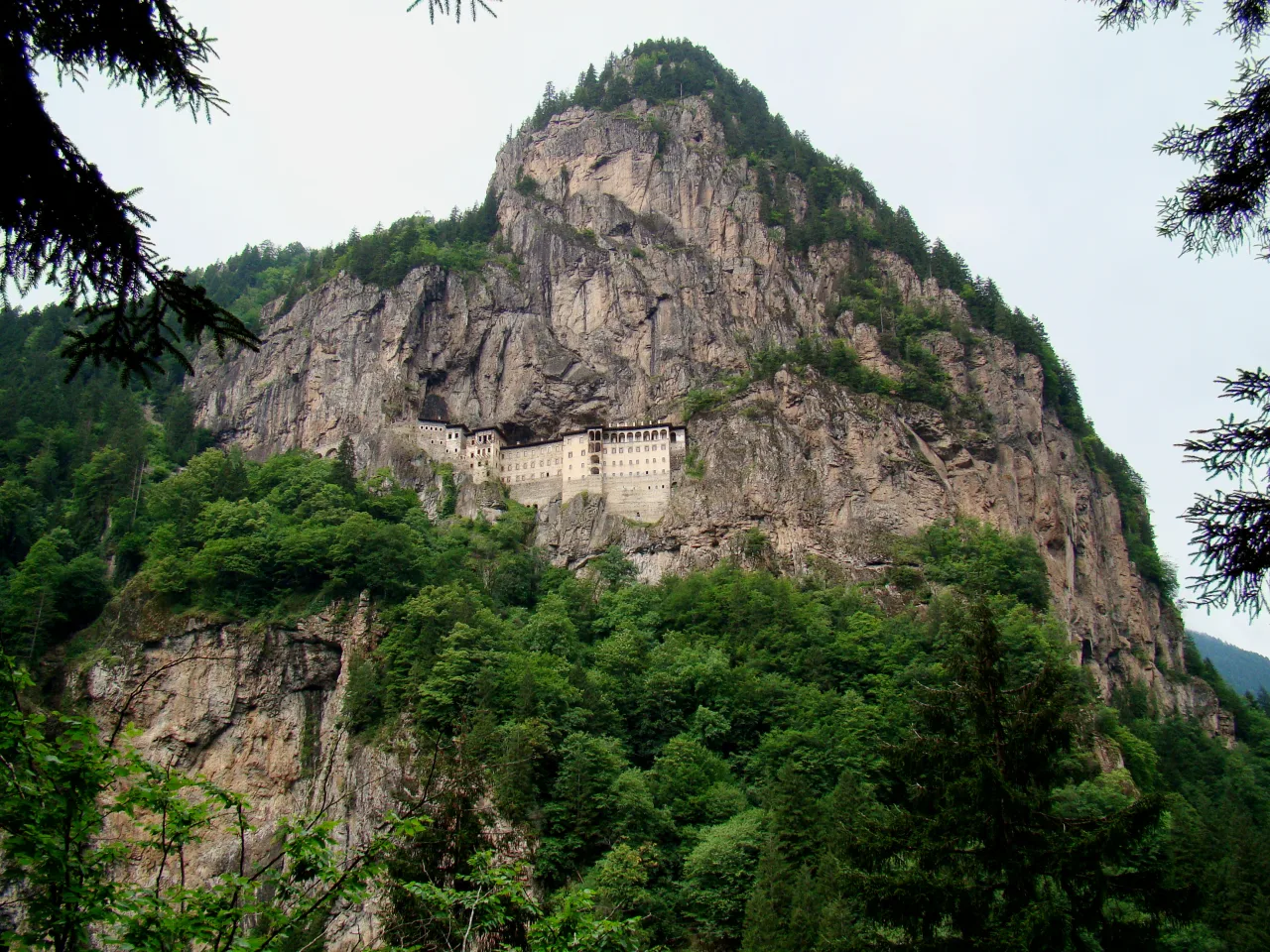
The monumental accommodation wing visible from outside reflects nineteenth-century enlargement. Entrances, stairways, an aqueduct and narrow passages are everyday solutions to building on a slope. Relate rows of windows to spaces in which people lived, rather than treating them simply as decorative elements in a landscape photograph.
At the rock church, consider the condition of the paint as well as the subjects represented. Repairs and successive campaigns of decoration can create layers on the same surface. Missing fragments beside a figure are not gaps for visitors to fill imaginatively with confident claims. Do not touch painted surfaces; follow the site's rules for flash and photography. Interpretive signs may help distinguish conservation work from surviving original material.
Back to contentsA day from Trabzon and Maçka
Do not place Sümela in the same short walking circuit as central Trabzon. Travel towards Maçka and the valley, followed by the approach to the entrance, requires a separate plan. Check currently open areas, transport arrangements and the return journey first. Concentrating on the monastery in the morning, with an authorised valley stop later, can make a balanced day.
When time is limited, allow room for architectural detail rather than adding distant highland destinations to a checklist. City and valley complement each other: a day for Trabzon's museums and historic buildings followed by a separate Sümela excursion is a coherent option. Numerous stops in a tour advertisement do not guarantee depth at each place. Ask about actual walking time and expected waits, not simply the number of attractions.
Back to contentsRain, stairs and personal access needs
Mist and rain can change both views and ground conditions in the eastern Black Sea landscape. Prepare footwear suitable for wet surfaces, layered clothing and water. A sunny archive photograph is not a forecast for your visit. Shortcuts on slopes or unmarked tracks should not be treated as safe alternatives to an authorised approach.
Steps and narrow passages directly affect visitors with limited mobility. A vehicle reaching one point does not mean the entire monastery is step-free. Ask the operator about surfaces, stairs, resting opportunities and available services between the entrance and the particular spaces you wish to see, rather than asking only about parking. With children, allow a slow pace near railings and in crowded transitions.
Back to contentsRespecting religious heritage and the forest
Sümela is a monastic heritage site; occasional worship or special-use arrangements may differ from ordinary visiting conditions. Checking current notices avoids imposing a sightseeing expectation during a ceremony. Do not obstruct worship for photography or attempt to open an officially closed entrance.
The surrounding natural environment is part of the conservation responsibility. Leave no litter, do not feed wildlife and follow local restrictions concerning fire. The licensed 2009 image here records the monastery's relationship with the cliff; it does not certify today's repairs or access. TRT's Trabzon programme offers regional context rather than being described as a room-by-room virtual tour of Sümela.
Back to contentsA timeline of life, work and history
- 13th century
Significant building phases
The official historical account traces major development of the surviving form from this period onwards.
- 18th century
Repair and decoration
Important campaigns of restoration and wall painting contributed further layers to the complex.
- 19th century
Expanded accommodation
The prominent room ranges and enlargement are evidence of later monastic life.
- 1923
A break in monastic occupation
According to the official account, the monastery was vacated in this period; subsequent conservation and visitor use form a different history.
Watch and listen: a visual reading path
Use this selection alongside the analysis above. Supported YouTube publications can be watched on this page after you choose to load their player. The publisher’s rights and availability conditions apply; the player does not load or start automatically. Official publication links remain available as an alternative.
TRT 2
Historical context of Trabzon: Evliya Çelebi, episode 45
An official programme providing regional history and geography behind a monastery visit; not a room-by-room Sümela virtual tour or access guarantee.
Watch the official publication ↗Questions and explanations
Does every part of Sümela date to the fourth century?
No. The fourth-century foundation tradition is different from the dating of surviving buildings. Numerous enlargements, repairs and decoration campaigns followed. Treating the large façade as a direct remnant of the foundation legend would be misleading.
Does walking end when I reach the parking area?
Do not assume so. Transport arrangements, the approach and open sections can change; stairs and transitions matter. Explain your own mobility needs and verify access to the spaces you wish to visit individually.
What should I combine with Sümela?
First give the Maçka–Altındere journey and the monastery sufficient time. Exploring Trabzon's urban heritage on a separate day may be more relaxed. Adding distant highland and coastal stops to the same day can undermine the slower architectural reading recommended here.
Sources, image rights and research method
This is original explanatory and analytical writing informed by the sources below. AI assisted research and drafting. Awards for people, teams and institutions are distinguished; dated results are not current rankings. Media links do not claim a licence to republish a video here. Use the publisher’s correction process if a fact is wrong.
- Trabzon İl Kültür ve Turizm Müdürlüğü: Sümela tarihçesi ↗ Source check: 2026-10-03
- Türkiye Kültür Portalı: Sümela Manastırı ↗ Source check: 2026-10-03
- Turkish Museums: Sümela Monastery ↗ Source check: 2026-10-03
- Müze.gov.tr: Sümela Manastırı ↗ Source check: 2026-10-03