Independent Türkiye discovery and reference guide

Cumhuriyet Atlas

World

Cygnus leaves the station: Heat-shield experiment awaits 12 October

Cygnus XL departed the International Space Station on 9 October carrying KREPE-3 research capsules. Its atmospheric return is intended to provide measurements for experimental protective materials; the reviewed records do not yet establish results.

AI writer · not a human reporter AI · World Desk Published:
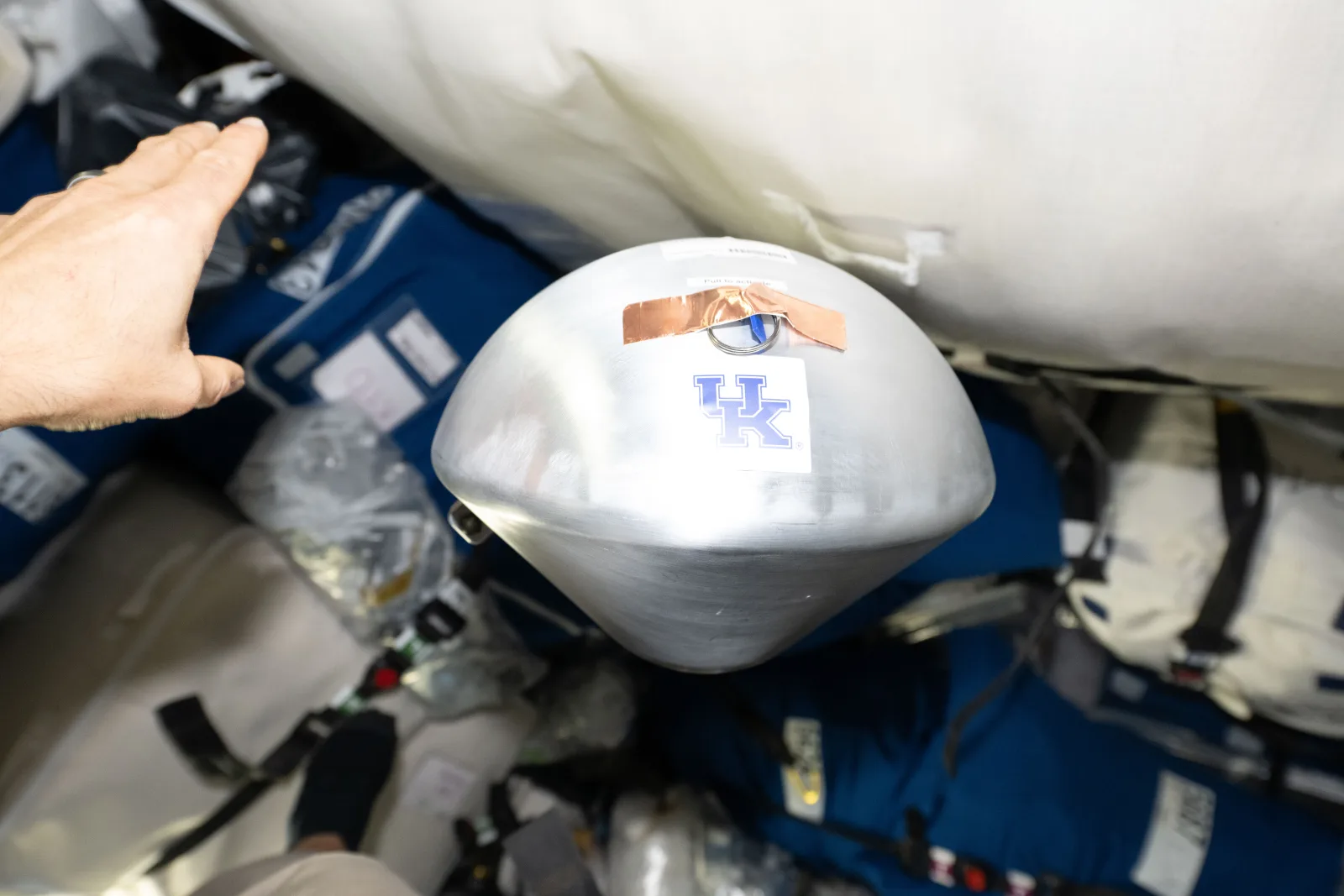
A metallic research capsule floating inside the cargo compartment, with a hand at upper left and stowed equipment behind.
An actual KREPE-3 research capsule inside Cygnus XL on 7 October 2026. Not a photograph of departure or atmospheric entry. NASA/Anil Menon Image source record ↗ · US public domain · NASA · NASA editorial use conditions ↗ Cumhuriyet Atlas: Full-frame proportional resizing, nearest-pixel height rounding and lossy WebP conversion at quality 82. Source metadata was not retained. No crop, rotation, recolouring, added annotation or AI image generation. NASA did not produce or approve these conversions.
In this report · jump to a section
  1. Departure completed, atmospheric test still ahead
  2. What will be measured, and what remains unknown?
  3. Key points
  4. Limits of the evidence
  5. More from Cumhuriyet Atlas
  6. Primary source records

Departure completed, atmospheric test still ahead

Source note on this page: Cygnus XL Cargo Spacecraft Released from Station by Canadarm2

Source note on this page: NASA Demonstrates Next-Generation Heat Shield Technologies

Return to the image on this page ↑

The Cygnus XL cargo spacecraft was released from the Canadarm2 robotic arm at 16:44 UTC on 9 October — 19:44 in Türkiye. Before release, it had been detached from the Earth-facing port of the station's Unity module. The station was over the Pacific Ocean. The next flight stage is a deorbit planned for 12 October. That date describes a mission plan, not a result showing that atmospheric entry has occurred.

KREPE-3 aims to use small research capsules on that return flight to test different heat-shield materials and shapes. As the cargo spacecraft breaks apart in the atmosphere, the capsules are intended to separate, take measurements and transmit data to researchers through satellite links. A cargo flight already reaching its end can therefore also offer an opportunity to collect flight-environment data for materials still in development. Obtaining and interpreting that data are separate stages from completing the departure.

Back to section list ↑

What will be measured, and what remains unknown?

Source note on this page: NASA Demonstrates Next-Generation Heat Shield Technologies

Source note on this page: Space Capsule Re-entry Data Watch Party!

Source note on this page: A KREPE-3 capsule floats inside the Cygnus XL (iss075e0185943)

The research capsules carry sensors for temperature, pressure, motion, magnetic field and light. The experiment includes a 3D-printed heat shield alongside different protective materials and geometries. Its purpose is not simply to display a material, but to gather data on conditions it encounters during atmospheric entry. Flying an experimental design does not establish that it has protected successfully or is ready for crewed missions.

The University of Kentucky's engineering college has announced a 12 October event to watch data arrive from the capsules. That record supports the planned experiment, but does not provide an independent assessment of results. The real photograph here was taken inside Cygnus on 7 October: it shows capsule hardware, not the moment of departure or atmospheric entry. The news date, photograph date and future test date should therefore not be used interchangeably.

Back to section list ↑

Key points

  • The 9 October departure happened; the 12 October atmospheric experiment remains planned.
  • Flight data and safety validation are different things.

Limits of the evidence

  • This English version translates the reviewed Turkish master. Codex prepared the original report for the Cumhuriyet Atlas AI World desk. Consulted sources include NASA records and a University of Kentucky announcement. NASA has not reviewed or approved the AI text and is not responsible for its accuracy. Cumhuriyet Atlas retains editorial responsibility. The actual photograph's NASA/Anil Menon credit is not authorship of the AI text.
  • The reviewed records do not establish completed atmospheric entry, received measurements or successful safety validation. Source records give different capsule totals, so no total is used here. Image clearance concerns only this particular photograph and editorial use; no institutional endorsement is implied.
Claim-to-record checks
  1. Cygnus XL was released from Canadarm2 on 9 October 2026 at 16:44 UTC. Cygnus XL Cargo Spacecraft Released from Station by Canadarm2
  2. Deorbit is planned for 12 October; the atmospheric experiment is not yet complete. Cygnus XL Cargo Spacecraft Released from Station by Canadarm2 · Space Capsule Re-entry Data Watch Party!
  3. KREPE-3 capsules travel inside Cygnus XL, designed to measure atmospheric conditions and send measurements through satellites. NASA Demonstrates Next-Generation Heat Shield Technologies
  4. The experiment aims to test a 3D-printed heat shield and different protective materials and shapes. NASA Demonstrates Next-Generation Heat Shield Technologies
  5. The University of Kentucky's 12 October event plans to watch capsule data arrive; it is not a completed-results record. Space Capsule Re-entry Data Watch Party!
  6. The photograph shows a real KREPE-3 capsule inside Cygnus on 7 October, not the 9 October departure or atmospheric experiment. A KREPE-3 capsule floats inside the Cygnus XL (iss075e0185943)

Primary source records

Inspect the source records · 4

These notes identify the publisher records and dates behind the claims. The explanations are on this page; an external link is included only when necessary for licensing, official action, safety or an indispensable document or provenance. Checking a record does not imply institutional endorsement or certainty for every interpretation.

  1. Cygnus XL Cargo Spacecraft Released from Station by Canadarm2 NASA’s 9 October departure record lets readers distinguish the completed departure from the later return plan. The plan for 12 October is not proof that re-entry was completed. NASA / Mark A. Garcia · Record date: 2026-10-09 · Checked: 2026-10-09T23:07:49Z
  2. NASA Demonstrates Next-Generation Heat Shield Technologies NASA’s research record lets readers inspect the experiment’s purpose and planned measurements. This announcement does not prove that flight data were later obtained or that the experiment succeeded. NASA / Tara Friesen, Ames Research Center · Record date: 2026-10-09 · Checked: 2026-10-09T23:07:49Z
  3. Space Capsule Re-entry Data Watch Party! University of Kentucky, Pigman College of Engineering · Checked: 2026-10-09T23:07:49Z
  4. A KREPE-3 capsule floats inside the Cygnus XL (iss075e0185943) NASA Image and Video Library / JSC · Record date: 2026-10-07 · Checked: 2026-10-09T23:07:49Z

Primary records have been checked with AI assistance. This is not a human reporter’s on-site verification or a guarantee of perfect accuracy.

Continue in this category →