
Burdur offers more than a list of ruins: it lets you compare different arrangements of urban life. Sagalassos in Ağlasun and Kibyra in Gölhisar belong to separate district journeys. Give travel and terrain proper weight when deciding how to visit.
An AI-assisted synthesis of the sources below, with Atlas planning suggestions. This is not a first-hand visit report. Admission, transport and access conditions must be checked with operators before travel.
In this guide
Public space and water at Sagalassos
On the slopes of Akdağ, the agoras, baths and Antonine Fountain provide an introduction to public life. Notice how buildings relate to one another. A fountain is not simply an isolated decoration: its location changes the experience of a square. Finds displayed in Burdur Museum can connect the architecture you encounter outdoors with objects recovered through excavation.
Terraces and gatherings at Kibyra
Kibyra’s hillside arrangement brings together a stadium, theatre and council or music building. They represent different ways people gathered, rather than several versions of the same attraction. The celebrated Medusa pavement should be understood within its building. Do not assume a conserved mosaic will always be exposed for viewing; protection arrangements are separate from its archaeological significance.
Carry a question between the two sites
Choosing one main ancient city per day leaves room for observation. On a second visit, take a question from the first: how was the slope used, where did people assemble, and how did water feature in public space? Adjust walking time to your needs on open, uneven ground. Plan a museum visit separately. Sharing a province does not make two archaeological sites neighbouring stops.
From prehistoric communities to urban life in the museum
Burdur Archaeological Museum should not be considered only for sculpture from Sagalassos. Finds associated with Hacılar, Kuruçay and Höyücek invite questions about production and everyday needs long before the Roman cities. Start with a ceramic vessel or small figurine, then compare it with architectural sculpture. As scale, material and discovery context change, ask what sort of community relationship each object might represent.
Rather than declaring a figurine the portrait of one definite goddess, read what its label actually establishes. The names Hacılar and Hacılar Great Mound can refer to different archaeological contexts; similar names do not justify merging periods. The Natural History Museum associated with Elmacık fossils offers another timescale, reaching beyond human settlement. Confirm the two collections’ addresses and accessible displays separately before designing your comparison.
Domestic organisation at Taş Oda
The Ministry records central Burdur’s Taş Oda Mansion as a seventeenth-century example of domestic architecture. Stone below, timber and mudbrick above, rooms opening from a hall and the decorated principal room reveal choices about materials and use. A house is more than a collection of ornamental ceilings. Circulation between floors, storage and spaces for receiving people also disclose its social organisation.
As you would choose one museum object for close study, choose a threshold or cupboard arrangement in the mansion. Separate present use from former use: an exhibition or café layout need not reproduce historic domestic activity exactly. Look without touching wooden surfaces and ask about permission for indoor photography. A mansion can provide a substantial urban focus for someone who cannot undertake a long archaeological walk, but accessibility needs to be checked for that particular building.
Hearing Teke culture through sipsi and weaving
Burdur’s identity within the Teke region involves music and making as well as archaeology. The sipsi has a reed body and a sound-producing mouthpiece, and plays an important role in dance music around Dirmil. When listening to a recording, consider how short melodic phrases relate to dance movements, not simply whether you recognise a tune. Instrument making, performance and dancing are connected traditions, each requiring different knowledge.
Burdur alacası and İbecik cloth let you explore weaving through location, fibre and purpose. Ask what yarn was used, where an item was woven and whether it was made by hand. A souvenir is not necessarily locally produced. Permission to film a maker at work is separate from buying their product. İbecik, Dirmil and central Burdur are not neighbouring city streets; choose a district journey according to the tradition you want to understand.
At Salda, conservation comes before the photograph
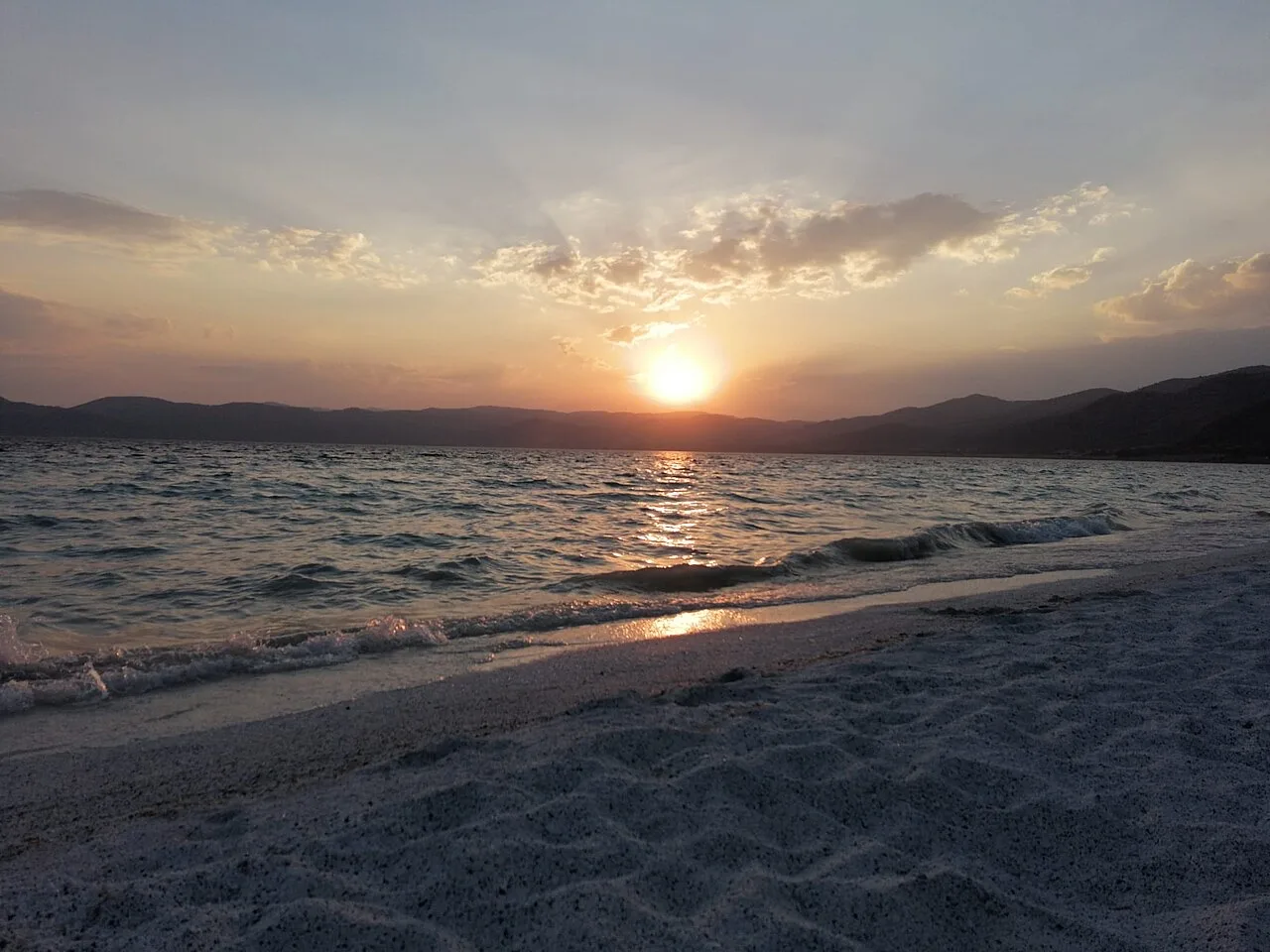
Salda in Yeşilova is known for its pale shoreline and lakeside setting, but a natural surface is not a beach accessory. Following designated visitor boundaries, leaving deposits in place and avoiding sensitive ground for a photograph belong to the visit itself. Promotional comparisons with beaches in another country do not establish that the same swimming or parking arrangements apply here.
Lake Burdur, Salda and Yarışlı are separate water bodies. Levels, season and observation position change the landscape and birds that can be seen. Do not promise a particular species or the shoreline shown in an old photograph. Separate city museums from a lake day to leave time for both history and environmental observation. Salda Ski Centre has its own seasonal and operating conditions; reaching the lake with the same name does not establish that ski runs are open.
Choose the visit that fits your question
Public squares
Study the relationship between agoras, fountain and baths at Sagalassos.
Spaces for gatherings
Compare Kibyra’s stadium, theatre and council building.
Museum connection
Use Burdur’s collection to extend what you observed at the sites.
Visual exploration before you travel
Burdur · official archive introduction (2016)
Compare the province’s historic and natural settings; archive footage does not guarantee present access or services.
Kültür ve Turizm Bakanlığı WebTV · Watch the official publication ↗
Practical questions before your visit
Is Burdur worth visiting only for its two best-known ancient cities?
No. City museums, mansions such as Taş Oda, Teke music and weaving provide different reasons to visit. District archaeological sites do not have to be squeezed automatically into a city programme.
Can I understand sipsi making or İbecik cloth entirely in the city centre?
A display or shop may offer examples, but ask where a product originated and where its maker works if you want to understand production in its setting. Relevant districts and villages need separate transport.
May I walk onto every Salda shoreline shown in photographs?
No. A photograph records a past moment, not permission. Current conservation boundaries and marked routes apply. Leave shoreline material in place and keep vehicles off sensitive surfaces.
Sources and scope of this guide
These primary sources support the historical and heritage background. Comparisons and suggested ways to organise a visit are Atlas editorial analysis, not instructions from the source institutions.