
← Back to History of the Republic
Organization · a new centre
The Representative Committee in Ankara
The arrival in Ankara came years before the capital decision. The city first became a centre of communications, politics and logistics, and later the seat of the Assembly and new state.
27 December 1919Ankara
At a glance
- Arrival
- 27 December 1919
- Delegation
- Representative Committee
- First headquarters
- Agricultural School
- Became capital
- 13 October 1923

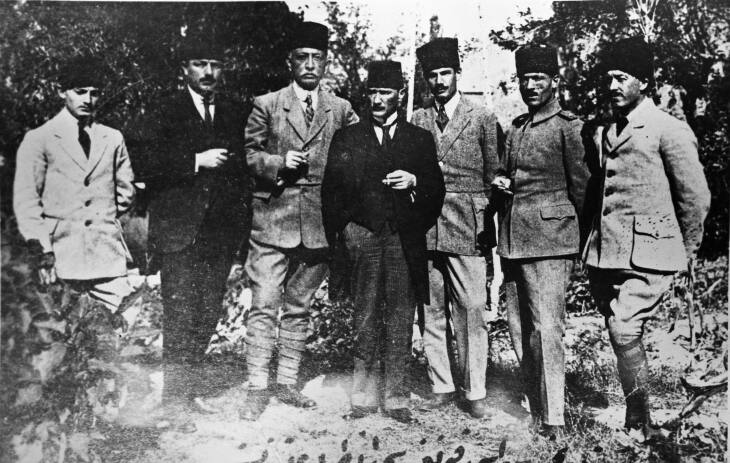
Fotoğrafçı bilinmiyor / Wikimedia Commons · Visual record and provenance ↗ · Public domain ↗ · Open the full-size visual ↗
From an arrival to a working centre
Mustafa Kemal and the Representative Committee arrived in Ankara on 27 December 1919, beginning another stage in the organisation of the national movement. The Erzurum and Sivas congresses had established a claim to representation. That claim now needed a working centre capable of maintaining contact with different regions. Moving to Ankara did not replace the congress programme: it provided a base for communications, political meetings and organisational work. Geography mattered, but so did local support and existing transport connections. The Republic had not yet been proclaimed, and the formal decision making Ankara the capital would not come until 1923. Keeping these distinctions clear prevents the later capital from being projected backwards into every earlier event.
↑ Back to dossier contentsRailways, telegraph lines and western connections
Being near the middle of a map was not enough to make a city a useful headquarters. The speed of incoming information, the routes available to representatives and communication with the western theatre all affected the choice. Ankara's railway and telegraph connections helped the movement follow developments in western Anatolia and remain in contact with Istanbul. Military and political functions were closely connected: a report from the front could influence resource allocation, negotiations and relations with local organisations. A headquarters was therefore not simply a place issuing instructions. It also collected information and compared competing assessments. Ankara's selection offers a concrete example of how infrastructure and location could increase the practical capacity to govern.
↑ Back to dossier contentsLocal backing and everyday organisation
The public welcome made local support visible, but establishing a lasting headquarters required more than a ceremony. The Agricultural School, where the Representative Committee initially worked, recalls the modest facilities and practical arrangements of this period. Accommodation, meetings, correspondence and communications formed parts of the same daily operation. Local officials, civilian supporters, military personnel and communications workers contributed in different ways. Ankara's importance cannot therefore be reduced to one leader choosing a city. The social support that made the choice workable was also significant. Its later identity as a capital grew from this experience; imagining the Ankara of 1919 through the extensive government buildings of later decades obscures the limited resources with which the early organisation operated.
↑ Back to dossier contentsThe relationship with the Istanbul parliament
The arrival in Ankara did not immediately end political engagement with Istanbul. In early 1920, the opening of the last Ottoman Chamber of Deputies and the expression of national demands there still mattered. Ankara served as a place for meetings with deputies and for following parliamentary developments. The formal occupation of Istanbul in March, arrests of deputies and the end of the Chamber's activity transformed this situation. Representation now required more than maintaining contact with an existing parliament: a new assembly had to be convened somewhere it could operate. Ankara's communications and organisational role helped prepare the practical foundations for that change. This was a developing response to events, not proof that every institutional detail had been fixed in advance.
↑ Back to dossier contentsThree thresholds: 1919, 1920 and 1923
Three dates in Ankara's history answer different questions. The Representative Committee arrived on 27 December 1919; the Grand National Assembly opened on 23 April 1920; and Ankara was formally designated the capital on 13 October 1923. The first concerns an organisational centre, the second a parliamentary expression of sovereignty, and the third a lasting choice for the state's seat of government. Together they show how political importance acquired institutional form over time. Reading Ankara only through its capital status overlooks its earlier experience of wartime representation and administration. Considering the first Assembly building, the Agricultural School and the communications network together reveals both the movement's major decisions and the everyday working arrangements that made those decisions possible.
↑ Back to dossier contentsArchive note
Archive images for wider context

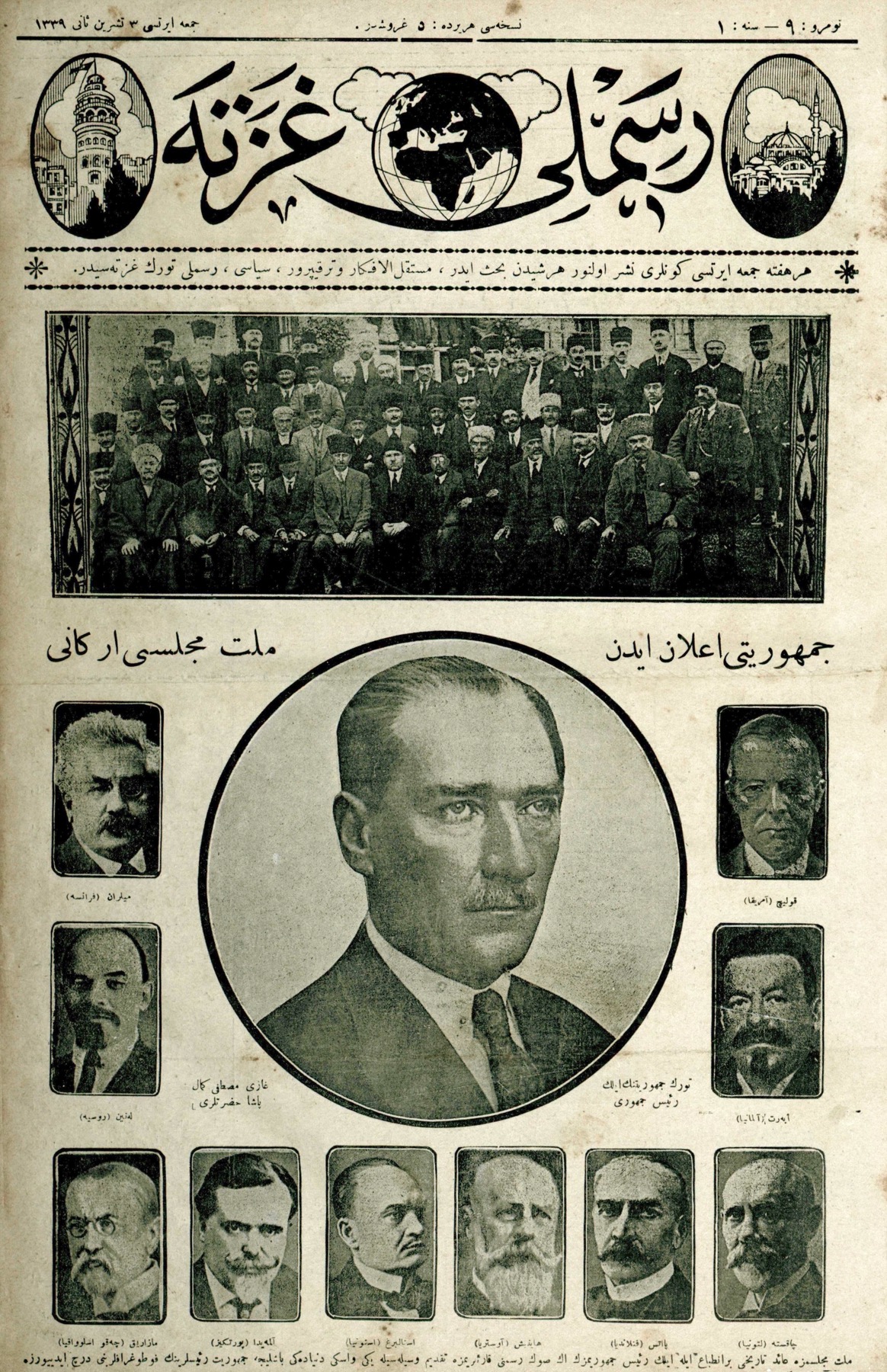
Cumhuriyet Atlas
Continue the story here
21—22 June 1919
The Amasya Circular
The programme that joined national sovereignty to the call for a general congress at Sivas.
Explore →
23 July—7 August 1919
The Erzurum Congress
A congress convened for the eastern provinces developed into a programme of national independence.
Explore →
19 May 1919
Arrival in Samsun
An official inspectorate assignment opened into the political organization of resistance in Anatolia.
Explore →Documents and sources3 sources
Official reference points used to verify the chronology and interpretive frame on this page.
- Mustafa Kemal Pasha's arrival in Ankara ↗Atatürk Ansiklopedisi
27 December 1919 and the Representative Committee's working centre.
- Chronology of 1919 ↗KÜLTÜR VE TURİZM BAKANLIĞI
Chronological sequence from Samsun through the congresses to Ankara.
- Chronology of 1920 ↗Kültür ve Turizm Bakanlığı
Dates of the occupation, assembly call and institutional decisions in Ankara.