

← Back to History of the Republic
Fotoğrafçı bilinmiyor / Wikimedia Commons · Public domain ↗ Campaigns · second defence
Second Battle of İnönü
As the London Conference ended without agreement, a new Greek offensive pressed toward Eskişehir and Afyon. Defence at İnönü became a second demonstration of Ankara’s military resilience.
23 March—1 April 1921İnönü · Eskişehir and Dumlupınar sector
Mustafa Kemal Pasha and Western Front commander İsmet Pasha after the Second Battle of İnönü.
At a glance
- Began
- 23 March 1921
- Concluded
- 1 April 1921
- Commander
- İsmet Pasha
- Front
- Western Front
Not simply a repeat of January
Second İnönü shared a place name with the January engagement, not identical circumstances. Ankara's army developed its organisation during the intervening weeks, while the Greek side prepared another offensive. London's failure to produce peace shows armed struggle continuing alongside political objectives. Following the opponent's response after a defensive success prevents chronology from becoming a list of only one army's actions.
The Ministry of National Defence uses 23 March–1 April for the broader operation, including advance and withdrawal. Narrower ranges such as 26–31 March can focus on the principal fighting around prepared positions. This page retains the broad range while distinguishing its phases. A difference in dates should prompt a question about scope, not an automatic assertion that accounts contradict the existence of the battle.
↑ Back to dossier contentsNorth and south: different situations within one war
The offensive placed pressure along the Bursa–Eskişehir and Uşak–Afyon axes. İnönü's positions mattered in the north; Dumlupınar and Afyon were important in the south. These directions need to be separated on a map. Success in the northern sector does not mean every southern unit achieved an identical result at the same moment. Concentrating limited forces in one place did not erase requirements elsewhere.
Before reaching the main İnönü positions, Greek troops spent time fighting covering forces. Such formations need not hold each point indefinitely: gaining time for the principal defence can also be their task. This distinction prevents movement during the approach phase from being mistaken for the engagement's final result. A unit's responsibilities cannot be reconstructed merely from its last position on a map.
↑ Back to dossier contentsMetristepe and reinforcements: the outcome remained open
Metristepe and Kanlısırt became critical during the heavy fighting late in March. Greek progress on these heights contradicts any impression of an effortless victory already secured. Command had to respond to changing threats until the outcome was settled. The loss of one position did not establish the collapse of the whole front; its recovery would not alone end the war either.
Refet Pasha's biography highlights reinforcements associated with the Southern Front and the Assembly Guard Battalion. Timely use of fresh troops is a different issue from a headline manpower total: a rested formation beside exhausted units can change available options. The withdrawal reported on 1 April needs to be understood against that preceding uncertainty and endurance, not treated as a result guaranteed from the beginning.
↑ Back to dossier contentsA name behind the front: Ali Hikmet Ayerdem
Ali Hikmet Bey was appointed to command the prepared İnönü position on 10 March 1921. During Second İnönü, his duties as acting Western Front commander included rear-area administration and supply. This detail gives substance to work usually hidden by accounts centred only on the best-known commanders at combat positions. Meeting a formation's needs and maintaining order behind it were also part of defence.
Communications and reconnaissance deserve attention too. Aircraft observations helped headquarters obtain information on movement and withdrawal, but this was not modern continuous surveillance. Flying, maintenance, weather and transmission could create gaps. Judging an earlier decision solely by the complete picture known afterwards obscures the limitations under which it was made.
↑ Back to dossier contentsA congratulatory telegram and political morale
Mustafa Kemal's message to İsmet Pasha on 1 April interpreted the victory in terms of the nation's future. A political message and an operational report perform different tasks: one gives meaning to an achievement and strengthens morale, while the other reports units' circumstances and movement. History becomes clearer by considering both without making either a substitute for the other.
For civilians, continuing uncertainty mattered alongside improved morale. Households, local resources and urban security had not entered a settled peace. Explaining the public effect of victory news does not imply that every difficulty vanished that day. No undocumented family anecdote or aggregate casualty total is added here; social history requires its own records and testimony.
↑ Back to dossier contentsWhy Kütahya–Eskişehir belongs next
The İnönü success must not replace the subsequent Aslıhanlar–Dumlupınar fighting in the south. Bringing forces under İsmet Pasha after the Southern Front's abolition shows that organisational change continued. The defeats at Kütahya–Eskişehir in July do not make March's victory unreal: a new test occurred at another time, with changed forces and operational circumstances.
A mature chronology records victories and withdrawals honestly within the same history. Second İnönü demonstrated the regular army's endurance; Sakarya posed a different defensive problem after July's crisis. Making that connection clarifies Mustafa Kemal's coordination from Ankara and İsmet Pasha's field responsibilities without losing the collective labour of soldiers and support personnel.
↑ Back to dossier contentsRead the turning points together
- 10 March 1921
Rear-area preparation
Ali Hikmet Bey's appointment illustrates the separate work involved in supply and a prepared defence.
- 23 March 1921
An advance along two axes
Movement towards Eskişehir and Afyon opened the broad operational phase.
- 26–31 March 1921
Fighting at the positions
The concentrated İnönü fighting forms the core covered by narrower battle date ranges.
- 1 April 1921
Withdrawal and congratulations
The northern Greek withdrawal was followed by İsmet Pasha's report and Mustafa Kemal's message.
- Spring–July 1921
The war continued
Southern operations, command changes and Kütahya–Eskişehir place this victory within an unfinished struggle.
Explore the archive and documentary context
TRT Arşiv
İsmet İnönü · commander on the Western Front
An archive programme about the commander's War of Independence years, not a continuous live record of March 1921. Distinguish the original images from a narrative assembled afterwards.
Choosing to load the player connects to YouTube and shares technical data such as your IP address with Google. Autoplay is off. This choice does not change your cookie preferences. The publisher may restrict regional access or embedding; the official link below provides an alternative.
Supported YouTube publications can be watched here by choosing to load their player. Videos are not copied onto our server. Interpret archive images alongside their production date and the narrator’s perspective; the official publication link remains as an alternative.
Questions and historical distinctions
Why do accounts give different opening dates?
A broad range can include advance, approach and withdrawal, while a narrower range concerns the main fighting at the positions. Establish which phase the source names before comparing dates. The general range used here is 23 March–1 April.
Is this Dumlupınar the victory of August 1922?
No. Different engagements occurred in the same area in different years. Southern operations in spring 1921 must not be confused with the Great Offensive and the Commander-in-Chief Battle in 1922. A place name is not exclusive to one historical event.
Was Mustafa Kemal the field commander here?
İsmet Pasha held tactical Western Front command. Mustafa Kemal's responsibilities concerned political and military coordination through Ankara and the Assembly. This distinction explains complementary duties within one struggle rather than turning their contributions into a competition.
Archive note
Archive images for wider context


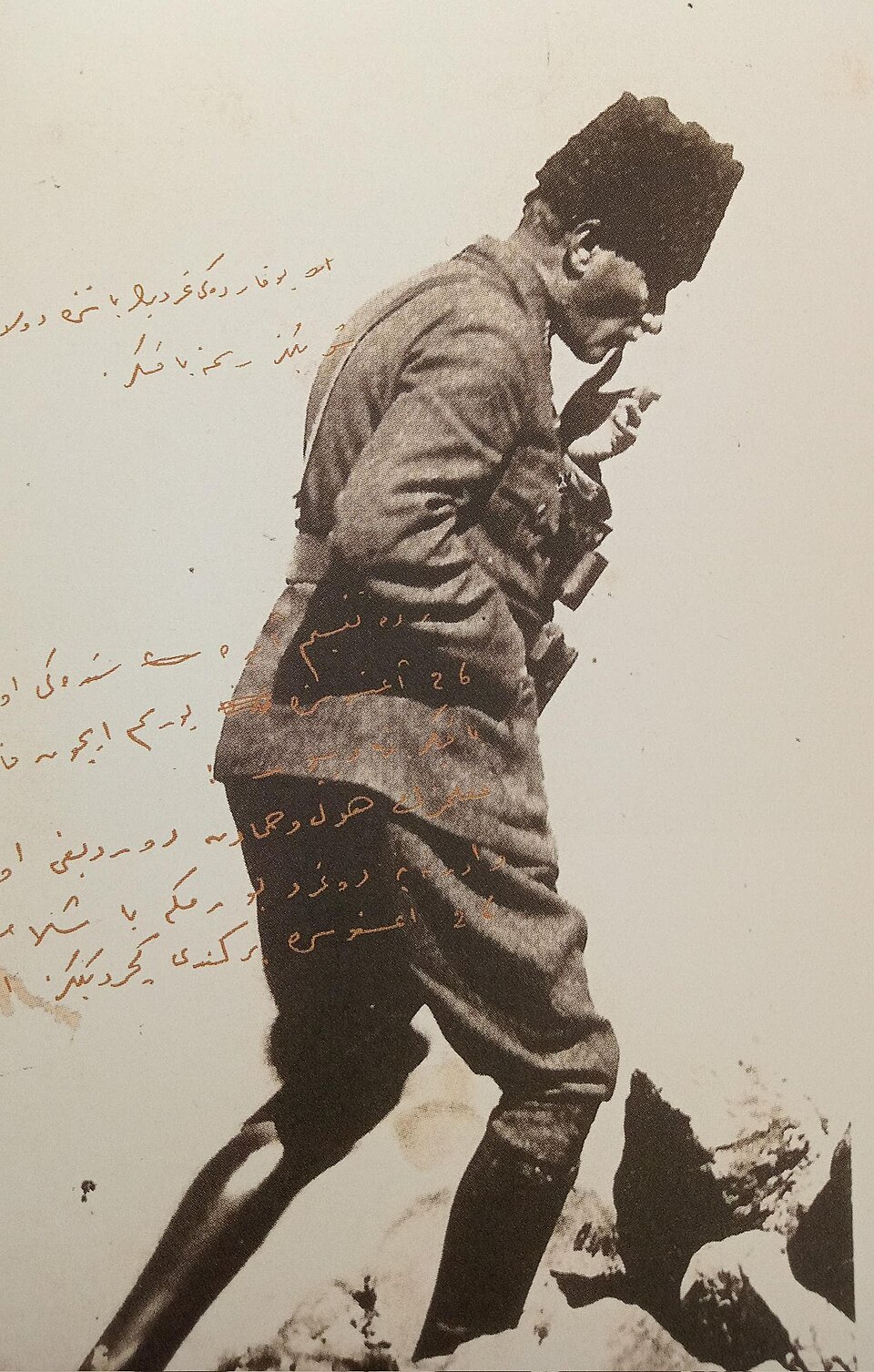
Cumhuriyet Atlas
Continue the story here
6—11 January 1921
First Battle of İnönü
The newly formed regular army’s first major test on the Western Front.
Explore →
10–24 July 1921 · redeployment on 25 July
Kütahya–Eskişehir: defeat, withdrawal and rebuilding
The essential chapter between İnönü and Sakarya: lost cities, the decision of 18 July, the counterattack of 21 July and Parliament’s efforts to rebuild the capacity to fight.
Explore →
23 August—13 September 1921
The Battle of Sakarya
A twenty-two-day-and-night defence halted the advance toward Ankara.
Explore →Documents and sources8 sources
Official reference points used to verify the chronology and interpretive frame on this page.
- The Battles of İnönü ↗Atatürk Ansiklopedisi
Phases of both battles and their regular-army context.
- Military History Documents Journal 91 ↗Millî Savunma Bakanlığı
Military archival documents relating to the İnönü operations.
- Chronology of 1921 ↗Kültür ve Turizm Bakanlığı
Chronology of battles, parliamentary work and diplomacy.
- MSB · İkinci İnönü, hava harekâtı ve Batı Cephesi ↗ata.msb.gov.tr
- ATAM · Ali Hikmet Ayerdem: cephe gerisi ve ikmal ↗ataturkansiklopedisi.gov.tr
- ATAM · Refet Bele: takviye ve Güney Cephesi ↗ataturkansiklopedisi.gov.tr
- ATAM · Kütahya–Eskişehir Muharebeleri ↗ataturkansiklopedisi.gov.tr
- MSB · Askerî Tarih Belgeleri Dergisi: Sayı 149, İnönü belgeleri ↗www.msb.gov.tr