
← Back to History of the Republic
Hibrideacus / Wikimedia Commons · CC BY-SA 4.0 ↗ Athlete dossier · goalball
Sevda Altunoluk: three Games, three goalball golds
Goalball is a team sport designed for athletes with vision impairment, combining sound and spatial orientation at elite speed. Sevda Altunoluk’s cross-court and bouncing throws sat at the centre of Türkiye’s three-Games title run.
Rio 2016—Paris 2024Türkiye · world
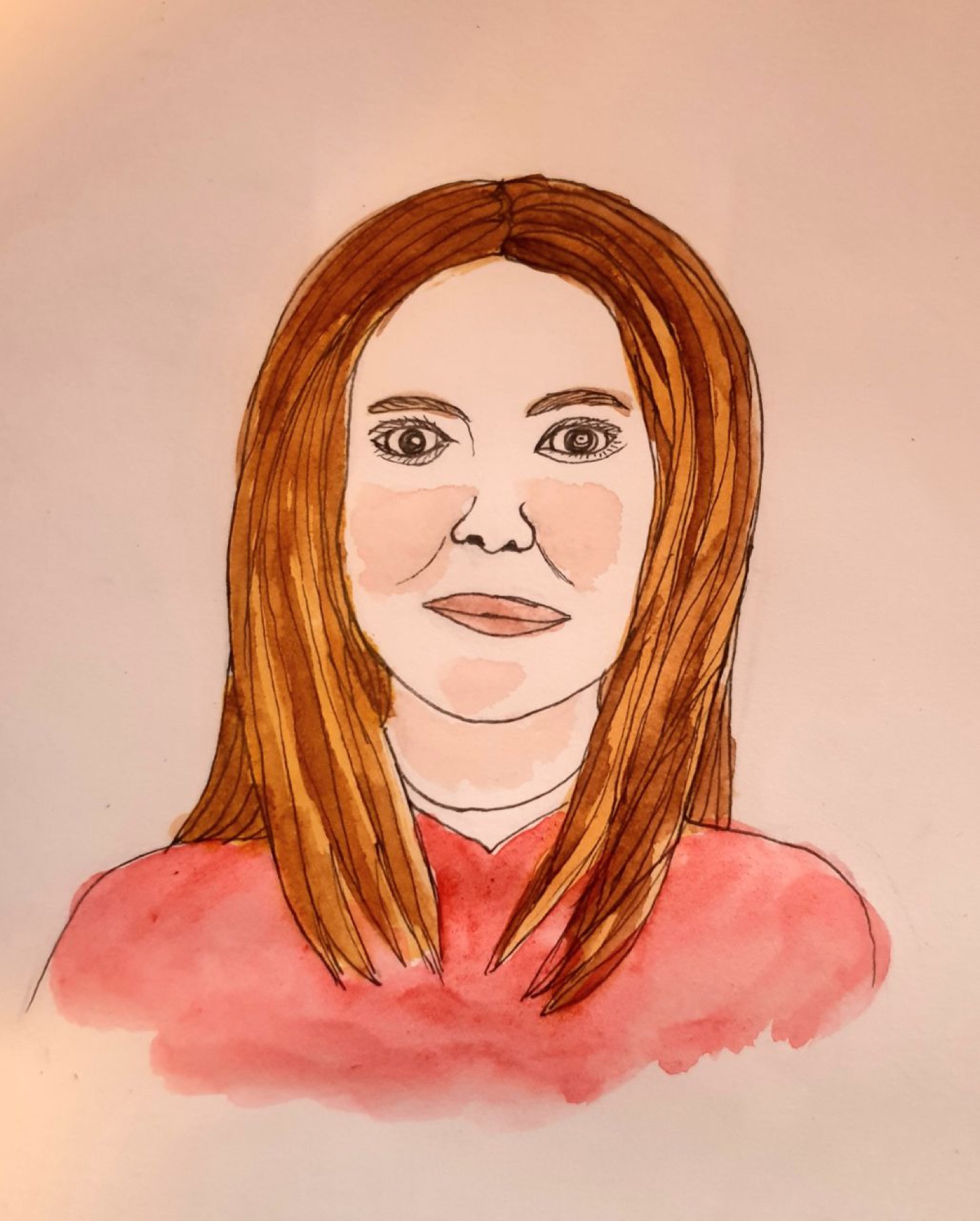
Portrait of Sevda Altunoluk; watercolour illustration, 2023.
At a glance
- Paralympic golds
- 3
- Rio 2016
- 36 goals
- Paris final
- Türkiye 8–3
- Role
- Attack + defence
An athlete at the centre of goalball
Sevda Altunoluk connects generations within the international success of Türkiye's women's goalball team. Developed for athletes with vision impairment, goalball combines following the ball's sound with protecting a shared defensive area. Understanding Altunoluk requires more than counting goals: sound, timing and team position interact throughout a match. Attackers change speed and direction while defenders try to close the spaces between them. Spectator silence is also a practical element because hearing the ball makes decisions possible. Watching goalball therefore involves a different form of audience participation from the continuous noise associated with many other indoor sports, and that difference is central rather than incidental.
↑ Back to dossier contentsRio 2016 and an important attacking role
Türkiye's women won their first Paralympic goalball gold at Rio 2016. Altunoluk finished with thirty-six goals, including three in the 4–1 final victory against China. Those figures establish her attacking importance, but a scorer's biography should not erase defence and team preparation. Winning the ball, delivering it securely for an attack and resetting after the throw belong to one continuous cycle. Recognising which areas an opponent protects also affects the next decision. Rio matters both as a first title for Türkiye and as a clearly identifiable beginning from which to follow the later championship chapters of Altunoluk's own international career.
↑ Back to dossier contentsTokyo and Paris: continuity inside changing squads
Türkiye retained its title at Tokyo 2020 and won a third gold at Paris 2024 by defeating Israel 8–3. Altunoluk appeared in all three championship squads. Her biography therefore shows that a consistent team name can contain changing personnel while some experience continues across cycles. The years between titles are not simply waiting periods: other tournaments, new opponents and changing roles intervene. Having won before does not automatically secure another final. Defence, attacking choices and communication under pressure have to be rebuilt for each competition. The sporting significance of the three golds lies in that repeatedly established level of competition, not merely in the repetition of a ceremony.
↑ Back to dossier contentsMore than the power of a throw
Power matters in goalball, but the ball's path and arrival time also shape the outcome. A flatter or bouncing delivery asks defenders to solve different timing and positioning problems. Varying an established rhythm can reduce the time available for an opponent's decision. In Altunoluk's footage, watch where an attack begins and whether its line is repeated or changed in the next possession. Her return to defence belongs to the same portrait. If attack and recovery become disconnected, a strong throw can still be followed by an exposed space. Goals are therefore the visible outcome of a wider tactical dialogue rather than an isolated measurement of throwing strength.
↑ Back to dossier contentsSeeing the whole team around one player
A dedicated Altunoluk biography should not push her teammates into the background. Her sister Sevtap also belonged to the Tokyo and Paris championship squads, connecting a family story with specific sporting roles. Every team member still deserves recognition for their own defensive and offensive responsibility. Goalball belongs in Türkiye's atlas as a central internationally competitive team sport, not an unusual curiosity at its margins. Listening to the ball while following defensive coverage and attacking decisions makes Altunoluk's achievement more intelligible. Her three medals then become more than a celebrated aggregate: they describe a distinctive career within a game that readers can learn to understand.
↑ Back to dossier contentsArchive note
Archive images for wider context

Portrait of Sevda Altunoluk; watercolour illustration, 2023. Hibrideacus / Wikimedia Commons · CC BY-SA 4.0
Documents and sources5 sources
Official reference points used to verify the chronology and interpretive frame on this page.
- Sevda Altunoluk athlete profile ↗IPC
Goal-scoring record and the first two Paralympic championship generations.
- A third consecutive goalball gold ↗IPC · PARIS 2024
Official record of the Paris 2024 final and Türkiye roster.
- Introduction to goalball ↗IBSA
Published by IBSA: Introduction to goalball. Supports the relevant results or rules context in this dossier.
- Goalball rulebook 2025 ↗IBSA
Published by IBSA: Goalball rulebook 2025. Supports the relevant results or rules context in this dossier.
- Tokyo 2020 goalball review ↗IPC / IBSA
Published by IPC / IBSA: Tokyo 2020 goalball review. Supports the relevant results or rules context in this dossier.