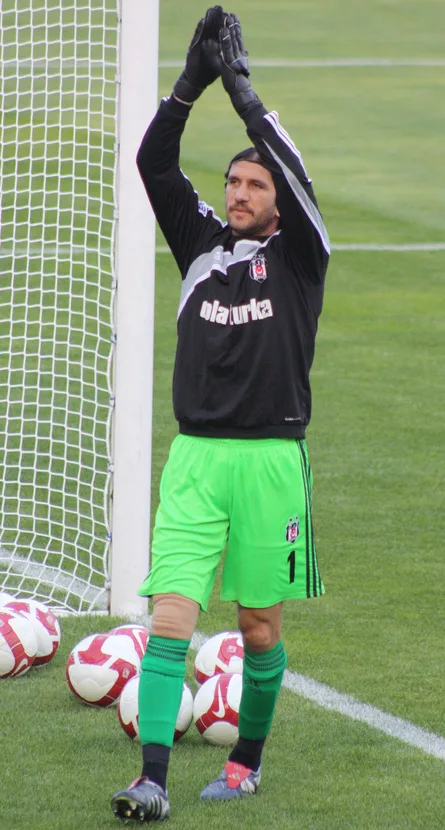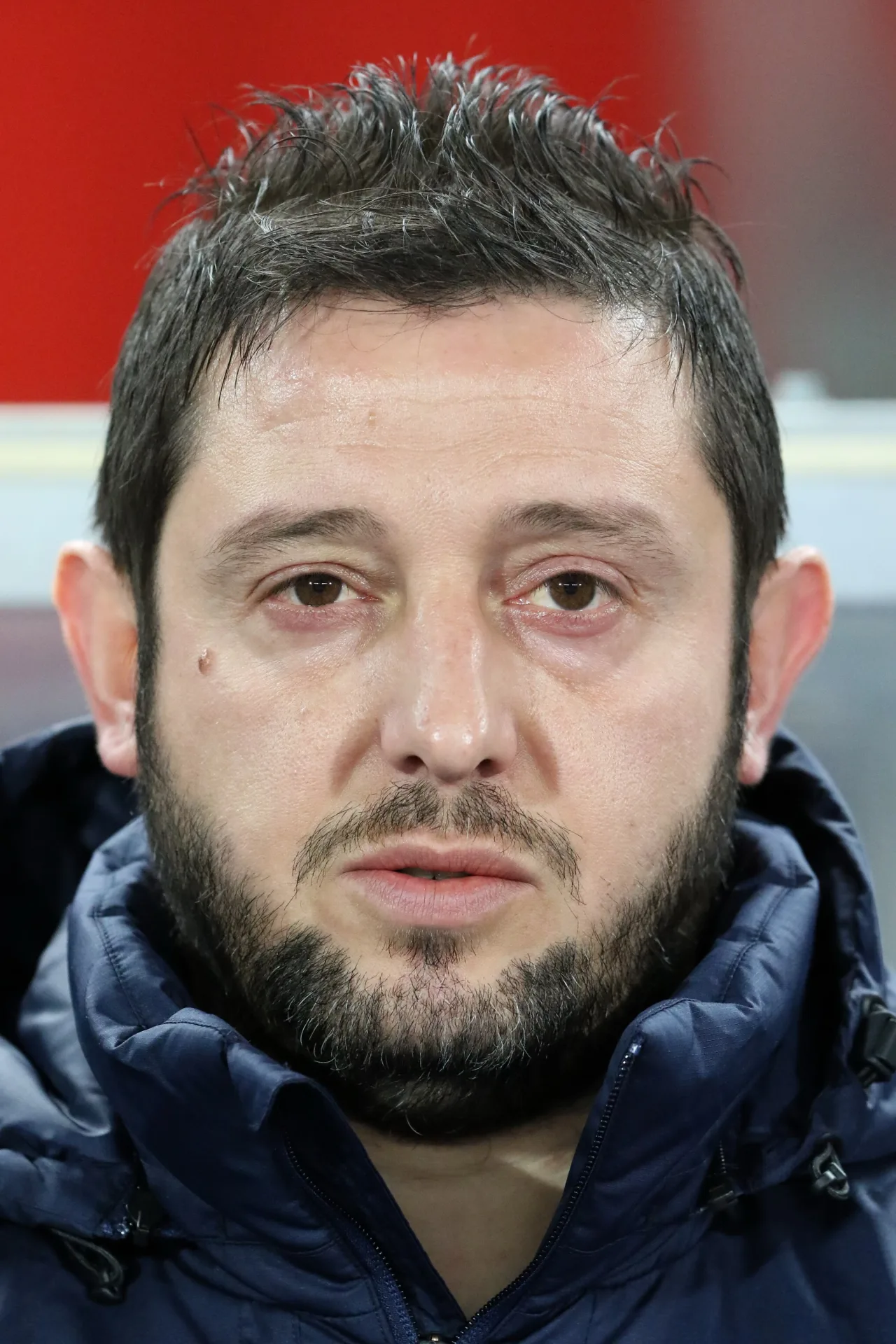
Nihat Kahveci’s career shows a Turkish player establishing himself in Europe as part of an attacking structure, rather than simply appearing in a transfer headline. The Czech Republic match at EURO 2008 remains his most recognisable moment. Understanding it also requires the mobile-forward identity developed across Beşiktaş, Real Sociedad and Villarreal.
- Distinctive role
- Mobile forward
- EURO 2008 encounter
- Türkiye 3–2 Czech Republic · group stage
- Spanish clubs
- Real Sociedad · Villarreal
The journey from Beşiktaş to Spain
Born on 23 November 1979, Nihat became known at Beşiktaş. His January 2002 move to Real Sociedad reunited him with John Toshack, who had previously coached him in Istanbul. The transfer provides a clear boundary between the Turkish and Spanish chapters, without projecting his later fame backwards onto his arrival.
Playing in Spain meant more than entering a prestigious league. Language, training rhythms and different defensive arrangements can change the value of the same movement. Watch Nihat’s contribution before the ball reaches him: a forward’s adaptation concerns space and timing as much as the visible final touch.
Back to contentsReal Sociedad and the value of a partnership
Real Sociedad finished second in the Spanish league in 2002/03. UEFA’s contemporary assessment placed the partnership of Nihat and Darko Kovačević at the centre of the team’s attacking strength. Complementary use of space is a better explanation than treating a successful season as the achievement of one player alone.
One forward may attract defenders while another moves into the space behind them. The timing of that run depends on the speed and position of the pass. Follow the defensive line alongside the teammate carrying the ball; preparation for a goal often begins away from the central action shown by the camera.
Back to contentsVillarreal and returning to Beşiktaş
Villarreal followed the Real Sociedad chapter. UEFA’s 2009/10 handbook records 18 league goals for Villarreal in 2007/08 and a return to Beşiktaş on 27 June 2009. The figure belongs to one league season, not his international record or an aggregate of every competition throughout his career.
Returning to a former club does not reproduce the original period unchanged. Age, expectations and the distribution of attacking responsibilities alter the situation. Reading the first rise and the later return separately avoids applying one measure of success to every season and makes the changing conditions of a career easier to understand.
Back to contents15 June 2008: identifying the comeback correctly
The Geneva encounter was a group match, not a quarter-final. Türkiye recovered from two goals down to beat the Czech Republic 3–2. Nihat equalised in the 87th minute and supplied the winner in the 89th. The result carried Türkiye into the knockout phase; the subsequent Croatia encounter is a separate story.
The goals involved different decisions. The equaliser demanded a quick response to a goalkeeper’s error; the winner required a finishing choice while moving towards goal. Calling the comeback belief alone overlooks the sporting work of exploiting an opening, locating space and executing a skill under exceptional pressure.
Back to contentsReading a career beyond one famous clip
Begin with the development environment at Beşiktaş, continue through the Real Sociedad partnership, then examine the national side’s tournament circumstances. One player can fulfil different functions in different squads. This route separates club performance from the few weeks of an international tournament and produces a more balanced portrait.
Official highlights show decisive moments, not an entire season’s tactical archive. Compare the direction of the run, the first touch and the defender’s distance. Continue to Rüştü Reçber to remember that EURO 2008 belonged to a group working in different roles, not only to the players who scored the goals.
Back to contentsA timeline of life, work and history
- 1979
Birth
Nihat Kahveci was born on 23 November; Beşiktaş became the first major club chapter of his career.
- 2002–2003
The Real Sociedad breakthrough
His January 2002 transfer was followed by second place in the Spanish league in 2002/03.
- 2008
Two goals in Geneva
Goals in the 87th and 89th minutes on 15 June completed a 3–2 victory over the Czech Republic.
- 2009
Returning to Beşiktaş
UEFA’s handbook dates his return after the Spanish years to 27 June.
Watch and listen: a visual reading path
Use this selection alongside the analysis above. Supported YouTube publications can be watched on this page after you choose to load their player. The publisher’s rights and availability conditions apply; the player does not load or start automatically. Official publication links remain available as an alternative.
UEFA
EURO 2008: Türkiye 3–2 Czech Republic
Watch Nihat’s two goals and the comeback sequence through UEFA’s official match footage.
Watch the official publication ↗Questions and explanations
Was the Czech Republic match a quarter-final?
No. It was a EURO 2008 group match. Türkiye’s subsequent encounter with Croatia was the quarter-final; the two comeback stories must remain distinct.
Is 18 goals a career total?
No. It is UEFA’s figure for Villarreal’s 2007/08 Spanish league season. Goals from different teams and competitions are not interchangeable statistics.
What should a viewer watch in Nihat’s game?
The timing of runs and movement behind the defence before the shot. Following the ball carrier too explains why a particular run becomes useful at that moment.
Sources, image rights and research method
This is original explanatory and analytical writing informed by the sources below. AI assisted research and drafting. Awards for people, teams and institutions are distinguished; dated results are not current rankings. Media links do not claim a licence to republish a video here. Use the publisher’s correction process if a fact is wrong.
- UEFA · Nihat to seal Real deal, 2002 ↗ Source check: 2026-10-03
- UEFA · Real Sociedad’s 2002/03 partnership ↗ Source check: 2026-10-03
- UEFA · Türkiye–Czech Republic, EURO 2008 ↗ Source check: 2026-10-03
- UEFA · 2009/10 club statistics handbook ↗ Source check: 2026-10-03