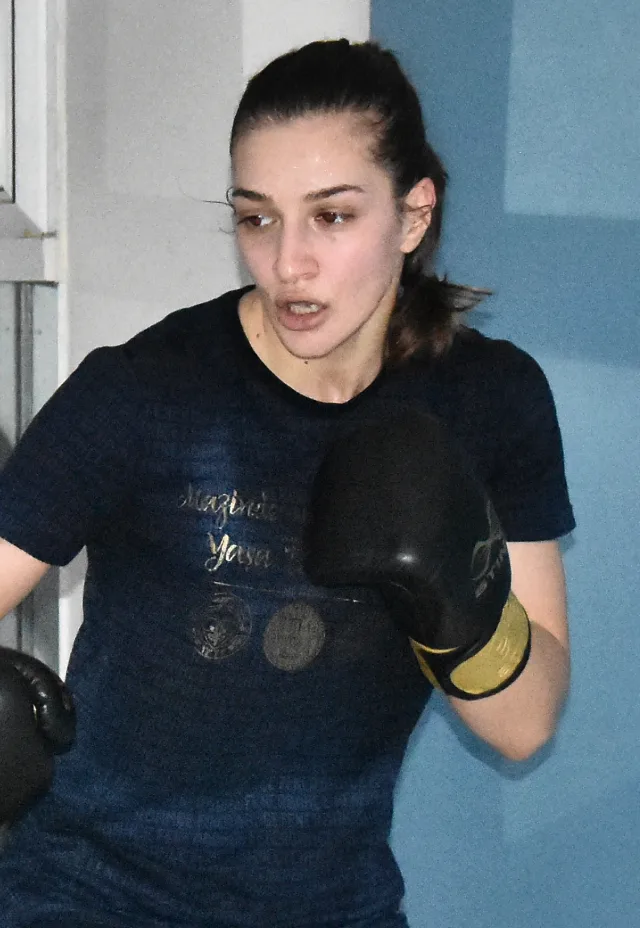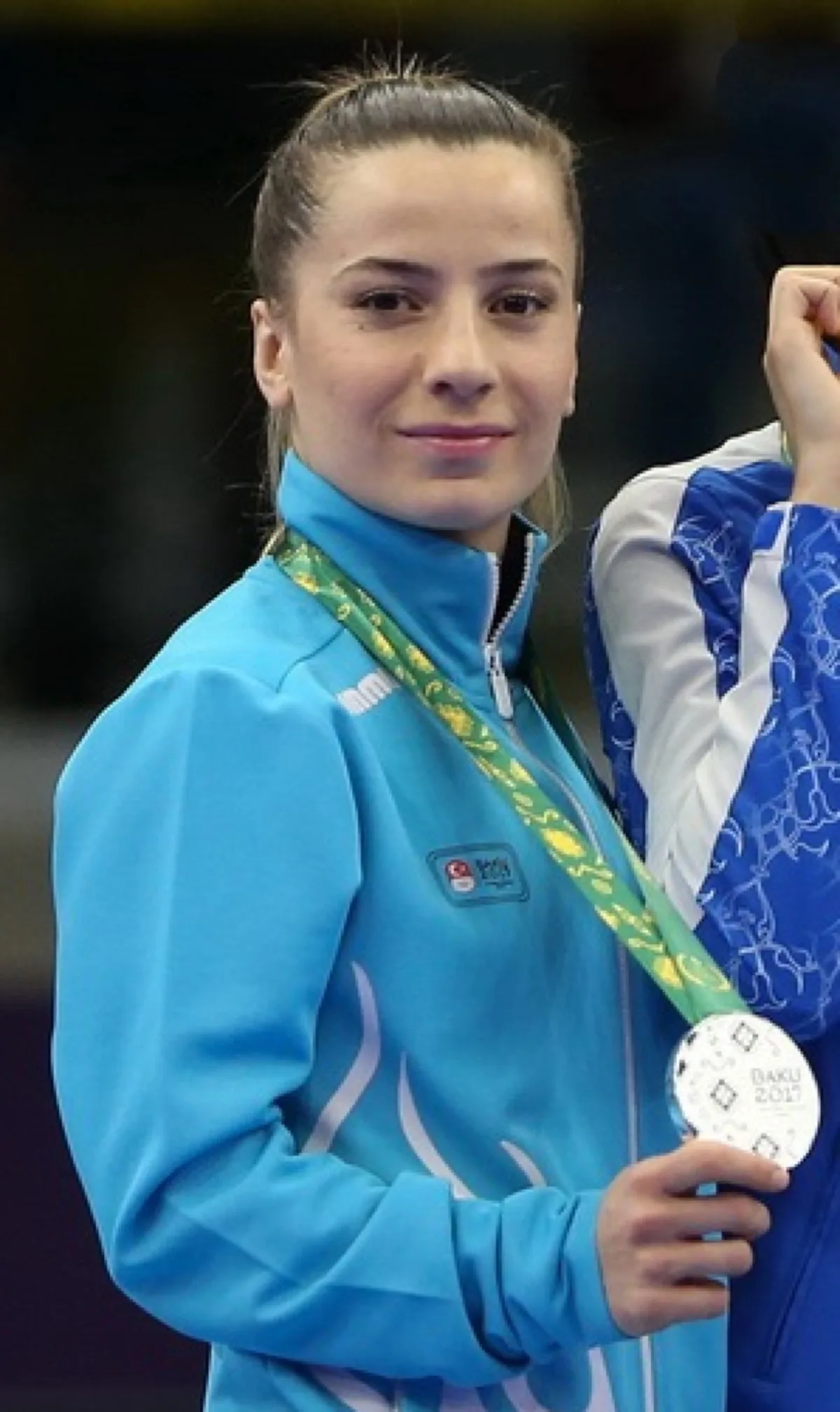
Serap Özçelik Arapoğlu's career cannot be reduced to the closing seconds of one final. Born in 1988, she carried results in younger age groups into senior world and European competition. Her physical-education studies and teaching experience also offer a way to understand sport as a process of learning. This profile introduces karate through controlled technique, distance, competition categories and long-term development rather than through an indistinct image of combat.
- Discipline
- Karate · kumite
- Senior world gold
- Bremen 2014 · women's 50kg
- Senior world silver
- Madrid 2018 · women's 50kg
- Education
- Physical education at Celal Bayar University, completed in 2010
From İstanbul to national competition
The Turkish Karate Federation's interview gives her birth date as 18 February 1988 and her birthplace as İstanbul. In her first-person TÜBİTAK interview in 2019, she explained that she began karate in 2000 and became a national athlete in 2005. That interval matters: her success should not be portrayed as a finished talent present from the outset. Learning technique, becoming accustomed to competition and reviewing mistakes are separate parts of development.
The same interview records her completion of physical-education studies at Celal Bayar University in 2010. Education and international competition need not be competing identities. Performing a movement and explaining it to another person require different skills. Her account of teaching brings that second dimension into view. The employment details belong to the dated interview and are not extended into an assertion about her current institution or role.
Back to contentsFrom junior champion to senior world gold
WKF's results record her 2007 junior world title at 53kg and her 2014 senior world title at 50kg. These were different age groups and categories. Junior success does not guarantee victory in later finals: moving into senior competition introduces other opponents and different decision-making problems. An important feature of her career is remaining internationally competitive through that transition rather than being remembered only for an early medal.
Bremen 2014 gold and Madrid 2018 silver are separate world-championship outcomes in women's 50kg kumite. Silver should neither disappear under a failure label nor be rewritten as gold. Reaching the final in both periods is significant in its own right. Opponents, paths through the draw and form on the day vary. A results table cannot explain all those factors, but it establishes which medal belongs to which event.
Back to contentsEuropean titles and a season award
The official WKF record includes senior European titles in 2011, 2012, 2014 and 2018. Returning to the top of a continental championship in different years indicates a longer competitive pattern than a single breakthrough. These dated results should not be mistaken for a live world ranking, which changes as participation and points are renewed. Historical achievement and present competitive position answer different questions.
İstanbul's youth-and-sport authority records her 2017 Premier League Grand Winner award. This recognises success across a series season, not a world-championship title at one event. The official video of the 2019 Shanghai bout also belongs to the Premier League. Keeping these contexts visible allows readers to follow European championships, world championships and series stops without combining everything into one unexplained medal total.
Back to contentsWatching kumite: control, distance and decisions
The medals discussed here belong to kumite, competition against an opponent, rather than kata performance. WKF's 2026 rules emphasise control, timing and appropriate distance in scoring technique. The hardest contact is therefore not automatically the best action. When considering a move on screen, follow the referee's interruption, the score display and the rules applicable at the date of that contest, not simply the most dramatic-looking impact.
Watch the Shanghai video at normal speed first, then revisit one short exchange. Look beyond hands to the distance between athletes, the moment of approach and the return to a safe position after an attack. This is a suggestion for understanding a broadcast, not a combat lesson to practise at home. One short sequence cannot describe a player's entire style; longer contests are needed to distinguish repeated choices from an isolated moment.
Back to contentsThe educational dimension of a champion's career
In the 2019 interview she discusses technical, tactical, strength and conditioning work together. A dated description of elite preparation is not a training prescription for every reader. A more useful lesson is that progress does not consist solely of repeating one movement. Competition experience, constructive feedback and properly supported planning complement one another. This profile provides neither a personal medical plan nor a nutrition programme.
Reading her story alongside Servet Tazegül's taekwondo and Buse Naz Çakıroğlu's boxing highlights the separate rule languages of three combat sports. Similar protective equipment or a shared word such as tatami does not make them the same discipline. Özçelik's distinctive place is sustained achievement in karate kumite across several international settings. Including study, teaching and competition reveals the work of learning behind the medals rather than treating the podium as the whole biography.
Back to contentsA timeline of life, work and history
- 1988
Birth in İstanbul
The federation interview records 18 February 1988 as her birth date.
- 2000–2005
Starting karate and reaching the national team
Her 2019 interview dates her beginnings to 2000 and national-team entry to 2005.
- 2007
Junior world title
Won junior women's 53kg kumite gold at the world event in Türkiye.
- 2014
World gold in Bremen
Became senior world champion in women's 50kg kumite.
- 2017
Premier League season recognition
The Grand Winner award recognised a series season rather than a single championship.
- 2018
European gold and world silver
After a continental title, she finished second at 50kg in the Madrid world championship.
Watch and listen: a visual reading path
Use this selection alongside the analysis above. Supported YouTube publications can be watched on this page after you choose to load their player. The publisher’s rights and availability conditions apply; the player does not load or start automatically. Official publication links remain available as an alternative.
World Karate Federation
Shanghai 2019: Alexandra Recchia versus Serap Özçelik
WKF's selection from the 2019 Premier League helps viewers follow distance, attack timing and controlled technique. Published in 2020, this film is neither the 2014 world final nor an explanation of the 2026 rules.
Choosing to load the player connects to YouTube and shares technical data such as your IP address with Google. Autoplay is off. This choice does not change your cookie preferences. The publisher may restrict regional access or embedding; the official link below provides an alternative.
Questions and explanations
Are kumite and kata the same event?
No. Kumite is a contest between two athletes; kata is a performance of a structured technical sequence. The titles identified here are in women's kumite categories. Kata footage should not be presented as an archive of the bouts in which she won these medals.
Does Grand Winner mean world champion?
It is a Premier League series-season award. World and European championships are separate competitions. All are meaningful achievements, but naming the date and organisation explains exactly which competitive challenge was won.
Why does every contact in the film not score?
Kumite is not simply a contact count; it evaluates controlled, rule-compliant technique. The period's rules, refereeing decision and timing matter. The 2019 bout shown here and the 2026 rules document describe different competitive periods.
Sources, image rights and research method
This is original explanatory and analytical writing informed by the sources below. AI assisted research and drafting. Awards for people, teams and institutions are distinguished; dated results are not current rankings. Media links do not claim a licence to republish a video here. Use the publisher’s correction process if a fact is wrong.
- TÜBİTAK Bilim Genç: Serap Özçelik Arapoğlu ile 2019 birinci el söyleşisi ↗ Source check: 2026-10-03
- WKF Sportdata: Serap Özçelik Arapoğlu resmî turnuva sonuçları ↗ Source check: 2026-10-03
- Türkiye Karate Federasyonu Karate dergisi 5: doğum bilgisi ve 2011 şampiyonluk söyleşisi ↗ Source check: 2026-10-03
- İstanbul Gençlik ve Spor: 2017 Karate 1 Premier League Grand Winner kaydı ↗ Source check: 2026-10-03
- WKF 2026.01 Kumite kuralları, Finlandiya Karate Federasyonu yayını ↗ Source check: 2026-10-03
- World Karate Federation: 2019 Şanghay Premier League Recchia–Özçelik karşılaşması ↗ Source check: 2026-10-03