Ani draws its power from the relationship between widely separated monuments, not from a single spectacular building. The Arpaçay gorge and volcanic plateau shaped both defence and everyday movement. At this archaeological site on the Türkiye–Armenia border, apparently empty ground can be understood as the space of lost streets and neighbourhoods. This guide turns a photographic stop into a walk through urban history without suggesting that every reconstruction or historical interpretation is settled.
- Location
- Kars; plateau beside the Arpaçay gorge
- Visit type
- Extensive outdoor archaeological site
- Reading approach
- Armenian heritage together with subsequent historical layers
A capital with several historical layers
Ani became the capital of the Bagratuni Armenian kingdom in 961. Its churches and urban organisation are important witnesses to that heritage. Seljuk control in 1064 and subsequent Shaddadid rule explain further layers. Armenian, Byzantine, Seljuk and Georgian connections belong in the same historical account: reducing the city to one community or one century obscures its significance.
The Silk Road connection is more useful than a romantic route label. It invites questions about transport, markets, crafts and the revenues that supported a substantial settlement. Compare gates with the lines of movement on the site plan. As you walk between monuments, consider how trade and access influenced the location of activity within the walls.
Back to contentsQuestions to take to the monuments
At the cathedral, begin with the overall volume before looking at entrances and the arrangement of supports. Understanding its place in Armenian architecture offers more than treating it as an anonymous stone silhouette. Changes of religious use also demonstrate that a city building cannot be separated completely from political history.
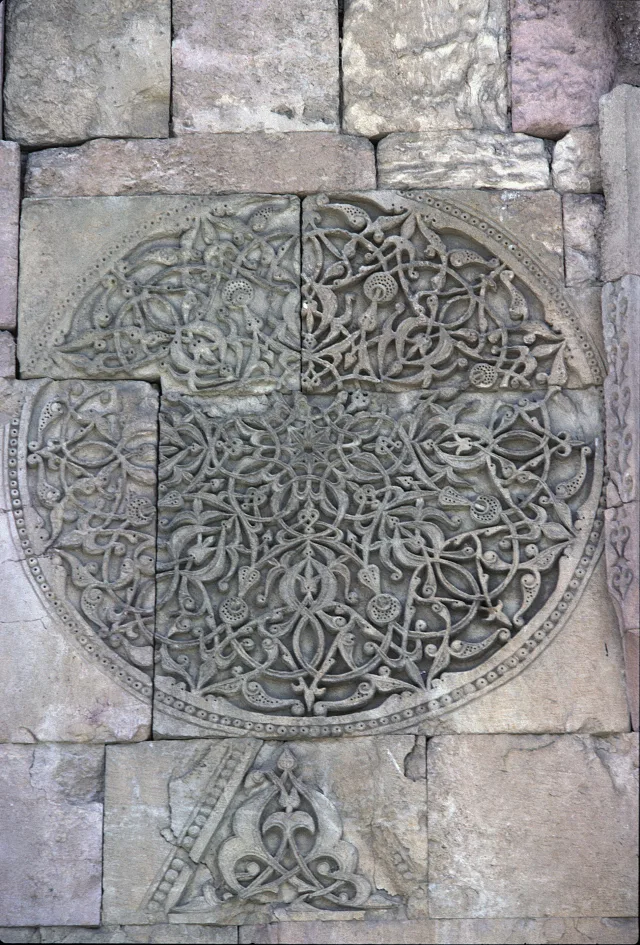
At the Manuçehr Mosque, consider its position above the valley alongside the minaret's role in the urban view. Church and mosque ornament are not interchangeable: read their differences as distinct design choices within a shared environment. Missing roofs, damaged walls and structural supports require present-day safety judgments. An old photograph is evidence of a past appearance, never proof that visitors may enter a particular space today.
Back to contentsA day from Kars: make walking the priority
Organise transport separately from your arrival in Kars. Reading beforehand or visiting the city museum can establish a framework that makes limited time at Ani more rewarding. On arrival, study the overall plan and choose a loop between the walls, main route and principal buildings. Plan your return as carefully as your photographic stops.
For a shorter visit, concentrate on the cathedral, Manuçehr Mosque and walls. With more time, add other religious buildings and traces of settlement. Trying to reach every ruin can turn interpretation into a tiring race. Different groups need different rhythms: an architecture enthusiast may linger at one elevation, while a family may benefit from shorter walking sections with breaks. These are suggested priorities, not an official timed tour.
Back to contentsWeather, exposed ground and access
Ani is not an indoor museum. Wind, sunshine, rain and snow are fundamental planning factors. Check the forecast together with road conditions; prepare water, protective clothing and footwear suited to uneven ground. Do not assume shade, sheltered seating or a level surface beside every monument. A dramatic winter photograph does not make an icy path safe.
Visitors using wheelchairs or unable to walk long distances should ask the operator about the slope, surface and currently open sections of a specific route from the entrance. Historic bus timetables on local websites should not be treated as current services. Looking across the border gorge from an authorised viewpoint is different from leaving visitor paths. Signs, barriers and instructions determine where you may go.
Back to contentsPhotography and the work of conservation
Climbing a wall for a better view can endanger both the masonry and the visitor. Do not touch carved surfaces or collect loose stone and pottery as souvenirs. Work from permitted ground to photograph buildings at human scale; obtain the relevant information separately for commercial photography or drones.
World Heritage inscription in 2016 did not mean that all structures had been repaired or that conservation problems had ended. Research and repair remain part of understanding the site. The licensed photograph here records a view from 2016 rather than promising present conditions. TRT's public Kars programme supplies regional historical context; it is not presented as a complete visual survey of every building at Ani.
Back to contentsA timeline of life, work and history
- 961
Bagratuni capital
Becoming the Armenian kingdom's capital was a major turning point in Ani's monumental urban development.
- 1064
Seljuk control
A new political period began; subsequent buildings and uses need to be read alongside earlier heritage.
- 2016
World Heritage inscription
The Archaeological Site of Ani joined UNESCO's cultural World Heritage List.
- 2018
Conservation review
A World Heritage Committee decision continued scrutiny of conservation and management work.
Watch and listen: a visual reading path
Use this selection alongside the analysis above. Supported YouTube publications can be watched on this page after you choose to load their player. The publisher’s rights and availability conditions apply; the player does not load or start automatically. Official publication links remain available as an alternative.
TRT 2
Historical context of Kars: Evliya Çelebi, episode 32
An official public programme placing an Ani visit in the regional history of Kars. Regional context, not a claimed complete survey of Ani's monuments.
Watch the official publication ↗Questions and explanations
Can I visit Ani by walking around central Kars?
No. Ani is not a neighbourhood in the city centre: it requires separate transport. Include the outward and return journey, current road conditions and opening arrangements in your plan. Arriving in Kars by train does not automatically provide a transfer to Ani.
Is the whole archaeological site step-free?
That cannot be guaranteed. Open ground, varied surfaces and distances between ruins matter. Explain your mobility needs and ask the operator about a particular route, rather than relying solely on a general accessibility symbol.
Why is Ani more than a church visit?
The churches are essential, but the walls, mosque, streets and trading connections together tell the story of a city. Comparing religious buildings helps visitors understand distinct communities and changes in urban life without erasing the importance of any one tradition.
Sources, image rights and research method
This is original explanatory and analytical writing informed by the sources below. AI assisted research and drafting. Awards for people, teams and institutions are distinguished; dated results are not current rankings. Media links do not claim a licence to republish a video here. Use the publisher’s correction process if a fact is wrong.
- Kars İl Kültür ve Turizm Müdürlüğü: Ani ↗ Source check: 2026-10-03
- UNESCO Türkiye Millî Komisyonu: Türkiye'nin Dünya Miras Alanları ↗ Source check: 2026-10-03
- Turkish Museums: Türkiye'nin UNESCO Alanları, Ani ↗ Source check: 2026-10-03
- UNESCO Dünya Miras Merkezi: Ani koruma kararı ↗ Source check: 2026-10-03