
Seeing Hakkâri only through mountain views overlooks its settlement and architectural history. Meydan Madrasa in the centre and Çukurca’s stone houses offer two different scales of building.
An AI-assisted synthesis of the sources below, with Atlas planning suggestions. This is not a first-hand visit report. Admission, transport and access conditions must be checked with operators before travel.
In this guide
The organisation of Meydan Madrasa
Its inscription dates the building to 1700–1701. Arcades and rooms arrange movement around a two-storey courtyard. Look beyond the decorated entrance to the changing supports and circulation on each level.
Homes shaped by a slope
Çukurca’s multi-storey stone houses against the castle slope show a local response to steep terrain. Read façades with changes in ground level and the proximity of neighbouring buildings. Do not enter occupied or repairing properties without permission.
A district journey needs its own plan
Hakkâri centre and Çukurca are separate destinations. Confirm current roads, weather and local access notices, leaving room for travel through mountain terrain. Respect residential privacy and any photography restrictions. The architectural comparison is worthwhile without treating the whole province as a single short circuit.
Understanding a mountain province beyond a single summit
In Hakkâri, kilometres alone do not explain a journey. The plain settlement of Yüksekova, the provincial capital's slopes, Şemdinli's valleys and Çukurca's stone neighbourhoods have different landscapes and road patterns. One striking mountain panorama cannot represent the whole province. The variety makes the connections between settlement, livestock, cultivation and movement easier to recognise. For a first visit, begin with the capital's historic buildings and then choose a district excursion. This is more informative than attempting to reproduce a promotional checklist of the entire province in two days.
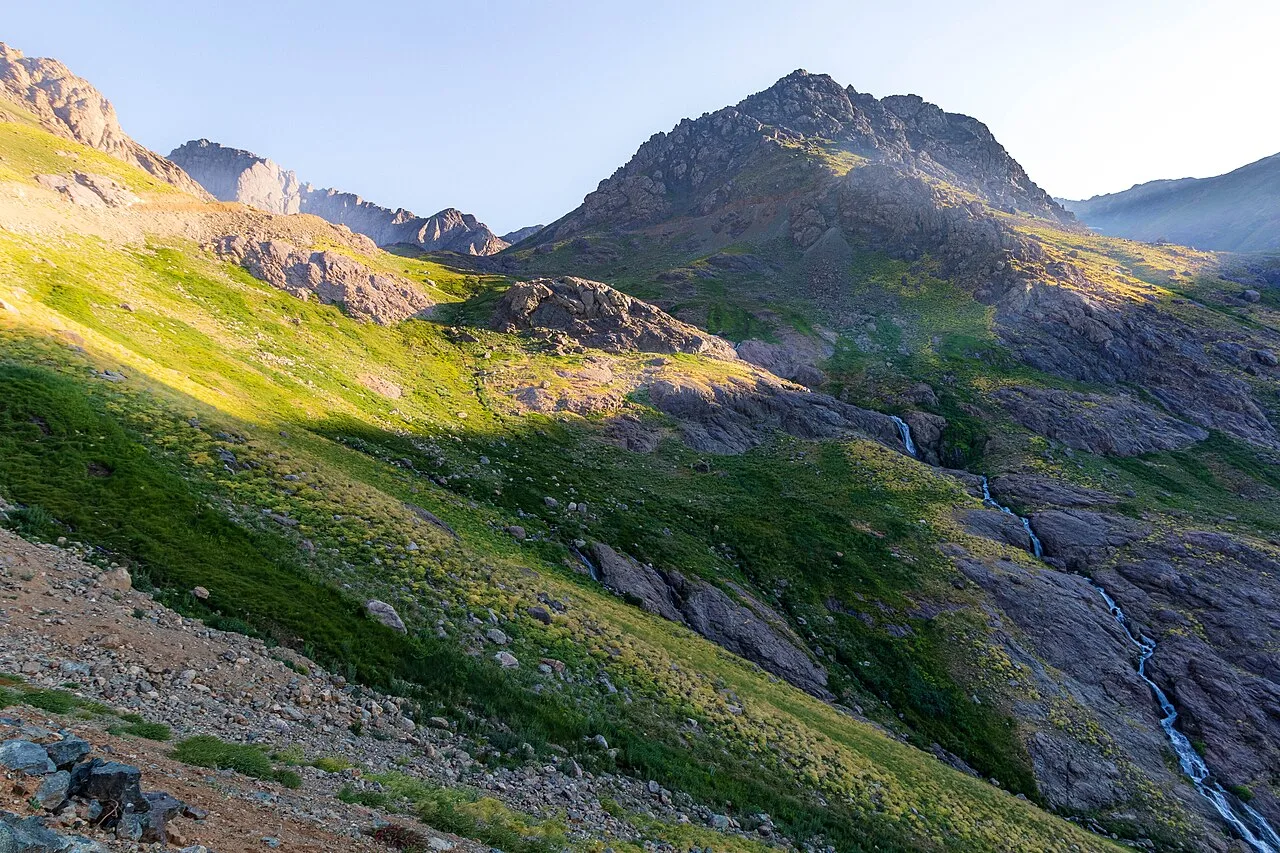
Around Cilo and Sat, water, snow, pasture and rock form an impressive natural setting. A mountain photograph, however, is not a route map. Reaching a viewpoint, climbing a summit, crossing a glacier and walking to a high lake require different preparation. Check the season, road and permission arrangements individually. Plan with appropriate local guidance, a realistic return time and equipment suited to the actual conditions. A reassuring phrase in a tourism description should not substitute for assessing a particular route. The distinction helps visitors enjoy the landscape without mistaking its beauty for an assurance of easy access.
Meydan Medresesi and the different histories preserved in stone
The entrance inscription of Meydan Medresesi dates the building to 1700–1701. Its courtyard and two-storey arrangement invite questions about the organisation of learning as well as the craft of construction. Consider cells, circulation and shared space together instead of treating the monument as an attractive facade alone. Time spent at a madrasa also helps explain the scale of the surrounding neighbourhood and the conditions of building in a mountain town. Where conservation has changed a section, distinguish that intervention from the surviving historical fabric.
The Hakkâri stelae belong to a very different layer of history. Found below Çölemerik Castle, they are displayed in Van Museum, so visiting their discovery area is not the same as seeing the stones themselves. Human, animal and weapon imagery can be studied without turning uncertainty over date and makers into a confident ethnic attribution. Rock art, gravestones and the stonework of a madrasa served different purposes in different periods. A shared material does not establish one unchanged cultural origin. Recognising those differences makes the archaeological and architectural story more interesting, not less.
Koçanis, Şemdinli and Çukurca: buildings within communities
The church at Konak, historically known as Koçanis, is an important reminder of the region's Assyrian and Church of the East past. Explain the relationship between the church, its community and the settlement instead of presenting it as abandoned stone scenery. Inscriptions and sundials offer starting points for observation; an exterior photograph cannot establish current interior access. Separating today's visiting arrangements from the transformations experienced by earlier communities produces a more respectful historical account.
In Şemdinli, the Kayme residence and stone bridge around Bağlar, formerly Nehri, provide another way to read a valley through religious life and movement. Kayme's inscriptions dated 1909–1911 and its restoration in 2017 are not the same event. At Çukurca, houses fitted into the slope and tahini production show how architecture and agriculture relate to ordinary life. Looking at the outside of a home is not permission to enter private space. Ask separately about visiting a working mill or a religious place; neither should be assumed to function like a purpose-built tourist exhibit.
Berçelan, the Zap and winter sport: a working landscape
Seeing Berçelan only as a picturesque collection of tents obscures its seasonal economy. Grazing, dairy production and movement to upland pastures are part of everyday work. A tent photograph or an invitation in a tourism brochure does not make every household open to visitors. Observe without obstructing people or livestock, ask before photographing individuals and avoid leaving traces in pasture. A proposed excursion to lakes such as Seyithan or Lis also needs its own route assessment; proximity on a picture does not make them short walks from the city.
The Zap links the province's valleys to the Tigris basin, but watching moving water and taking a rafting trip are separate experiences. Confirm water conditions and an appropriate section with a qualified operator rather than organising an independent activity from a scenic description. Managed skiing at Mergabütan offers a different sporting environment from technical activity on a high mountain. Old statements about season length, hotel provision or pistes cannot establish today's operating status. Preparing separately for summer pasture, river activity and a winter facility respects the province's diversity rather than simplifying it into one generic outdoor holiday.
Weaving, oral music and the distinct identities of the table
The names and patterns of Hakkâri kilims gain meaning through the weaver's work and the stories passed with them. Instead of assigning one universal explanation to every motif, listen to the maker's own account. Wool, colouring, technique and intended use all contribute to an object's value. The province also produces bags, socks, belts and other woven items. Turning a purchase into a conversation about skill gives a more substantial encounter than treating everything simply as a souvenir.
Dengbêj oral performance and group dance bring words, voice and community together. A wedding is a social gathering with invitation and privacy rules, not an automatically accessible tourist show. Food offers another introduction through doğaba, keledoş, herbed cheese, Yüksekova's çirek cheese and Çukurca tahini. These reveal different skills rather than one identical cuisine across all Eastern Anatolia. Ask about ingredients and storage, particularly where herbs, milk, sesame or nuts are involved. Local provenance cannot guarantee medical benefits or suitability for every person. A thoughtful visit connects the table, performance and craft with the people who keep them alive.
Choose the visit that fits your question
City day
Study courtyard circulation at the madrasa.
District day
Focus on buildings and terrain in Çukurca.
Local information
Check access before departure.
Visual exploration before you travel
Hakkâri documentary — history and mountain life
The public documentary uploaded by the Ministry on 5 September 2023 offers a visual introduction to the province's cultural and natural setting. Promotional footage does not verify current roads, mountain access or the safety of a sporting activity.
T.C. Kültür ve Turizm Bakanlığı WebTV · Watch the official publication ↗
Practical questions before your visit
Can I independently visit every place shown in a Cilo photograph?
No. Promotional imagery cannot establish route difficulty, permission or the day's mountain conditions. A viewpoint, pasture visit, glacier crossing and summit climb require different preparations. Verify current access and use appropriate guidance for technical routes.
Can I see the Hakkâri stelae in the provincial capital?
The discovery site is in Hakkâri, but the provincial directorate identifies the stones as displayed in Van Museum. Separate the archaeological context from the museum location of the portable objects when arranging your itinerary.
Are upland tents and weddings open visitor attractions?
Not automatically. Pastures are working and living environments, while weddings are private social gatherings. An invitation or permission is needed before entering a household, photographing people or treating a ceremony as part of a tour. Local guidance and clear consent make the encounter more respectful.
Sources and scope of this guide
These primary sources support the historical and heritage background. Comparisons and suggested ways to organise a visit are Atlas editorial analysis, not instructions from the source institutions.
- Kültür Portalı · MEYDAN MEDRESESİ ↗
- Kültür Portalı · ÇUKURCA TARİHİ TAŞ EVLER ↗
- Hakkâri İl Kültür ve Turizm Müdürlüğü — Gör Hakkari ↗
- Hakkâri İl Kültür ve Turizm Müdürlüğü — Kültürel Hazineler ↗
- Hakkâri İl Kültür ve Turizm Müdürlüğü — Hakkari'yi Keşfet ↗
- Hakkâri İl Kültür ve Turizm Müdürlüğü — El Sanatları ↗
- Hakkâri İl Kültür ve Turizm Müdürlüğü — Soyut Kültürel Değerler ↗
- GoTürkiye — Hakkâri cuisine and district products ↗
- Kültür ve Turizm Bakanlığı WebTV — Hakkari Belgesel Filmi ↗