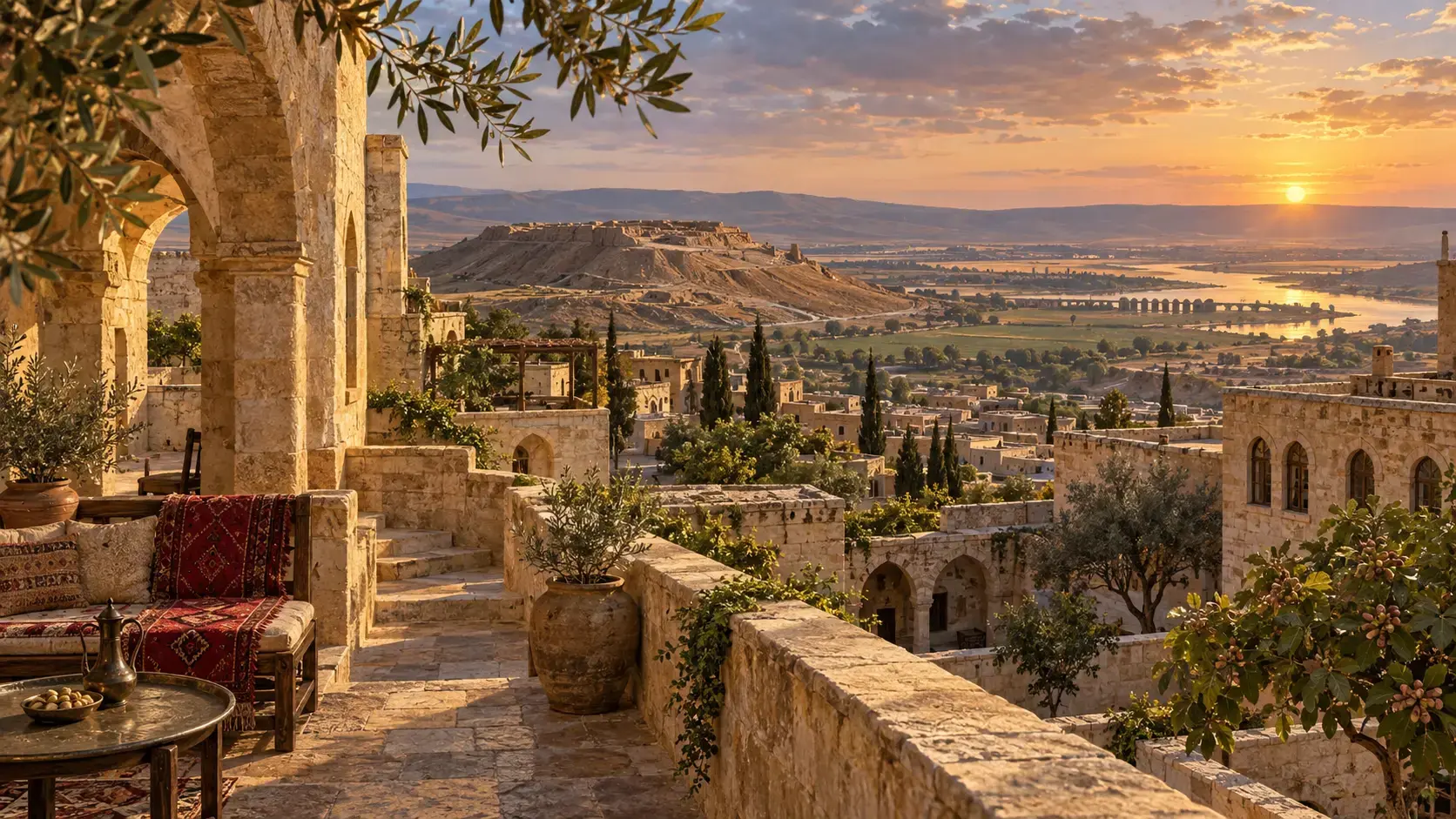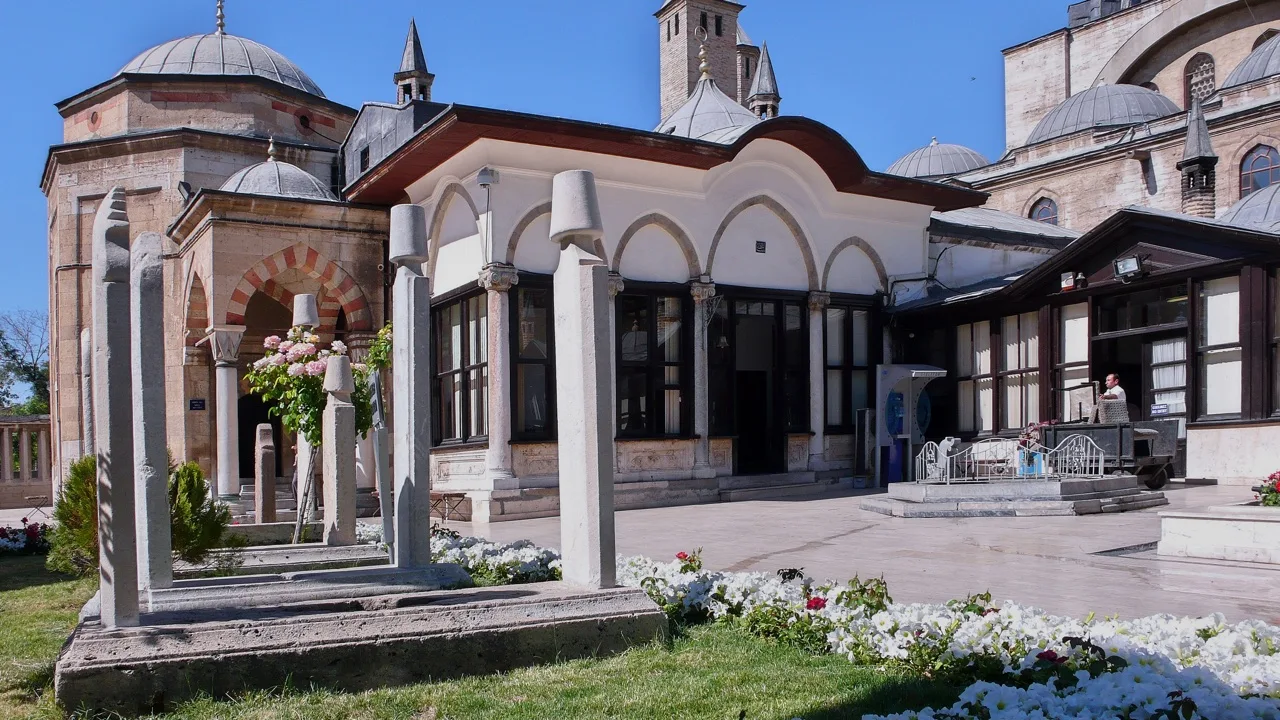
An archaeology-focused day in Konya can take Çatalhöyük beyond the label very old. A stronger question is how people lived together. Instead of looking only for rulers' names or a monumental façade, consider houses, neighbours and the uses of space. This guide helps you give the site a separate block from your city-centre programme and decide what to observe before you arrive.
An AI-assisted synthesis of the sources below, with Atlas planning suggestions. This is not a first-hand visit report. Admission, transport and access conditions must be checked with operators before travel.
In this guide
How can a settlement work without familiar streets?
UNESCO identifies adjoining houses and roof access among Çatalhöyük's distinctive features. Carrying today's assumptions about streets and front doors directly into the past can make that arrangement harder to understand. Think about the relationship between neighbouring houses, routes of movement and divisions within an interior. Comparing a plan with a contemporary home may be a helpful starting exercise, but keep the analogy limited. The daily life of another society cannot be explained entirely through our own housing experience. A productive comparison reveals differences instead of making them disappear.
Not a photograph of one moment
Different occupation levels represent a long accumulation of time. Do not read every visible fragment in an excavation as part of one day's townscape. Connect observations with the period information supplied on site, and distinguish original remains from interpretive displays or reconstructions. A reconstruction can make something understandable without proving every detail of the original building. That distinction is especially useful with children: it allows a conversation about what is visible, what has been found and how an explanation has been constructed. Understanding uncertainty is part of understanding archaeology.
Turn the visit into a small investigation
Before leaving, write three questions: where was the entrance, how did the house relate to its neighbour, and how were spaces allocated to activities? Afterwards, try to answer each with an observation. An unanswered question can remain unanswered. Recognising a limit is more useful than inventing an explanation for every object. Check current outdoor conditions, transport and access requirements separately. If you add other visits in the city, preserve a return buffer rather than reducing the archaeological site to a hurried photograph stop. The plan should give you enough time to look twice.
Mevlâna Museum: separate life, texts and setting
Alongside the existing Çatalhöyük guide, central Konya opens a very different chronology and intellectual world. Mevlâna Museum brings a person’s life, works and later institutional memory together. Instead of compressing them into one romantic phrase, identify the subject of each displayed object. A manuscript, a burial setting and an everyday object answer different historical questions and deserve different kinds of attention.
Quotations associated with Mevlâna do not all carry the same original textual context. A work’s name, date and displayed interpretation provide a useful starting point. Remembrance or religious respect and historical reading may be separate aims, which visitors can experience together or independently. Where crowds make extended reading difficult, notes and later research can be more useful than rushing through the entire collection.
Sille: more than one building type in a valley
Sille in Selçuklu district occupies the sides of a narrow valley, a setting distinct from central Konya. The Culture Portal identifies church heritage alongside mosques, baths, fountains and bridges. Reducing the settlement to one religious-building photograph hides the places through which water, movement and everyday life were organised across different parts of the neighbourhood.
Choose an arrival and return point, then select a building type for closer attention. A restored interior’s present function is not necessarily its original use. Private homes, open cultural spaces and places of worship require different visitor behaviour. Evaluate slopes, stone streets and thresholds for your group rather than relying on a general description of a picturesque village.
Wooden architecture in Beyşehir involves another travel scale
Eşrefoğlu Mosque in Beyşehir is not an adjoining room in the central Mevlâna itinerary. It is a component of UNESCO’s serial property of five wooden-column mosques. Inside, the relationship between columns, timber ceiling and masonry envelope provides a more detailed architectural reading than recognising the monument only through its entrance or an exterior photograph.
A lakeside landscape visit can be connected with the mosque, but outdoor and indoor conditions differ. Check worship arrangements, visitor access and the return journey independently. A point on the lakeshore is not automatically an authorised swimming or activity area. Respecting provincial travel distances also makes the time available for architectural detail more realistic and the overall itinerary less hurried.
Felt and food: give living culture time
Konya’s felt-making offers another way into culture beyond historical stone buildings. TRT’s 2005 archive shows skilled work behind the finished product. It does not prove that every contemporary shop uses the same process. Ask about materials, maker and intended use before purchasing, rather than treating the name of a tradition as an automatic quality certificate for every object.
A meal need not be an empty interval between monuments. Local food can become informative through questions about ingredients and presentation; this guide recommends no particular business, menu or fixed price. Choose a principal focus among the centre, Sille, Beyşehir and Çatalhöyük, leaving others for separate days. That structure gives genuinely different cultural layers enough attention rather than making them interchangeable stops.
Çatalhöyük: two mounds and different layers of time
Çatalhöyük, inscribed in 2012, is not a snapshot of a single period. UNESCO dates the eastern mound’s 18 Neolithic occupation levels to 7400–6200 BCE and the western mound’s Chalcolithic settlement to 6200–5200 BCE. The adjoining houses without streets and with rooftop access should not simply be equated with a modern neighbourhood.
First ask which mound and layer an explanation concerns. A house plan, wall decoration and reconstruction are not interchangeable evidence. Three columns in your notes can help: remains observed in place, the researcher’s interpretation and your own question. This makes a visit an opportunity to follow how knowledge is constructed, rather than immediately describing a very old settlement through present-day assumptions about cities.
Alâeddin Hill: one building can have several dates
The Culture Portal traces Alâeddin Mosque’s construction from the reign of Mesud I to completion in 1221, while giving the minbar a separate date of 1155. Reused marble columns from Roman and Byzantine periods also form part of the building. A column, the minbar and the mosque as a whole therefore do not share a single date.
Try a small architectural reading exercise: record structural elements, woodwork and use of space separately. An older component does not date the whole present building to that period. Caption your photograph with the particular detail you observed; the monument’s name alone leaves these layers invisible. Give details time when worship and visitor arrangements allow. If entry is restricted, describe your exterior observation rather than implying that you explored the interior.
Karatay: distinguish the madrasa from the origins of its tiles
Karatay Madrasa dates to 1251 and opened as the Tile Museum in 1955. The Culture Portal describes the enclosed-courtyard educational building alongside tiles from Kubad-Âbâd Palace and ceramics from different periods. Objects sharing a gallery today should not all be treated as the madrasa’s original decoration.
Look separately for material, date and place of origin on an object label. A tile on the building’s wall and one relocated to a display case raise different questions: one concerns the room’s arrangement, the other the life of its original setting. Recording provenance makes the museum more than a photograph stop for colourful surfaces. If an origin is not supplied, leave it as a question rather than filling the gap with a guess.
İnce Minare: read Seljuk culture through stone and wood
The Culture Portal identifies İnce Minareli Madrasa as a thirteenth-century educational foundation of Sâhib Atâ Fahreddin Ali. Following repairs in the Republican period, it opened as the Stone and Wood Museum in 1956. Its inscriptions, Konya citadel reliefs and wooden door and window panels bring material from different buildings together.
After Karatay, focus here on the change of material. Read the subject of an inscription, the form of a relief and the technique of a wooden panel separately. The gallery is not necessarily an object’s original setting. Treating the two museums as different study desks for a related subject provides a more meaningful comparison than ticking off stops. Allow time for close looking, and check current access rather than assuming that a complete collection visit always fits your schedule.
Republican museum history: distinguish 1926 from 1927
Museum official Naci Bakırcı’s 2007 study distinguishes the Mevlâna lodge’s arrangement as Konya Asarı Atika Museum in 1926 from its opening in 1927; it also notes a reorganisation in 1954. This helps avoid treating the Culture Portal’s compressed reference to 1926 as an unambiguous date for public opening.
Explore that transformation on two levels: the place’s earlier use and the collection’s later presentation. An inventory number, object description or display arrangement shapes how a visitor encounters historical material. Including museums in the Republic’s chronology means more than listing buildings and inauguration dates: it asks how an existing cultural setting became a source of public knowledge. Lodge history, museum formation and today’s visitor experience are connected, but they are not interchangeable subjects.
Plan at three scales: city centre, archaeological site and district
For the centre, choose a main focus between Mevlâna and the museums around Alâeddin; Karatay and İnce Minare can be paired for close reading of objects. Do not automatically treat Çatalhöyük or Beyşehir as short additions to that programme. Give outward travel, the visit and the return separate lines in a day plan. If time becomes tight, preserve attention to your chosen subject rather than adding another stop.
At Çatalhöyük, separate the archaeological site from the modern visitor centre. The municipality’s announcement of 4 February 2024 describes interactive interpretation of the settlement and finds; it does not guarantee today’s hours, prices or access. ATUS provides bus/tram, day-type, stop and route information. Check the return for your chosen date separately: city transport information alone does not establish every connection needed for a district excursion.
Choose the visit that fits your question
Family observation
Sketch a simple house plan and use different marks for evidence and guesses.
Archaeological interest
Follow period and layer labels instead of assuming that everything visible was contemporary.
Limited time
Separate the site and city into blocks, confirm transport and choose a clear priority.
Visual exploration before you travel
Konya felt-making: TRT’s 2005 archive
See felt as a process of skilled work, not only a souvenir. Footage from 2005 is not a current workshop address or visitor announcement.
Practical questions before your visit
Is Konya only Mevlâna Museum and Çatalhöyük?
No. Sille’s valley settlement, Beyşehir’s wooden architecture and living crafts open different subjects. Selecting your main interest produces a more useful route than trying to complete everything in one day.
Is Eşrefoğlu Mosque a short walk from central Konya?
It is in Beyşehir district and requires a separate transfer. Being within the same province does not mean being in the same neighbourhood. Include the return in your plan.
Does the felt-making film arrange a current workshop visit?
No. The archive records craftsmanship in 2005. Confirm any current workshop’s address, permission, working arrangements and sales conditions separately before planning a visit.
Do Çatalhöyük’s two mounds belong to the same period?
No. UNESCO describes Neolithic occupation in the eastern mound and Chalcolithic layers in the western mound. Identify the mound and period when reading an explanation.
Why are both 1926 and 1927 given for Mevlâna Museum?
Bakırcı’s study distinguishes museum arrangement in 1926 from opening in 1927. Different stages in the formation of the museum should not be compressed into one date.
Does every displayed museum object come from its present building?
No. An object’s place of origin may differ from its current display setting. Check its label and interpretation; do not infer a definite provenance from the gallery alone.
Does this guide guarantee current museum hours or every transport connection?
No. Checking historical sources does not confirm live operating conditions. Verify museum access, outward connections and your final return option separately for the date of your visit.
Sources and scope of this guide
These primary sources support the historical and heritage background. Comparisons and suggested ways to organise a visit are Atlas editorial analysis, not instructions from the source institutions.
- UNESCO · Neolithic Site of Çatalhöyük ↗
- Kültür Portalı · Mevlâna Museum ↗
- Kültür Portalı · Sille ↗
- UNESCO · Eşrefoğlu Mosque within the wooden-column serial property ↗
- Kültür Portalı · Alâeddin Mosque, building phases and minbar ↗
- Kültür Portalı · Karatay Madrasa and Tile Museum ↗
- Kültür Portalı · İnce Minare Stone and Wood Museum ↗
- Naci Bakırcı · Konya Mevlâna Dergahı, İstem 10 (2007), pp. 191–202; museum chronology on p. 193 ↗
- Konya Metropolitan Municipality · Çatalhöyük visitor centre, announcement dated 4 February 2024 ↗
- Konya Metropolitan Municipality · ATUS bus/tram schedules, stops and route information ↗