
Karatepe-Aslantaş and Kastabala offer two archaeological perspectives in Osmaniye. One foregrounds gateways, reliefs and inscriptions; the other streets, terraces and civic buildings. Use those differences to shape an exploratory visit rather than a checklist.
An AI-assisted synthesis of the sources below, with Atlas planning suggestions. This is not a first-hand visit report. Admission, transport and access conditions must be checked with operators before travel.
In this guide
Why two languages matter at Karatepe
The open-air museum at Karatepe-Aslantaş in Kadirli preserves Late Hittite gateways and reliefs in their landscape. Its Phoenician and Luwian hieroglyphic inscriptions played an important role in understanding Luwian writing. Treat the texts as more than surface decoration: they open questions about rulership, communication and the survival of knowledge.
Follow the urban arrangement at Kastabala
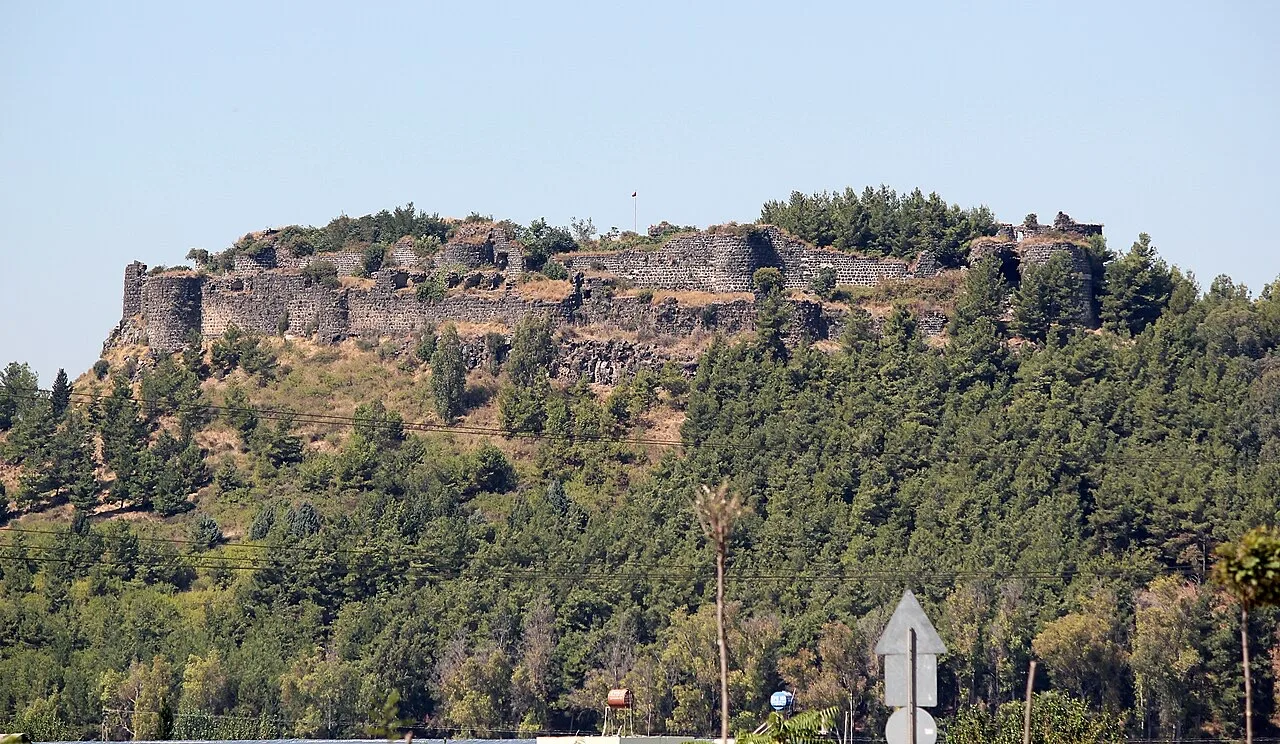
At Kastabala, the colonnaded street, civic remains and castle on a rocky rise represent different layers of the same landscape. Its position near the Ceyhan encourages you to connect monuments with the surrounding plain and routes. Do not assume every visible wall belongs to one period. Use the site interpretation to distinguish phases revealed by excavation from an impression formed at first glance.
Take one question to both places
For a short visit, select a main site and check travel and return arrangements before adding the second. Compare how Karatepe’s gateways and Kastabala’s street direct movement. Study reliefs without touching them, respect conservation boundaries and allow breaks outdoors. Check present-day repairs and access separately from historical descriptions: an important monument is not automatically accessible in every season or during ongoing work.
Changing functions at Ala Mosque in Kadirli
Ala Mosque in central Kadirli is a strong focus for reading how different periods gave one structure new functions. Osmaniye Museum’s excavation account distinguishes church organisation, a crypt, mosaic areas and later Islamic use. Reusing an old column fragment does not date the entire building to the column’s original period. Spolia show how earlier material became part of later construction decisions.
Do not merge Dulkadirid and Ottoman additions with the early phases into one foundation story. Follow site interpretation to connect an entrance, mihrab or cistern with its function. Conserved sections such as the crypt and mosaics may not be continuously accessible. Visitor permission and worship arrangements are separate rules; respect present boundaries when photographing. Kadirli is an independent district journey, not a neighbourhood within central Osmaniye.
Know the maker behind a Karatepe kilim
The name Karatepe is associated with weaving as well as the open-air museum. Municipal and Governor’s Office records describe Karatepe kilims and the work of a local cooperative. Who wove a textile, where and under what production process matter alongside pattern, colour and yarn. A sales label alone cannot conclusively establish the age or meaning of a motif. A maker’s inherited account and documented history offer different layers of information.
Ask about working days and visitor arrangements before going to a workshop or cooperative. Filming someone at a loom without permission is not justified simply by a cultural-promotion purpose. When buying, ask about fibre, dye, dimensions and care, and how handmade work is distinguished from mass production. Rather than treating an ancient museum relief as the exact template of a modern kilim, compare visual languages produced in the region at different times.
Peanuts connect the field with processing
Osmaniye’s peanut sector provides a concrete way to understand connections between farming and the city economy. DOĞAKA’s official Turkish and English films introduce production, not a promise that a tourism operator welcomes visitors every day. Think beyond a snack to a chain involving cultivation, harvest, sorting, processing and sale. Peanuts are not the same plant or product as pistachios associated with Gaziantep.
Ask a producer or seller about origin, whether the product is in-shell or processed, and storage conditions. Peanuts are an allergen; obtain information from the business about other ingredients and shared processing for mixed products. Permission is needed to enter fields. Production volumes and export figures should not be repeated without a year and official statistics. This guide explains processes rather than presenting changing commercial totals as timeless facts.
Plan plain-side castles and upland life separately
Toprakkale is a defensive focus associated with important route junctions; not every visible wall can be assigned to the earliest settlement date. Harun Reşit Castle and Haruniye around Düziçi involve a different district direction from Kadirli. Plateaus such as Zorkun add altitude and seasonal change to a visit. Archaeology on the plain, productive farmland and mountain life are separate but connected subjects.
Choose a main district for a short stay, calculating the return journey and authorised walking conditions before adding another focus. Osmaniye becoming a province again in 1996 is an administrative milestone, not the date when its settlements began. That distinction helps explain how a recent province name contains a much older cultural landscape. Do not treat health language in spa publicity as medical evidence. Use current operating information for visits and appropriate professional advice for health questions.
Choose the visit that fits your question
Writing and art
Read inscriptions, reliefs and gateway architecture together at Karatepe.
Urban structure
Trace the relationship between street and public buildings at Kastabala.
A slower route
Give one site your main day and keep the second for a separate comparison.
Visual exploration before you travel
Osmaniye · the peanut production chain
Explore local production and provincial geography; the film does not establish present workshop, road or service access.
T.C. Doğu Akdeniz Kalkınma Ajansı · Watch the official publication ↗
Practical questions before your visit
Do old stones at Ala Mosque date the entire building to one period?
No. Reused material, building phases and later additions can have different dates. Match visible elements with excavation interpretation rather than assuming one construction moment.
Does buying a Karatepe kilim automatically support a local maker?
Check who wove it and where. Asking about a cooperative or workshop, materials and production method helps you make an informed choice.
Are Osmaniye peanuts the same as Gaziantep pistachios?
No. Check the actual product and ingredients you are purchasing, and ask the seller about allergens and shared processing equipment.
Sources and scope of this guide
These primary sources support the historical and heritage background. Comparisons and suggested ways to organise a visit are Atlas editorial analysis, not instructions from the source institutions.
- Kültür Portalı · Karatepe Aslantaş Açık Hava Müzesi ↗
- Kültür Portalı · Kastabala Antik Kenti ↗
- Kültür Portalı · Ala Cami kazı evreleri ↗
- GoTürkiye · Osmaniye coğrafyası ve kaleleri ↗
- Osmaniye Belediyesi · Karatepe Kilimleri ↗
- Osmaniye Valiliği · Karatepe Kilim Kooperatifi ↗
- DOĞAKA · Osmaniye yerfıstığı üretimi ve resmî filmleri ↗
- Kültür Portalı · Osmaniye idari tarih ve yerel kültür ↗