
← Back to History of the Republic
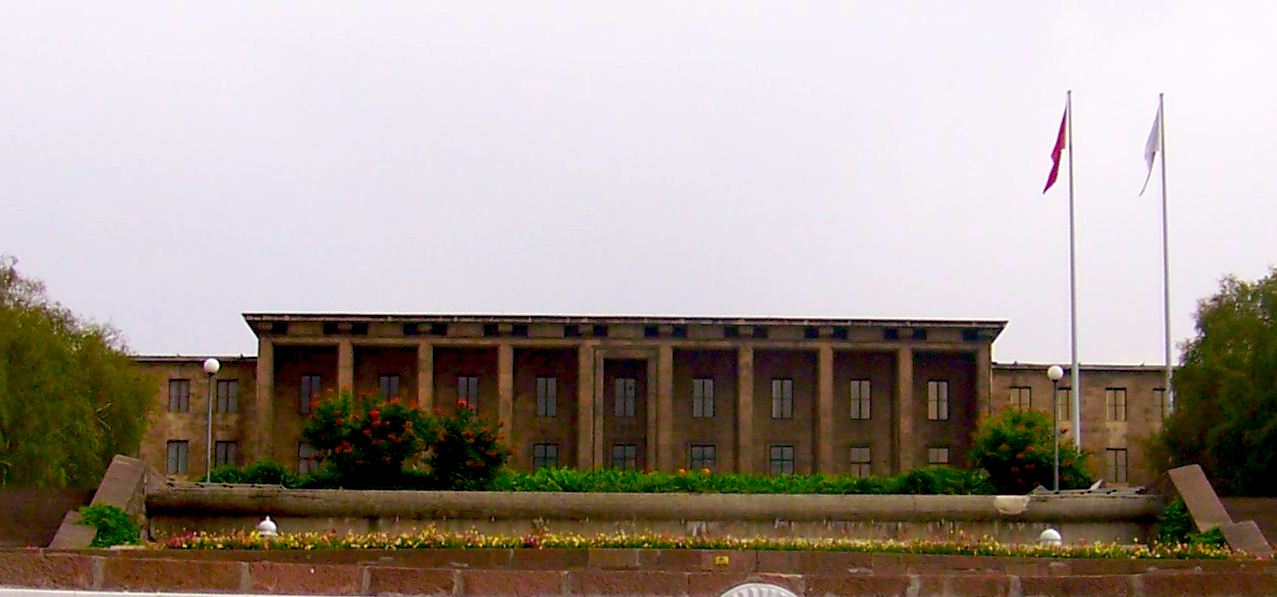
Makril, fotoğraf / photograph; Kjetil r, Commons kırpması / Commons crop; Clemens Holzmeister, mimari / architecture — Wikimedia Commons · CC BY-SA 3.0 ↗ The Republic continues · tests of democracy
28 February and 15 July
The 1997 process applied military and bureaucratic pressure to an elected government. In 2016, an attempted seizure of power by a faction within the armed forces included attacks on parliament and failed.
28 February 1997—15/16 July 2016Ankara · Istanbul · Türkiye
The assembly's third building, in the Commons crop by Kjetil r of Makril's photograph. The catalogue dates it to 22 July 2007; conflicting camera metadata means the precise capture day is not relied upon. It provides institutional context, not a view of the 1997 meeting or 2016 bombardment.
At a glance
- NSC decisions
- 28 February 1997
- Government resigned
- 18 June 1997
- Attempted coup
- 15 July 2016
- Joint declaration
- 4 party groups
1997: a pressure campaign longer than one day
The National Security Council meeting of 28 February 1997 became the symbolic date of military-bureaucratic pressure on the Welfare Party–True Path Party coalition led by Prime Minister Necmettin Erbakan. Unlike 1960 or 1980, there was no same-day transfer of power closing all constitutional institutions. Instead, decisions, briefings, public pressure and political manoeuvres progressively narrowed the elected government's room to act. The description 'postmodern coup' is used to explain this different mechanism; it does not mean its effects on ordinary lives were slight.
Military intervention in political decision-making, justified in terms of security and secularism, also depended on responses within civilian institutions. Parliamentary inquiry testimony and studies of the parliamentary system discuss differing roles of media, the judiciary, bureaucracy and some civil organisations. These records do not justify assigning identical conduct to every member of an institution. Commission testimony records what a participant recalls and argues; each statement is not automatically an established judicial finding. The central democratic question is how military pressure reduced the accountable authority of elected institutions.
↑ Back to dossier contentsEducation and public rights: personal consequences
The disputes concerned more than the government's survival. Access to university and public employment while wearing a headscarf, religious education, vocational schools and the application of secularism affected people's educational and working lives. The legal history of headscarf restrictions extends before 1997: not every restriction originated at one National Security Council meeting. Equally, a person's belief or clothing alone does not establish a political programme or criminal conduct.
Law No. 4306 took effect in August 1997 and introduced eight years of uninterrupted compulsory primary education from the 1997–1998 school year. The objective of increasing schooling and the way a policy was implemented within the period's pressure campaign require separate evaluation. Consequences differed for access to school, transported pupils and vocational routes. Valuing wider education does not require overlooking exclusion on religious grounds. Protecting rights also requires more detailed analysis than attaching one political label to every educational choice. The histories of legislation, administrative practice and students' experiences need to be read alongside one another.
↑ Back to dossier contentsResignation, party closure and the judicial calendar
The Erbakan government's resignation was accepted on 18 June 1997; President Süleyman Demirel's letter was read in parliament on 19 June. It also recorded that the existing cabinet should continue until a new government was formed. The February meeting and the June resignation therefore should not be described as one day's events, nor should the intervening politics disappear. The change of government raised the distinction between a majority changing through electoral processes and political change occurring under pressure.
The Constitutional Court decision closing the Welfare Party was dated 16 January 1998: the council meeting itself was not a party-closure ruling. In the separate case of university headscarf restrictions, the European Court of Human Rights' Grand Chamber held on 10 November 2005 that the relevant rights had not been violated in Leyla Şahin's application. Read that judgment together with its separate opinions. The outcome of this specific case is neither a general approval of every measure associated with 1997 nor a summary of all rules today. Political pressure, administrative decisions and judicial judgments are distinct forms of action within the history.
↑ Back to dossier contents15–16 July 2016: an armed attempt to seize power
On the night of 15 July 2016 a faction within the armed forces attempted to remove the elected president and government and take control. Bridges and critical institutions were targeted; tanks, helicopters and combat aircraft entered civilian life. Bombardment of the Grand National Assembly showed that the attack was directed not only at a government but at the institution representing the electorate. Security personnel and civilians lost their lives, people were injured and families faced lasting changes. Those losses concern individual lives and relatives' experiences, not merely a numerical component of political slogans.
Turkish authorities attributed responsibility to the organisation they designate FETÖ/PDY, and subsequent investigations and trials proceeded within that framework. A historical account should state that official attribution clearly while retaining the need to assess each person's responsibility through evidence and the relevant judicial record. It would be wrong to attribute the attempt to every member of the armed forces: soldiers, police officers, civilian officials and citizens also opposed it or did not participate. Its defeat by the morning of 16 July reflected the combined effects of different forms of resistance and institutional action, not one person or one image alone.
↑ Back to dossier contentsParliamentary and public resistance
Civilian resistance in the streets, appeals by President Recep Tayyip Erdoğan and the government, actions by security units opposing the coup and continued communication were important dimensions of the night. People could defend constitutional order for different reasons without sharing a party allegiance or worldview. Describing resistance should distinguish risks assumed by civilians from the duties of professional institutions. Remembering historical courage is not advice to later readers to confront armed vehicles.
The joint declaration of 16 July by parliament's AK Party, CHP, MHP and HDP groups condemned the attempted coup and attacks on the assembly. It is a contemporary record of different political traditions agreeing to defend their representative institution. Signing it does not establish agreement on every subsequent government measure. Parliament is more than a building: it is a place where government and opposition can speak, oversight can operate and electoral representation can continue. The assembly's continued work under attack matters to the Republic's chronology because it asserted that institutional continuity. The disagreement that remained between parties is part of democratic life, not evidence that their common rejection was meaningless.
↑ Back to dossier contentsReading the aftermath: security, law and memory
The state of emergency taking effect on 21 July 2016 and subsequent decrees were a separate stage of the state's security response. Although related to the same historical episode, suppressing the attempt and assessing later measures are not identical events. Parliamentary debates contain both security justifications and objections from different parties. The Venice Commission's 2016 opinion and the UN human-rights office's 2018 report recorded concerns about oversight, the scope of measures and rights safeguards. These are institutional assessments, not substitutes for judgments concerning each individual.
Unequivocally condemning an armed attack on democracy is compatible with examining subsequent actions through law and individual responsibility. Comparing sources does not minimise the suffering or cast doubt on the reality of the attack: it explains what each document can establish. Retrospective documentaries, an official declaration, victim testimony and a court file provide different kinds of evidence. A common lesson of 1997 and 2016 is that changing governments belongs to constitutional processes rather than armed or tutelary structures. That principle matters when the representation of people with different political preferences is endangered, not only when one's own preferred side is threatened. Preserving the distinction between criticism and coercion is essential to making this history useful rather than turning it into a catalogue of rival slogans.
↑ Back to dossier contentsRead the turning points together
- 28.02.1997
National Security Council meeting
The symbolic date of pressure on the elected coalition. Distinguish the meeting from subsequent implementation and the later resignation.
- 18.06.1997
Resignation accepted
The presidential letter accepted the cabinet's resignation and requested continued service until a new government formed; parliament heard it the next day.
- 08.1997
Eight-year primary education
Law No. 4306 introduced eight years of uninterrupted compulsory primary schooling from the 1997–1998 academic year.
- 16.01.1998
Welfare Party judgment
The Constitutional Court's party-closure ruling was a judicial decision distinct from the previous year's council meeting.
- 10.11.2005
Leyla Şahin judgment
The European Court's Grand Chamber found no violation in the specific application. Read its reasoning together with the separate opinions.
- 15–16.07.2016
Attempted coup and resistance
Parliament and other institutions were attacked during the armed attempt. Military and civilian resistance contributed to its defeat.
- 16.07.2016
Four groups' common declaration
The AK Party, CHP, MHP and HDP groups jointly condemned the attempted coup and attacks on parliament.
- 21.07.2016
State-of-emergency phase
The emergency debated in parliament began a distinct security and legal process, whose consequences were examined in later reports.
Explore the archive and documentary context
TRT Arşiv
The 15 July coup attempt — TRT Archive
This official archive narrative, published in 2019, revisits the night of 2016. Distinguish retrospective editing from footage recorded during the events and read it with the parliamentary transcript and joint declaration.
Choosing to load the player connects to YouTube and shares technical data such as your IP address with Google. Autoplay is off. This choice does not change your cookie preferences. The publisher may restrict regional access or embedding; the official link below provides an alternative.
TRT Haber
Remembering 28 February — TRT Haber documentary excerpt
A 2023 report presents Recep Tayyip Erdoğan's recollection from an earlier documentary. It is a particular political actor's retrospective testimony, not a neutral contemporary record representing every social experience.
Choosing to load the player connects to YouTube and shares technical data such as your IP address with Google. Autoplay is off. This choice does not change your cookie preferences. The publisher may restrict regional access or embedding; the official link below provides an alternative.
Supported YouTube publications can be watched here by choosing to load their player. Videos are not copied onto our server. Interpret archive images alongside their production date and the narrator’s perspective; the official publication link remains as an alternative.
Questions and historical distinctions
Why are 28 February and 15 July described differently?
In 1997 military-bureaucratic pressure constrained a government through a prolonged political process; in 2016 an armed faction attempted to take power. Both belong in a history of constitutional politics, but their institutions, methods, timelines and dangers to individuals differed.
Did the joint declaration remove every difference between parties?
No. It records a common constitutional position against the attempted coup and attack on parliament, not complete agreement on subsequent policies. The ability of different political traditions to defend the representative institution together is precisely part of the document's significance.
Is every statement in an official archive an established historical fact?
Official publication does not make every recollection or political interpretation a judicial finding. A transcript records speech, a declaration a common position, and a judgment a specific case outcome. Compare their purposes and dates, and assess criminal responsibility individually rather than through collective assumptions.
Cumhuriyet Atlas
Continue the story here
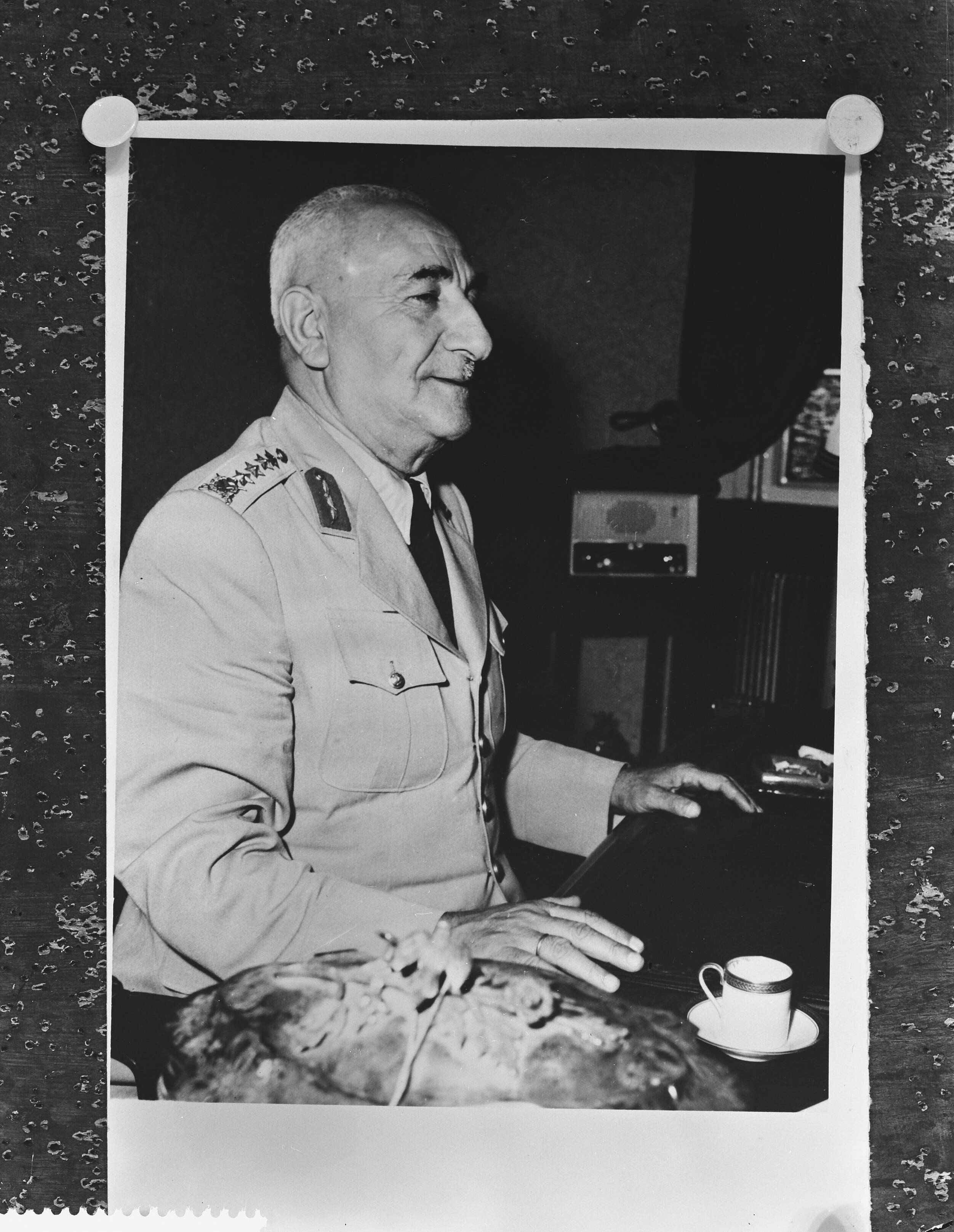
27 May 1960—6 December 1983
The interventions of 1960, 1971 and 1980
Military interventions interrupted elected politics and produced new constitutions with lasting social consequences.
Explore →
1999 and 2023 · reports extending into 2024
The 1999 and 2023 earthquakes: society, institutions and rebuilding lives
From Marmara and Düzce to Kahramanmaraş: read housing, insurance, coordination, education, work and heritage through dated institutional records.
Explore →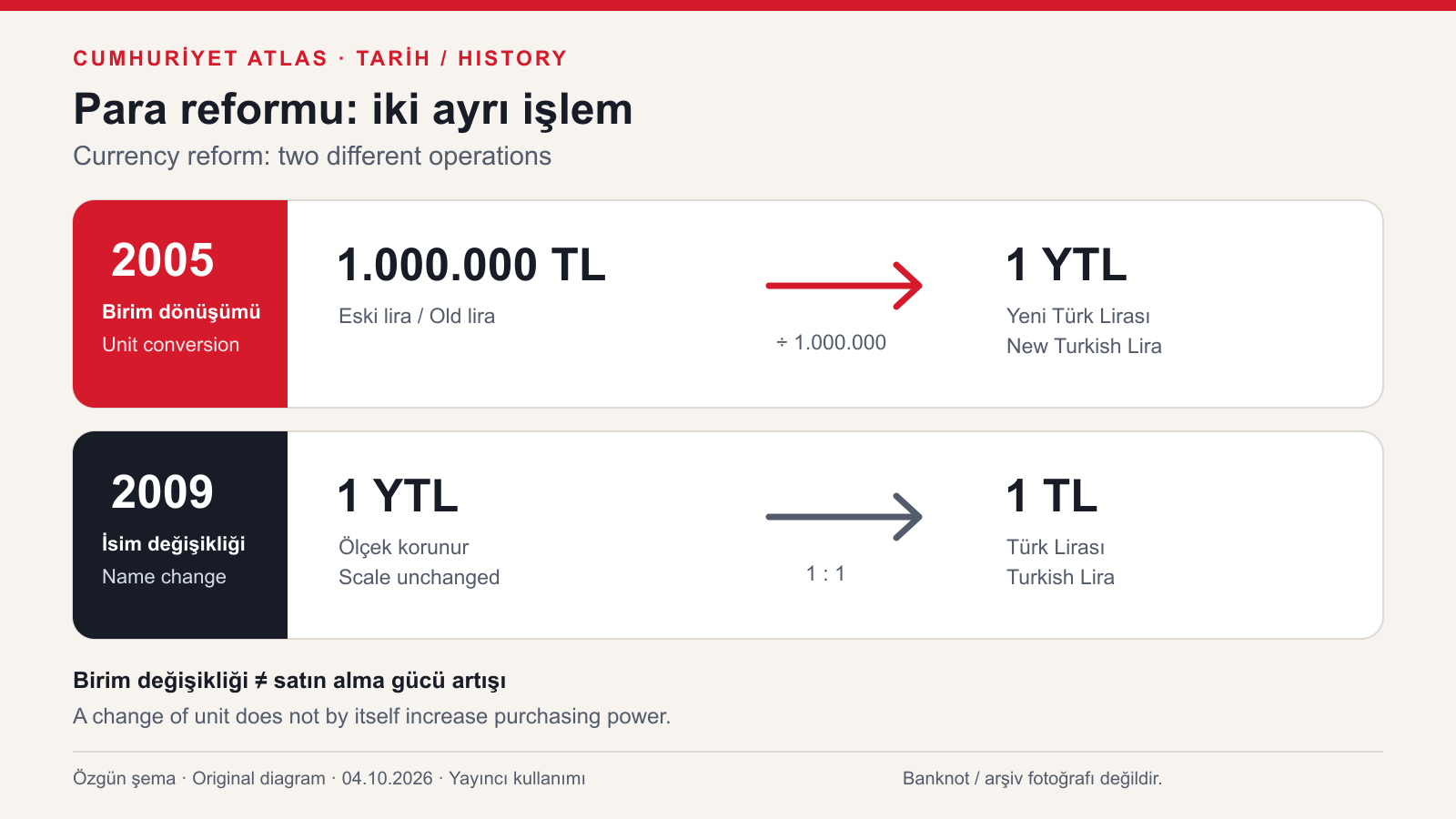
Transformation, 1980–2001 · currency reform, 2005/2009
Economic transformation, 1980–2001, and currency reform, 2005/2009
Financial opening, crisis, bank repair and a change of currency unit are not the same process. Explore selected turning points through an original conversion diagram and explanations that help make sense of archival documents.
Explore →Documents and sources12 sources
Official reference points used to verify the chronology and interpretive frame on this page.
- Military interventions and parliament ↗TBMM · 100. YIL YAYINI
A parliamentary-history study covering the ruptures of 1960, 1971, 1980 and 1997.
- The parliamentary declaration of 15 July ↗TBMM · GENEL KURUL
The joint declaration by four parliamentary party groups against the attempted coup.
- Democratic experience and parliament from the Ottoman era onwards ↗TBMM
Parliamentary historical context of the coalition and 28 February process.
- TBMM Darbe ve Muhtıraları Araştırma Komisyonu — Meral Akşener'in 25 Haziran 2012 tarihli tanıklığı ↗www.tbmm.gov.tr
- TBMM — 19 Haziran 1997 tutanağı, 18 Haziran tarihli hükûmet istifasının kabulü ↗www5.tbmm.gov.tr
- Millî Eğitim Bakanlığı — 4306 sayılı Kanun ve sekiz yıllık kesintisiz eğitim ↗dhgm.meb.gov.tr
- Anayasa Mahkemesi — Refah Partisi kararı, E.1997/1, K.1998/1, 16 Ocak 1998 ↗siyasipartikararlar.anayasa.gov.tr
- AİHM — Leyla Şahin/Türkiye, Büyük Daire, 10 Kasım 2005, çoğunluk ve ayrı görüşler ↗hudoc.echr.coe.int
- TBMM — Dört siyasî partiden darbeye karşı ortak bildiri, 16 Temmuz 2016 ↗www.tbmm.gov.tr
- TBMM — 21 Temmuz 2016 Genel Kurul tutanağı, olağanüstü hâl kararı ve farklı parti konuşmaları ↗cdn.tbmm.gov.tr
- Venedik Komisyonu — Darbe girişimi sonrası olağanüstü hâl kararnameleri hakkında 865/2016 sayılı görüş ↗www.venice.coe.int
- BM İnsan Hakları Yüksek Komiserliği — Türkiye'de olağanüstü hâlin insan haklarına etkisi, 2018 raporu ↗www.ohchr.org