
← Back to History of the Republic
Modern Republic history · the economy and everyday life
Economic transformation, 1980–2001, and currency reform, 2005/2009
Telling recent economic history only through rising or shrinking numbers loses the connection between institutions and everyday life. A financing decision, a bank payment problem and a change of unit mean different things. This dossier builds its chronology around those distinctions: intentions in contemporary documents are not outcomes, legal changes are not identical to later implementation, and comparisons of income and prices require attention to units. Its invented examples explain concepts; they are not the accounts of real households or banks.
Transformation, 1980–2001 · currency reform, 2005/2009Türkiye · monetary policy · banking · household budgets
At a glance
- Reading approach
- Chronology · institution · everyday document
- Visual
- Original explanatory diagram, not an archive photograph
- Scope
- Selected economic thresholds, not current financial advice
- Sources checked
- 4 October 2026
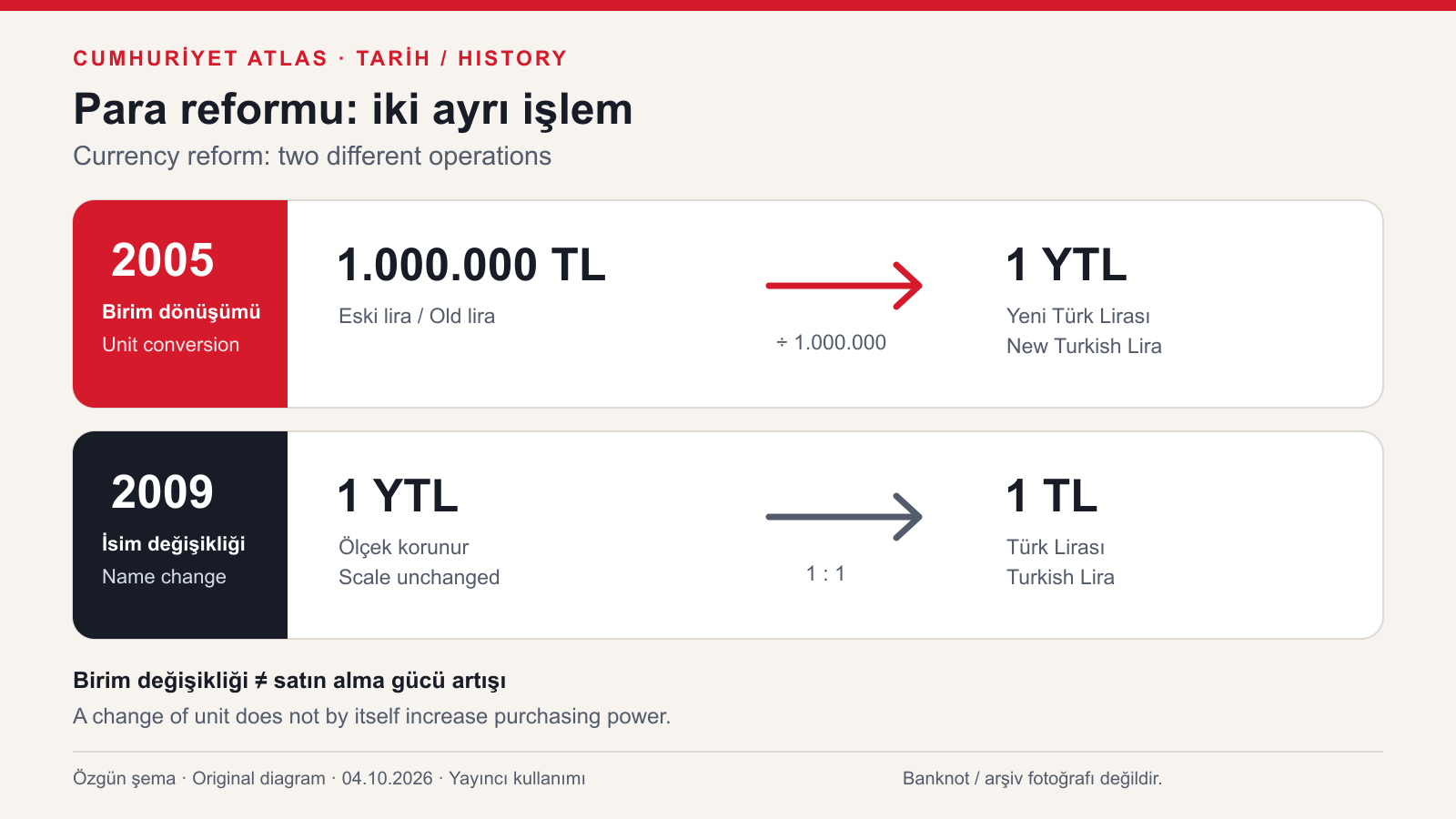
Webz Fusion · Cumhuriyet Atlas — original editorial diagram, 2026 · Visual record and provenance ↗ · Original editorial diagram · reserved Webz Fusion publisher use; no public reuse licence granted ↗ · Open the full-size visual ↗
Opening in the 1980s: economic decisions and political rupture are different events
The CBRT's institutional history identifies the decisions of 24 January 1980 as a threshold in economic transformation. Market-based interest-rate determination and the development of the Bank's money-market instruments formed part of this period. Economic policy and the history of political rights ask different questions. Reading the Republic's history requires separate attention to economic direction, political rights and institutional organisation: change in one sphere must not make the costs in another disappear. The military-interventions dossier provides a separate political chronology.
The Treasury and Finance Ministry's record of Decree No. 32 distinguishes adoption on 7 August 1989 from Official Gazette publication on 11 August. The linked text incorporates later amendments; not every provision visible today existed in exactly that form in 1989. The Bank's history also records permission for foreign-currency transactions and lira convertibility in 1989. Opening trade and opening capital movements also raise different questions. The former concerns goods crossing borders; the latter involves the direction, maturity and currency of financing. This distinction explains why an export narrative alone cannot describe a banking system's balance sheets. Greater access to finance and the management of its risks are separate matters.
↑ Back to dossier contentsFrom 1994 to 1999: stabilisation and the exchange-rate anchor
The IMF's announcement of 25 April 1995 records a stand-by arrangement approved for Türkiye on 8 July 1994 and its subsequent extension. Approval of credit was a financing decision supporting an economic programme, not a finding that every loss had been repaired. Securing external funds, understanding their conditions and explaining how families experienced a crisis require different kinds of evidence. The institutional record establishes the financing chronology; it cannot, by itself, stand in for the social history of adjustment.
In its Letter of Intent dated 9 December 1999, the Turkish government proposed a disinflation programme organised around fiscal adjustment, structural reform and an exchange-rate commitment. The document contains targets and expectations for subsequent years, not observed outcomes. An announced currency path attempts to influence price-setting and contractual expectations, but announcement and credibility are different stages. The letter is therefore useful for understanding the intended policy framework applied in 2000. It should not be read as a prophecy proving that the crisis of 2001 was inevitable from the outset, or as retrospective evidence that its promised results had already occurred.
↑ Back to dossier contentsNovember 2000 and February 2001: triggers are not the same as vulnerabilities
The CBRT's November 2001 report describes liquidity and interest-rate pressure on some banks funding holdings of government paper with short-term resources in November 2000. For February it discusses increased foreign-exchange demand and disruption in the payments system. This institutional account points to accumulated balance-sheet problems, not only a political confrontation. Liquidity concerns meeting payments as they fall due; capital concerns the buffer against losses. Owning assets does not necessarily mean a bank can turn them into cash when every payment is required.
The government's policy memorandum of 3 May 2001 records the float of the lira on 22 February and an earlier departure from the exchange-rate path than had originally been envisaged. The revised framework proposed changes in fiscal and structural policies in response to the crisis. A float differs from a commitment to defend one fixed level, but it does not mean that the central bank or government ceases to have economic responsibilities. Describing the turning point solely as one individual's achievement or failure would miss the connections between the currency regime and the banking system.
↑ Back to dossier contentsRepairing banks: capital, duty losses and supervision
The Banking Regulation and Supervision Agency's announcement of 15 May 2001 organised its programme into financial-operational restructuring and legal-institutional measures. It envisaged different action for state banks, banks within the Savings Deposit Insurance Fund and private banks. Settling duty losses, strengthening capital and improving supervision were not alternative names for one tool. Nor did publication of the programme prove that every proposed action had been completed.
Consider an invented balance-sheet example, not the accounts of any real bank. Assets cannot be sold immediately, yet a debt must be paid tomorrow: that creates a payment-timing problem. If the assets are worth less than the obligations, the problem is deeper. Extending maturities might ease the first pressure without automatically solving the second. Equally, supplying cash cannot by itself erase lasting losses. The example explains why liquidity, capital and supervision deserve separate places in a crisis narrative. It makes no finding about the present condition of any institution and does not identify a preferred financial product.
↑ Back to dossier contentsThe 2001 law and subsequent monetary policy: authority and accountability
Law No. 4651 was adopted on 25 April 2001 and published on 5 May. Its original text identifies price stability as the CBRT's primary objective, provides for direct selection of monetary-policy instruments, creates the Monetary Policy Committee and sets out public reporting. It also introduces restrictions on public-sector credit and primary-market purchases. This was not the founding of the Bank. A change in powers must not be mistaken for removal of responsibility.
The CBRT's account of its policy framework records implicit inflation targeting during 2002–2005 and the move to an explicit regime in 2006. The legal reform of 2001, currency reform of 2005 and policy framework of 2006 were therefore not one simultaneous event. A target is not a claim that every person experiences the same price change in every product. Evaluating public policy requires distinguishing the stated objective, the instruments used and the measured outcome. Existence of a legal design cannot deliver an advance verdict of success or failure on all its subsequent applications.
↑ Back to dossier contents2005: six zeros and a different unit of account
Law No. 5083 was adopted on 28 January 2004: on 1 January 2005, one million old TL became one YTL. It also regulated dual prices and circulation of old and new money during 2005. This was not a foreign-exchange rate, but the same amount expressed in a differently sized unit.
In an entirely hypothetical household budget, income is 200 million old lira and rent is 50 million. In the new unit these become 200 YTL and 50 YTL, while rent remains one quarter of income. Smaller numbers do not by themselves demonstrate that the remaining money purchases more goods. The same reasoning applies to an archived wage, bank balance or newspaper price: identify the unit first, then relate the amount to the period's prices. A shorter label and a lower real cost of living are different changes. The diagram makes that distinction visible; it does not present historical wage observations, a price index or a measure of economic growth.
↑ Back to dossier contents2009: removing 'New' did not remove another six zeros
The CBRT's notice of 8 May 2007 announced removal of the word 'New' on 1 January 2009 under Decision No. 2007/11963 of 4 April. E8 YTL and E9 TL banknotes were to circulate together during 2009. This was a transition schedule published ahead of implementation, not evidence that the new notes were already circulating in 2007.
Finance Ministry Accounting Communiqué No. 15 explained records denominated in YTL at the end of 2008 and in TL from 2009. The name change thus affected business ledgers and documents, not only the money carried in a wallet. Reading the closing unit correctly helps prevent a comparison of two years' accounts from being placed on different scales simply because the currency label changed.
The financial-statement note in the CBRT's 2009 annual report records one YTL = one TL. When comparing the diagram's rows, read the size of the unit separately from its name. The arrows show neither a market exchange rate nor an income series, so their length is not a measure of economic expansion.
↑ Back to dossier contentsHousehold history: price levels, inflation and a reading route
The CBRT's later educational film explains inflation as a continuing increase in the general level of goods and services prices. An increase in one item's price is not identical to general inflation. Our example is purely arithmetic: if a basket first rises from 100 to 110 and then to 115.5, the rate of increase falls from ten to five per cent while the basket becomes more expensive. Slower inflation does not mean that prices return to their earlier level. These numbers are not observations for Türkiye, a forecast or investment advice.
The Republic's economic history becomes clearer when read in three layers. Political institutions illuminate the circumstances of a decision; banking and budget records reveal how obligations are carried; everyday documents show the language of prices and payments encountered by households. Continue through the military-interventions dossier for the political framework, urbanisation and migration for working and everyday life, and national banking for institutions of the early Republic. This page explains selected thresholds from 1980 to 2009, not every subsequent development in economic history. Refusing to equate a currency's name with prosperity makes room for a more careful discussion of both achievements and the human costs of crises.
↑ Back to dossier contentsRead the turning points together
- 24 January 1980
A threshold in economic direction
The economic transformation recorded by the CBRT; policy and political rights require different questions.
- 7 / 11 August 1989
Decree No. 32
Adoption and Official Gazette publication occurred on different days; the linked consolidated text also contains later amendments.
- 8 July 1994
Stand-by arrangement
The IMF's 1995 record documents the 1994 financing approval; social outcomes require separate investigation.
- 9 December 1999
Proposed disinflation programme
The government's letter states targets and an exchange-rate commitment, not a table of outcomes already achieved.
- November 2000
Liquidity and interest-rate pressure
The CBRT's period report considers short-term funding alongside bank-portfolio vulnerabilities.
- 22 February 2001
The lira is floated
The government's May memorandum records departure from the earlier currency path ahead of the original plan.
- 25 April / 5 May 2001
Law No. 4651
Adoption and publication are distinguished; the Bank's objective, instruments, committee and reporting arrangements change.
- 15 May 2001
Bank restructuring
The supervision agency announces two main areas: financial-operational action and legal-institutional measures.
- 28 January 2004
Law No. 5083
Adoption is not the commencement date.
- 1 January 2005
New Turkish Lira
The unit conversion begins; compare the diagram's scales.
- 2006
Explicit inflation targeting
The CBRT distinguishes the earlier preparation period from the new monetary-policy framework.
- 4 April 2007 → 1 January 2009
Decision and later implementation
Removal of 'New' is decided in advance; a schedule announced for 2009 must not be backdated to 2007.
- 1 January 2009
From YTL to TL
The name changes; the unit's scale is preserved.
Explore the archive and documentary context
Türkiye Cumhuriyet Merkez Bankası · Herkes İçin Ekonomi
CBRT: What is inflation? · Later educational context
The official educational page dated 26 January 2018 supports the distinction between the price level and inflation. It is not contemporary footage of events in 1980, 2001 or 2005. The film was neither copied nor played; viewing is through the external official page.
Watch the official publication ↗Supported YouTube publications can be watched here by choosing to load their player. Videos are not copied onto our server. Interpret archive images alongside their production date and the narrator’s perspective; the official publication link remains as an alternative.
Questions and historical distinctions
Did removing six zeros instantly make people wealthier?
Changing the unit alone does not do that. If income and rent in the hypothetical budget are divided by the same scale, their relationship is preserved. Prosperity requires examining income and the goods and services it can buy together; shorter numbers are not proof of a rise in real income.
Was there a second change of scale in 2009?
No; the unit's scale was preserved when the name changed. Before comparing an archived amount, read its abbreviation and unit explanation. A shorter name does not by itself mean a calculation on a new scale.
Can the crisis of 2001 be explained by one political confrontation?
Dating a trigger is not the same task as explaining why its effects grew. Payment schedules, asset values and currency risks raise different questions. Investigating responsibility and avoiding a single-cause explanation are compatible: an account of an event also needs to explain how its institutions worked.
Why do falling inflation rates not mean every price has fallen?
The hypothetical basket illustrates that a price can continue rising while its rate of increase slows. A rate of change and a price level are different quantities. An average measure also does not mean every household buys the same items in the same amounts. This dossier provides neither current prices nor an instruction to buy or sell.
Cumhuriyet Atlas
Continue the story here
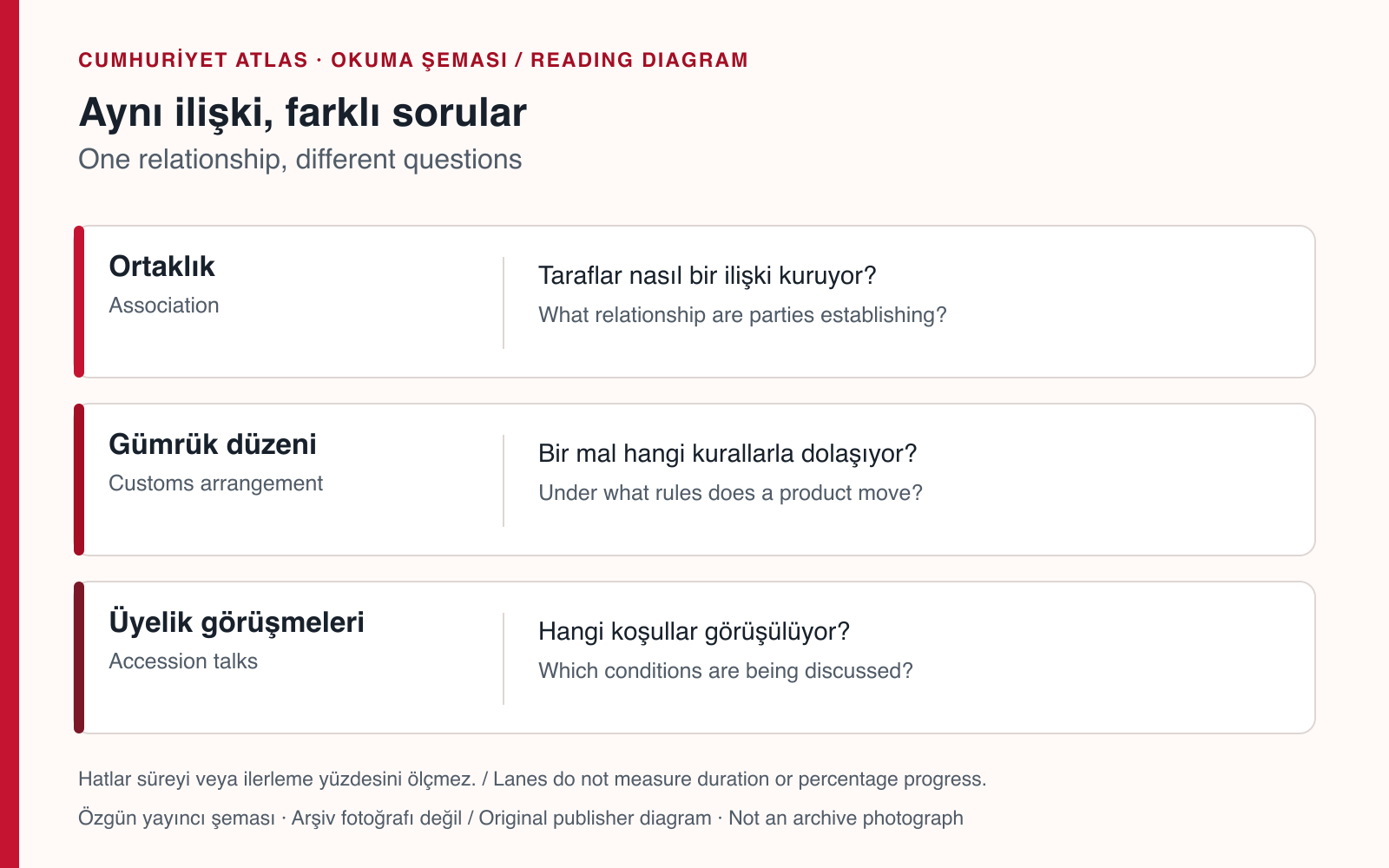
Association, trade and negotiating milestones
Türkiye–Europe relations: association, customs union and accession
Read three concepts without collapsing them into one: the stages of association, the limits of a trading arrangement and the workings of membership talks. Dates, documents and an original explanatory visual are presented together.
Explore →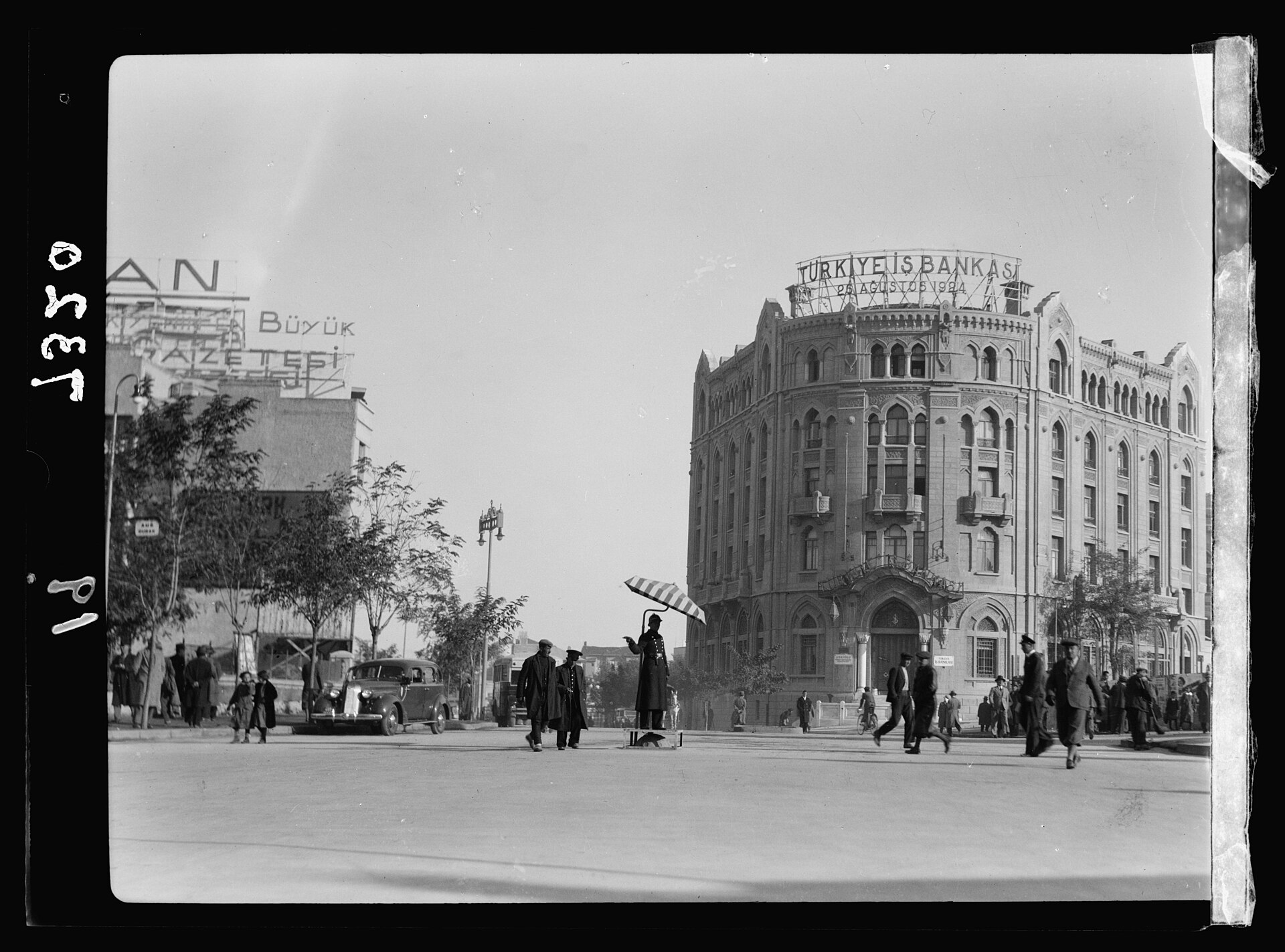
26 August 1924—1938
National banks, credit and monetary sovereignty
The distinct roles of İş Bankası, the Central Bank, Sümerbank, Etibank, Halkbank and a reorganized Ziraat Bankası.
Explore →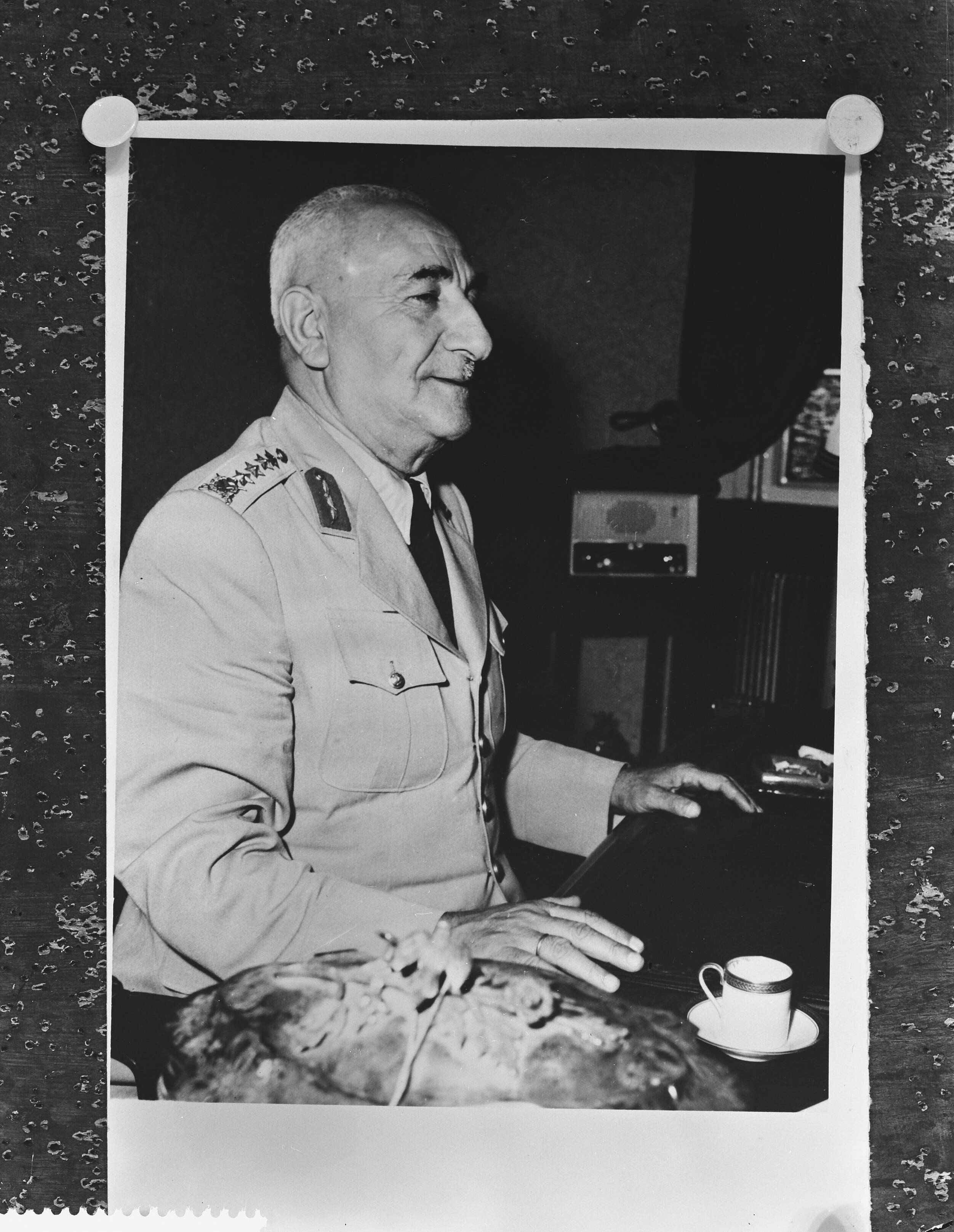
27 May 1960—6 December 1983
The interventions of 1960, 1971 and 1980
Military interventions interrupted elected politics and produced new constitutions with lasting social consequences.
Explore →Documents and sources14 sources
Official reference points used to verify the chronology and interpretive frame on this page.
- History: after 1980 ↗TCMB
- Decree No. 32 ↗Hazine ve Maliye Bakanlığı
- Stand-by announcement, 1995 ↗IMF
- Letter of Intent, 1999 ↗Türkiye Hükûmeti · IMF arşivi
- Monetary Policy Report, November 2001 ↗TCMB
- Policy memorandum, May 2001 ↗Türkiye Hükûmeti · IMF arşivi
- Banking programme announcement, 2001 ↗BDDK
- Law No. 4651 ↗TBMM
- Monetary-policy framework ↗TCMB
- Law No. 5083 ↗TBMM
- Notice No. 2007-16 ↗TCMB
- Accounting Communiqué No. 15 ↗Maliye Bakanlığı · TCMB arşivi
- Annual Report, 2009 ↗TCMB
- What is inflation? · educational page ↗TCMB