
← Back to History of the Republic
Basın Yayın ve Enformasyon Genel Müdürlüğü / Directorate General of Press and Information · Flickr Commons / Wikimedia Commons · No known copyright restrictions · institutional Flickr Commons release ↗ Agriculture · producer, knowledge and model enterprise
Agriculture: tax, science, farms and cooperatives
In a country where most people depended on farming, modernization could not rest on urban factories alone. Changing taxation, connecting producers with knowledge and credit, and demonstrating production under dry conditions were parts of one programme.
17 February 1925—1937Villages · Ankara · regional farms
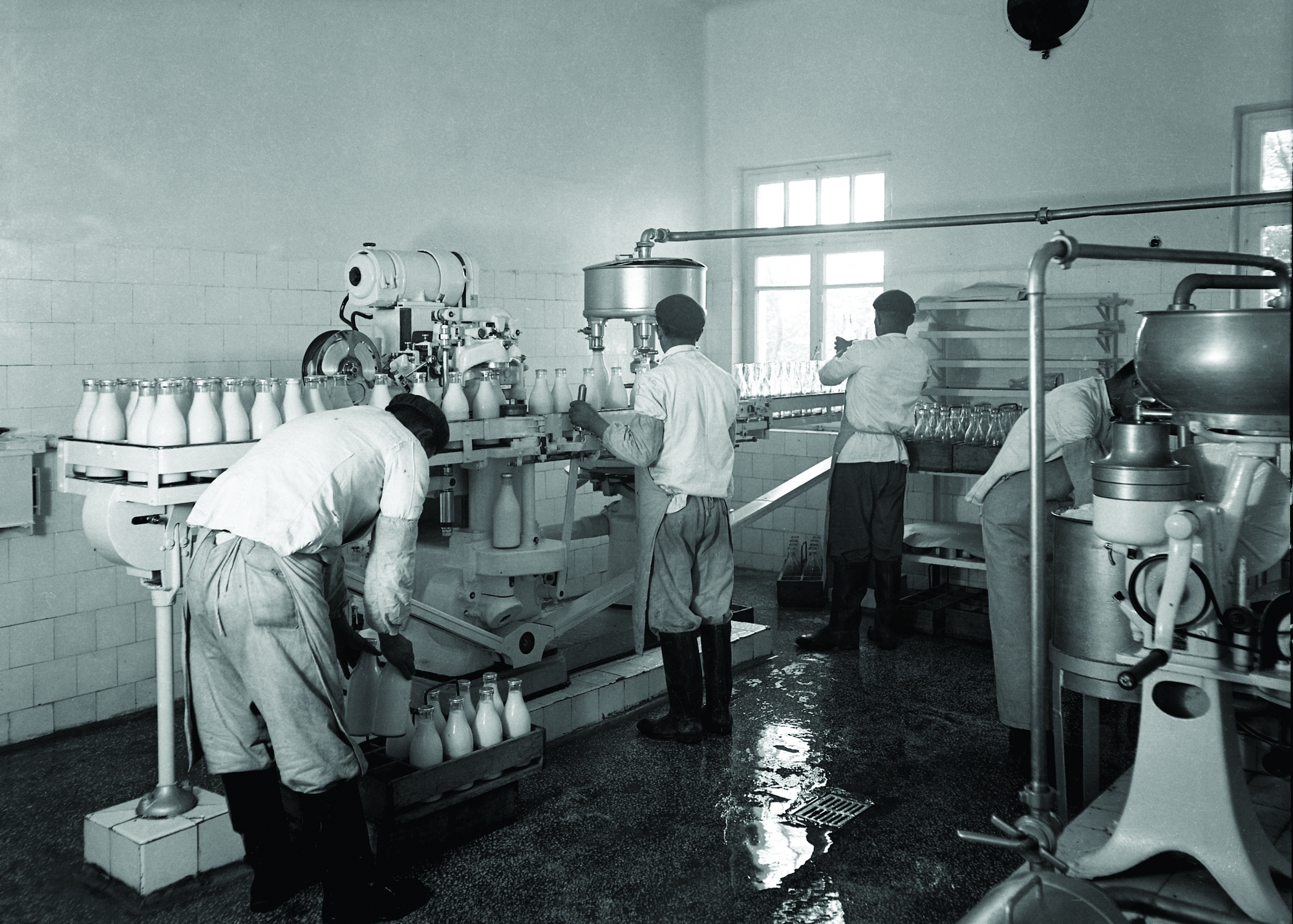
The Directorate General of Press and Information archive describes this photograph as 1939. It shows food production continuing after Atatürk's death, not the farm's foundation in 1925 or donation in 1937. The original JPEG has been preserved unchanged.
At a glance
- Tithe abolished
- 1925
- Forest Farm
- 1925
- Agricultural Institute
- 1933
- Transfer to Treasury
- 1937
Agriculture was an everyday question for the new state
Rebuilding agriculture in 1923 was not only an export or statistical ambition. Prolonged war had damaged labour supply, livestock, equipment and the organisation of production. Rural livelihoods, urban food supplies and government revenue were connected with farming. Agriculture was consequently not a minor subject separate from factories in Atatürk's conception of modernisation. Examining yields, transport and processing together makes the connection between rural development and the national economy clearer.
No single instrument could accomplish an agricultural transformation. Tax arrangements influenced what producers retained; credit influenced their means before sowing; education supplied technical knowledge; experimental farms demonstrated application. Purchasing a machine was different from connecting it with suitable soil, fuel and a maintenance system. Reading the period through these complementary instruments explains how national change was pursued without reducing its meaning to the success of one farm.
↑ Back to dossier contents1925: abolishing aşar changed a fiscal relationship
Law No. 552 adopted on 17 February 1925 abolished aşar. This was a tax on agricultural output whose collection also involved tax farmers known as mültezim. It should not be imagined as a modern income tax calculated on net profit. Removing the charge affected the share of production retained by a farming household. Collection methods and the relationship between producers and collectors were also part of the reform's social significance.
The decision meant giving up an important revenue category. An account therefore needs to consider how public income was reorganised as well as celebrating the abolition itself. Subsequent indirect taxation and arrangements concerning the commercial movement of produce did not leave every farmer free of all fiscal burdens. The reform nevertheless ended a particular historical charge. Examining the new balance between household production and the state's financial needs gives a more useful explanation of what changed.
↑ Back to dossier contentsThe Forest Farm: application and maintenance on difficult land
The Forest Farm near Ankara began developing in the spring of 1925. Improving the land and organising production around soil and water conditions were important parts of establishment. Atatürk's experimental farms were not limited to investing in ready-made fertile land. Ankara offers a case in which reclamation and building an enterprise were addressed together. The undertaking required a considerably broader agricultural organisation than purchasing machines alone.
An experimental farm's educational value lies in making its work comparable and sustainable. Seed or animal choices must be assessed against climate and soil; equipment can lose usefulness if maintenance capacity is absent. Atatürk's transfer letter of 1937 discusses repair facilities alongside work with domestic and foreign animal breeds. Reading this example today reveals innovation as more than imported machinery. Appropriate use, repairs and local knowledge give an investment practical value.
↑ Back to dossier contentsThe Higher Agricultural Institute: science meets production
The Higher Agricultural Institute began teaching on 30 October 1933. Initially it comprised four faculties: Natural Sciences, Agriculture, Veterinary Medicine and Agricultural Arts. Forestry joined later. The arrangement indicates an educational approach that connected plants, animal health, basic science and processing rather than treating them as isolated subjects. The teaching community associated with rector Friedrich Falke makes the training of specialists visible within the modernisation story.
The inclusion of agricultural machinery and rural crafts within Agricultural Arts is particularly revealing. A rural economy consisted of more than grain harvests; fibres, processing methods and craft production also formed livelihoods. A scientific institution's contribution was not identical to directly running a field. Organising knowledge, educating students and developing research were different tasks. Reading university and farm histories together shows the complementary relationship between experiment, technical learning and application in production.
↑ Back to dossier contentsCredit and cooperatives: producers organised themselves
Law No. 2836 of 1935 created a new legal framework for agricultural credit cooperatives. The Tekir Farm Agricultural Credit Cooperative was established in Silifke in 1936, with Atatürk as a founder and its number-one member. Tekir should not be confused with Tekirdağ: this example belongs to the Silifke area of Mersin. It adds a regional case beyond Ankara to a history too often told only through the Forest Farm.
Credit cooperatives and sales cooperatives did not perform an identical task. One addressed production finance; the other concerned collective activity in taking goods to market. Ziraat Bankası and cooperative organisation connected individual producers with institutional resources. Timing mattered to a household spending before sowing and earning after harvest. A cooperative depended on members' trust, records and continuing work, not only an official signature. Such an account treats farmers as economic actors rather than passive recipients of assistance.
↑ Back to dossier contentsBeet, milk and processing: agriculture connects with industry
Sugar factories made the relationship between growing raw materials and industrial production tangible. The experimental and pest laboratory established in Uşak in 1932 provides a case of beet cultivation requiring research. Plant health, crop quality and reliable processing represented different stages of one chain. Describing a beet field and a sugar factory as unrelated worlds would obscure why agricultural innovation mattered to industrial development.
The Forest Farm's dairy and other food-processing activities similarly invite attention to how a product moved from land or animals to an urban consumer. Processing, hygiene, containers, transport and sale were work undertaken after primary production. The 1939 archive photograph of milk-factory workers on this page shifts attention from a statesman's portrait to everyday labour. Its date is after Atatürk's death. It witnesses subsequent production associated with the approach developed during his presidency, not an event he personally attended.
↑ Back to dossier contentsThe 1937 donation: from personal farms to public responsibility
In a letter dated 11 June 1937, Atatürk informed the government that he donated the farms under his ownership to the Treasury, together with facilities, animals and equipment. This was more than a transfer of land: operating assets and productive infrastructure were included. References to technical and economic experimentation indicate an intention that these enterprises could serve as examples for future agricultural policy. The donation and the later institutional arrangements for managing the farms belong to different stages.
The transfer should not be represented as redistribution of all land in Turkey or a completed national land reform. It concerned the farms under Atatürk's ownership. Assessing agricultural modernisation requires taxation, education, credit, experimentation and processing investments to be considered together. They had different fields of influence and timescales. The strongest account of progress under Atatürk explains what each initiative changed and makes the transition to later Republican agricultural history visible.
↑ Back to dossier contentsRead the turning points together
- 1923
Restoring production after war
Needs for labour, animals, equipment and finance formed starting conditions for the new state's agricultural policies.
- 17 February 1925
Aşar is abolished
Law No. 552 ended a historical tax on produce and created a need to reorganise public revenue.
- Spring 1925
The Forest Farm near Ankara
Land improvement and enterprise-building established a setting for practical agricultural experimentation.
- 1932
An experimental laboratory in Uşak
Research on beet production and plant health connected agricultural materials with sugar manufacture.
- 30 October 1933
The Higher Agricultural Institute starts teaching
Its initial four-faculty arrangement brought science, farming, veterinary work and agricultural arts together.
- 1935–1936
Cooperative legislation and Tekir
The agricultural credit legislation of 1935 was followed by a cooperative in Silifke in 1936 with Atatürk as a member.
- 11 June 1937
The farms are donated to the Treasury
Atatürk's letter announced a transfer including operating facilities, animals and equipment alongside land.
- 1939
An archive image of milk-factory workers
The photograph described under this year by the institution witnesses continuing food production after Atatürk's death.
Explore the archive and documentary context
TRT 2
Tarihin Ruhu · Atatürk Forest Farm · episode 50
TRT 2's official programme discusses farm footage from 1925–1929 in historical context. Archival film and modern commentary should be distinguished; one scene does not represent the condition of agriculture throughout Turkey.
Choosing to load the player connects to YouTube and shares technical data such as your IP address with Google. Autoplay is off. This choice does not change your cookie preferences. The publisher may restrict regional access or embedding; the official link below provides an alternative.
Supported YouTube publications can be watched here by choosing to load their player. Videos are not copied onto our server. Interpret archive images alongside their production date and the narrator’s perspective; the official publication link remains as an alternative.
Questions and historical distinctions
Did abolishing aşar end all agricultural taxation?
No. A particular tax on output and its collection arrangements ended. Government revenue continued to be obtained through other means. The reform mattered because it changed a historical charge on producers and the relationship involved in collecting it, not because all fiscal burdens disappeared.
Where was Tekir Farm?
This cooperative example belongs to the Silifke area of Mersin, not Tekirdağ. The institution in which Atatürk was a founder and number-one member in 1936 supplies an important case of agricultural initiatives beyond Ankara. Similar names should not displace a historical location.
Did the Higher Agricultural Institute begin with five faculties?
Teaching began in 1933 with four faculties. Forestry joined subsequently, bringing the number to five. Avoiding the transfer of a later institutional arrangement to its opening moment is important for explaining the stages of educational reform accurately.
Why did donating the farms to the Treasury matter?
The transfer included equipment, animals and facilities, placing enterprises previously under personal ownership within public responsibility. It was not a distribution of all farmers' land. The donation should be understood as an institutional transition involving experimental and productive infrastructure for subsequent use.
Archive note
Archive images for wider context
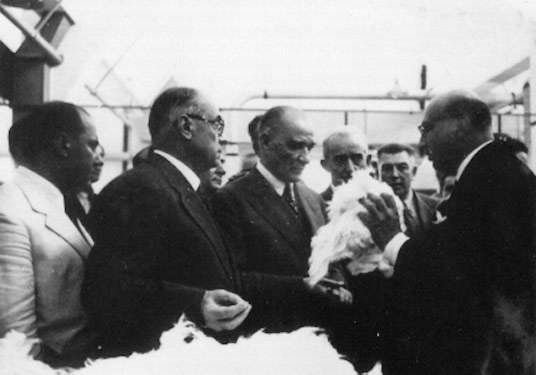

Cumhuriyet Atlas
Continue the story here
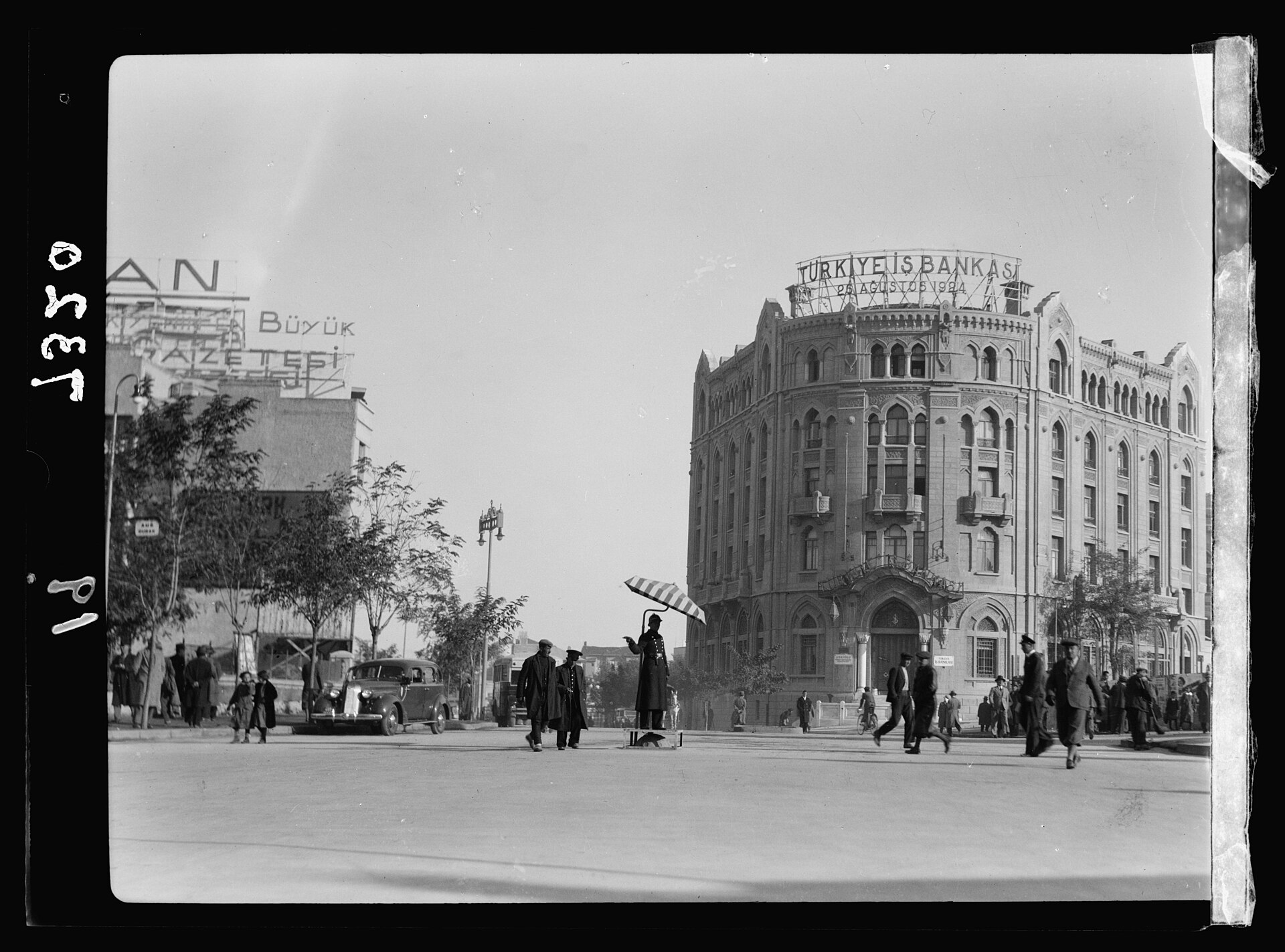
26 August 1924—1938
National banks, credit and monetary sovereignty
The distinct roles of İş Bankası, the Central Bank, Sümerbank, Etibank, Halkbank and a reorganized Ziraat Bankası.
Explore → 17 February—4 March 1923
The İzmir Economic Congress and economic sovereignty
Farmers, merchants, industrialists and workers debated the new state’s economic aims while Lausanne negotiations continued.
Explore →
1933—1938
Industrial plans, factories and production towns
From Sümerbank to Nazilli: textiles, paper, glass, mining and energy in planned industrialization.
Explore →Cumhuriyet
See the story in motion
Selections from our channel. Watch, open a related dossier and keep exploring.
Explore the video library → 11:38
Industry & science
Sugar factories: the memory of production
A channel publication on the establishment of sugar factories, paired with our industry, agriculture and banking dossiers.
Watch & explore →Documents and sources13 sources
Official reference points used to verify the chronology and interpretive frame on this page.
- Abolition of the tithe tax ↗ATATÜRK ANSİKLOPEDİSİ
History of the agricultural production tax abolished on 17 February 1925.
- Atatürk’s farms ↗ATATÜRK ANSİKLOPEDİSİ
Model farming, breeding, mechanization and transfer of the farms to the Treasury in 1937.
- Higher Institute of Agriculture ↗ATATÜRK ANSİKLOPEDİSİ
The scientific agricultural education and research institute opened in 1933.
- The farm's foundation and donation to the Treasury ↗Atatürk Orman Çiftliği
Primary institutional record for production, education and institutional dates.
- From the Higher Institute of Agriculture to the faculty ↗Ankara Üniversitesi Ziraat Fakültesi
Primary institutional record for production, education and institutional dates.
- Atatürk Araştırma Merkezi · İbrahim İnci, Türk tarımındaki gelişmeler, 1923–1938 ↗atamdergi.gov.tr
- Ankara Üniversitesi · Yüksek Ziraat Enstitüsü ve Ziraat Sanatları tarihçesi ↗gsfkoleksiyon.ankara.edu.tr
- Türkiye Tarım Kredi Kooperatifleri · Kurumsal tarihçe ↗tarimkredi.org.tr
- Ticaret Bakanlığı · Türkiye'de kooperatifçilik tarihçesi ↗ticaret.gov.tr
- Ziraat Bankası · Cumhuriyet dönemindeki yeniden düzenlemeler ↗www.ziraatbank.com.tr
- Türkşeker · Şeker Enstitüsü ve Uşak deneme laboratuvarı ↗www.turkseker.gov.tr
- TRT 2 · Tarihin Ruhu: Atatürk Orman Çiftliği ↗www.trt2.com.tr
- Basın Yayın ve Enformasyon Genel Müdürlüğü · AOÇ süt fabrikası çalışanları, Flickr Commons arşiv kaydı ↗commons.wikimedia.org