
← Back to History of the Republic
Matson Collection / Library of Congress / Wikimedia Commons · Public domain · no known restrictions ↗ Economy · a development programme before peace
The İzmir Economic Congress and economic sovereignty
Military victory required productive, financial, transport and commercial capacity to last. The İzmir Congress was not a binding blueprint solving every detail; it was a declaration that economic sovereignty completed political independence.
17 February—4 March 1923İzmir
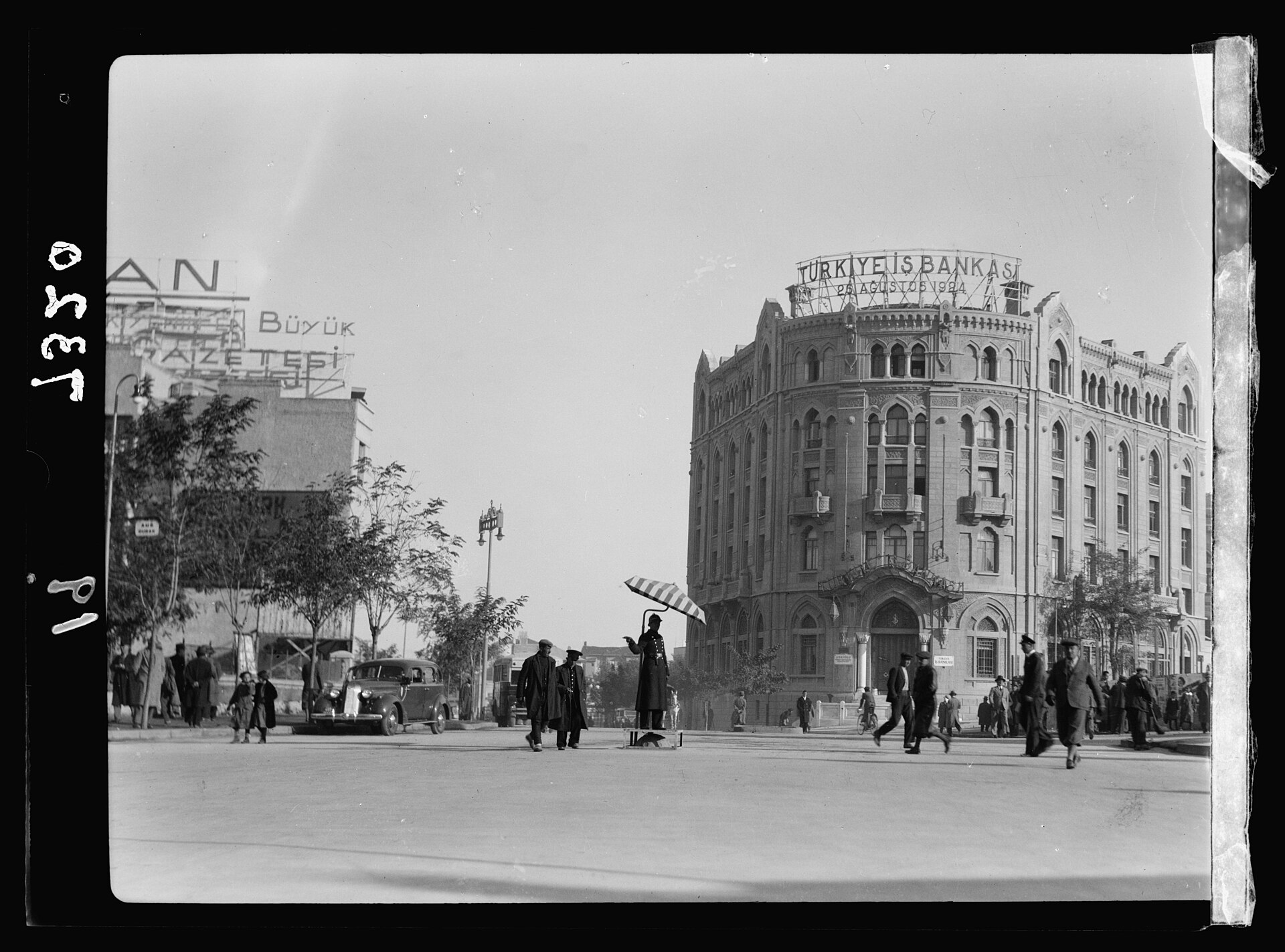
Türkiye İş Bankası building in Ankara, 1935; the façade records its founding date, 26 August 1924.
At a glance
- Opened
- 17 February 1923
- Closed
- 4 March 1923
- Representation
- 4 occupational groups
- Core idea
- Economic sovereignty
From wartime victory to rebuilding production
The İzmir Economic Congress met from 17 February to 4 March 1923, during the interruption in the Lausanne negotiations. The peace treaty had not yet been signed and the Republic had not yet been proclaimed. Turning military success into a durable political order required the reconstruction of production and trade after years of war. Economics therefore concerned more than money: it raised questions about the social foundations of the new state and its ability to sustain sovereignty. İzmir was a significant setting, combining recent liberation with severe destruction and commercial reorganization. The congress is best understood as a forum where different needs became visible at a founding moment, rather than a complete blueprint for every later economic measure. Its place in the chronology helps explain why the discussion carried such political weight.
↑ Back to dossier contentsFour groups, different needs within one economy
Farmers, merchants, industrialists and workers presented proposals. For a farmer, taxation, credit, animals and machinery could determine whether production was possible. A merchant confronted transport costs and commercial procedures. Industrialists sought capital, tariff protection, energy and skilled labour, while workers raised working hours, pay and conditions. These concerns could complement one another, but they could also conflict: reducing an employer's costs might reduce an employee's security. Treating the groups as decorative expressions of a single will removes this important field of negotiation. Economic history becomes more revealing when the different participants in a production chain remain visible. Representation at the congress also does not establish that every citizen or worker had an equal voice. The composition of a meeting and the breadth of its claims require separate consideration.
↑ Back to dossier contentsPrinciples were not automatically implemented laws
Shared principles appeared as the Misak-ı İktisadi, alongside separate sets of occupational proposals. These were not a national budget or a self-executing programme. Implementing a demand required legislation, finance, institutions and administrative capacity. Support for agriculture had to connect with taxation; expanded production with credit and railways; industrialization with technical education. Keeping these distinctions prevents the assumption that everything proposed at İzmir immediately became reality. Readers can trace a demand by asking which group advanced it, what later measure addressed it and which institution carried that measure out. Such questions explain the distance between a conference resolution and a change in daily life. They also reveal the work of administrators, producers and employees who would ultimately have to make a policy function.
↑ Back to dossier contentsChanging instruments between the 1920s and 1930s
Atatürk's opening address stressed that political independence needed economic strength. The instruments used to pursue that objective changed over time. Encouragement of national enterprise, private capital and banking were important in the 1920s. The worldwide crisis beginning in 1929, limited capital and difficult trading conditions increased the role of public investment during the following decade. Sümerbank and the industrial plans belong to this later setting. It is consequently misleading to describe the İzmir Congress either as a declaration of unrestricted markets or as the unveiling of an already complete state-industrial model. Continuity lay in the objective of increasing productive capacity and economic room for decision; methods evolved. Using knowledge or technology from abroad was not necessarily inconsistent with that objective, since the terms of cooperation and control mattered.
↑ Back to dossier contentsFollowing the congress into an institutional map
The banking, agriculture, railway and factory dossiers show different sides of the same problem. Credit supports investment, transport connects products with markets, research can improve productivity and factories process raw materials. Weakness in one part can restrict the effect of another. These connections explain why counting newly opened buildings or enterprises cannot by itself measure economic modernization. Access, public costs and conditions of work belong in the assessment alongside productive achievements. The congress remains significant because it linked independence with ordinary problems of production and livelihood. A useful question for readers today is how groups that share a broad objective can nevertheless disagree about who pays for it. Following those disagreements into institutions produces a more informative history than converting the congress into a single celebratory slogan.
↑ Back to dossier contentsArchive note
Archive images for wider context
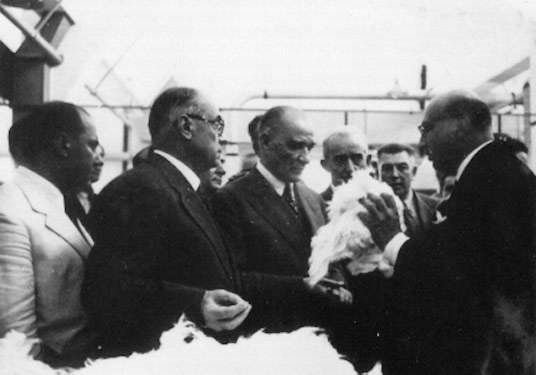
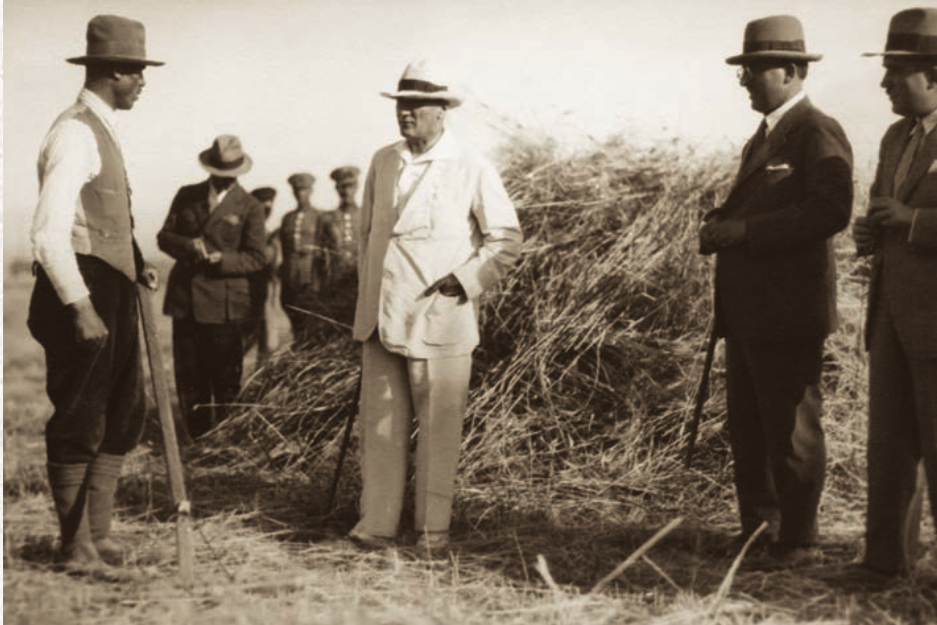
Cumhuriyet Atlas
Continue the story here
26 August 1924—1938
National banks, credit and monetary sovereignty
The distinct roles of İş Bankası, the Central Bank, Sümerbank, Etibank, Halkbank and a reorganized Ziraat Bankası.
Explore →
17 February 1925—1937
Agriculture: tax, science, farms and cooperatives
Abolition of the tithe, model farms, scientific education, seed and animal breeding, and the search for credit.
Explore →
1933—1938
Industrial plans, factories and production towns
From Sümerbank to Nazilli: textiles, paper, glass, mining and energy in planned industrialization.
Explore →Documents and sources3 sources
Official reference points used to verify the chronology and interpretive frame on this page.
- Atatürk’s economic policy ↗ATATÜRK ANSİKLOPEDİSİ
The balance among economic sovereignty, private enterprise, public investment and planning.
- Türkiye Economic Congress ↗Atatürk Ansiklopedisi
Reference for founding dates, institutional functions and period context.
- İzmir Economic Congress ↗İzmir Valiliği
Reference for founding dates, institutional functions and period context.