

← Back to History of the Republic
General Photographic Agency / Wikimedia Commons · Public domain ↗ Knowledge society · institutions and daily life
Education, science, health, culture and public life
Modernization is not only legal change. It requires institutions that train teachers, fight disease, conduct research, support music and theatre, and establish shared systems of time and measurement in everyday life.
1924—1938School · laboratory · hospital · stage
Two citizens study a poster of the new alphabet outside a municipal building, 22 November 1928.
At a glance
- Unified education
- 1924
- New alphabet
- 1928
- Public Health Law
- 1930
- University reform
- 1933
The everyday face of modernization: schools and teachers
The 1924 Unification of Education Law brought educational administration under the Education Ministry, establishing a framework for a common public system. A law alone, however, does not supply buildings, teachers or textbooks. Teacher training, vocational education and efforts to reach villages formed the practical side of reform. Following adoption of the new alphabet in 1928, the Nation Schools also made adult learning needs visible. Education was no longer considered only in terms of the years children spent in classrooms. Differences in access between regions, genders and social groups nevertheless continued. Reading this history as an effort to reduce barriers to knowledge, rather than simply as a rising count of schools, brings the experience of teachers and students into the account.
↑ Back to dossier contentsUniversity reform in 1933: more than a change of name
Replacing İstanbul Darülfünun with İstanbul University in 1933 marked an important break in the organization of higher education. Some existing academics joined the new institution, others lost their posts, and Turkish scholars educated abroad worked alongside scientists arriving from Europe. The contribution of researchers forced from their countries by Nazi persecution connects Türkiye's scientific history with Europe's political catastrophe. The reform involved more than a new sign: it reorganized expectations about research, laboratories, teaching and specialist training. Institutional renewal and academic freedom are nevertheless distinct questions; administration and scholarly capacity require separate assessment. Institutions such as the Higher Institute of Agriculture represented another route of specialization, connecting knowledge with practical production problems. Together these developments show both the extension of capacity and the choices through which that capacity was governed.
↑ Back to dossier contentsFrom faculty to research garden
According to Alim Arlı's study, Albert Malche submitted his report on 1 June 1932 after interviews and a questionnaire. He advocated improving Darülfünun rather than directly demanding its closure. Foreign-language learning and examinations testing application instead of memorisation addressed concrete teaching problems. The adviser's report and the government's later institutional decision should consequently not be read as the same document or intention.
İstanbul University's 2013 Faculty of Science brochure dates the opening of the botanical garden established by Alfred Heilbronn and Leo Brauner with specialist gardeners to 1935. It describes the garden and herbarium through teaching, research and plant collections. The historical connection is that university reform required settings for observation and examining specimens, not only academic chairs. The brochure is an institutional record from 2013, not a guide to today's visitor arrangements.
↑ Back to dossier contentsPublic health: organizing before illness occurs
Alongside hospital treatment, republican health policy placed importance on preventive services. Work during Refik Saydam's period as minister included developing personnel and administrative arrangements. The Public Health Law of 1930 became a major framework for duties concerning epidemics, environmental health and collective protection. Laboratories, records, vaccination efforts and local implementation complement one another within such a system. The position of a settlement unable to reach treatment cannot be explained only by counting buildings: staff, transport and continuity of service are essential. Historical achievement should not be confused with an assertion that every disease disappeared or access became equal immediately. Public health is an institutional undertaking requiring continuing resources and education, not simply a short campaign. This section concerns the history of services and does not provide personal medical advice.
↑ Back to dossier contentsPublic health: law, laboratory, production
Law 1267, adopted on 24 May 1928 and published on 27 May, provided for a public-health institute in Ankara attached to the Ministry of Health and Social Assistance. Its remit extended beyond producing vaccines and sera to health research, testing preparations and continuing education for physicians.
The Health Ministry's history records domestic production of tetanus and diphtheria vaccines from 1931 and anti-rabies serum in 1937. Sending cholera vaccine to China in 1938 belongs to that production history too. These examples reveal a laboratory that was more than a place of investigation: it was a public institution preparing identifiable products and supplying them elsewhere.
↑ Back to dossier contentsMuseums, performance and libraries as public infrastructure
People's Houses, opened from 1932, brought language, history, arts, sport, publishing and adult education into a public programme. They also disseminated the cultural and civic understanding of the single-party period; presenting them as detached from politics would be incomplete. Museums and archaeology made the material remains of the past objects of systematic investigation, while the formation of Ankara State Conservatory in 1936 developed specialist training for music and performance. Cultural institutions do more than offer events to audiences. They create an environment for educating teachers, artists, researchers and technical staff. Separating a city's library or museum entirely from its schools and factories weakens the picture of those connections. Culture was not simply an ornament added after modernization, but one means through which society represented and discussed itself.
↑ Back to dossier contentsThe conservatory's school and rehearsal system
MEB's Hasan Âli Yücel section dates the predecessor Music Teacher School in Cebeci to 1924. Paul Hindemith's investigations from 1935, Carl Ebert's stage teaching and Ernst Praetorius's work brought together different specialisms. Distinguishing teacher training from music and performance education prevents the institution's development being reduced to one opening date.
The Turkish summary of Ebert's letter dated 19 October 1936 in İTÜ's Altar Archive records requests for healthy classrooms with suitable acoustics, a rehearsal stage, sports facilities and a phonetics teacher. Teaching performance meant more than choosing repertoire: voice, movement and rehearsal space had to be organised together. These requests describe needs expressed while building a teaching system, not a checklist of facilities already provided.
↑ Back to dossier contentsShared time, measurements and sustained work
Changes to calendars, numerals, weights and measures transformed everyday life in relatively quiet but extensive ways. Shared dates and measurements could align transactions from commercial contracts and lessons to health records and railway operations. Surname regulation likewise concerned distinguishing people in official records and organizing public identity. Announcing a standard did not mean everyone learned it on the same day: older habits and new rules could coexist during transitions. Considering these institutions together also shows that modernization cannot be reduced to a leader's will. Atatürk supplied direction and political support; teachers, doctors, artists, engineers and citizens made that direction concrete through daily work. Lasting change depended on connecting the language of law with actual practice. That relationship is the common thread running through the classroom, laboratory, hospital and stage.
↑ Back to dossier contentsRead the turning points together
- May 1928
Founding law
Law 1267 was adopted on 24 May and published on 27 May.
- 1 June 1932
Report
Malche submitted his report on teaching reform.
- 1935
Botanical garden
The 2013 brochure dates the garden's opening to 1935.
- 19 October 1936
Ebert's requirements
The archived letter summary gives concrete classroom, rehearsal and specialist-teaching requirements.
Explore the archive and documentary context
TRT Arşiv
Music Teacher School
A programme published by TRT Arşiv in 2019, with 1936 in its title. That label is not the school's founding date, which MEB places in 1924. It provides context for the institution's different phases, not a claim that every shot was filmed in 1936.
Choosing to load the player connects to YouTube and shares technical data such as your IP address with Google. Autoplay is off. This choice does not change your cookie preferences. The publisher may restrict regional access or embedding; the official link below provides an alternative.
Supported YouTube publications can be watched here by choosing to load their player. Videos are not copied onto our server. Interpret archive images alongside their production date and the narrator’s perspective; the official publication link remains as an alternative.
Questions and historical distinctions
Did the 1928 public-health law concern only vaccine production?
No. Health research, testing preparations and training physicians were also among the institution's duties.
Did Malche demand Darülfünun's closure?
No. Recommendations for improvement differ from the government's institutional decision.
Do school and conservatory have the same founding date?
No. MEB describes the teacher-training school dated to 1924 as the predecessor of the later conservatory.
Archive note
Archive images for wider context
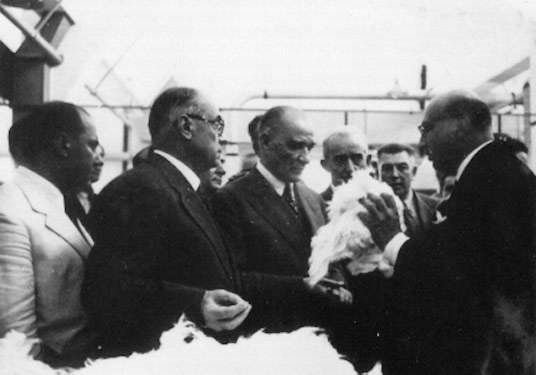
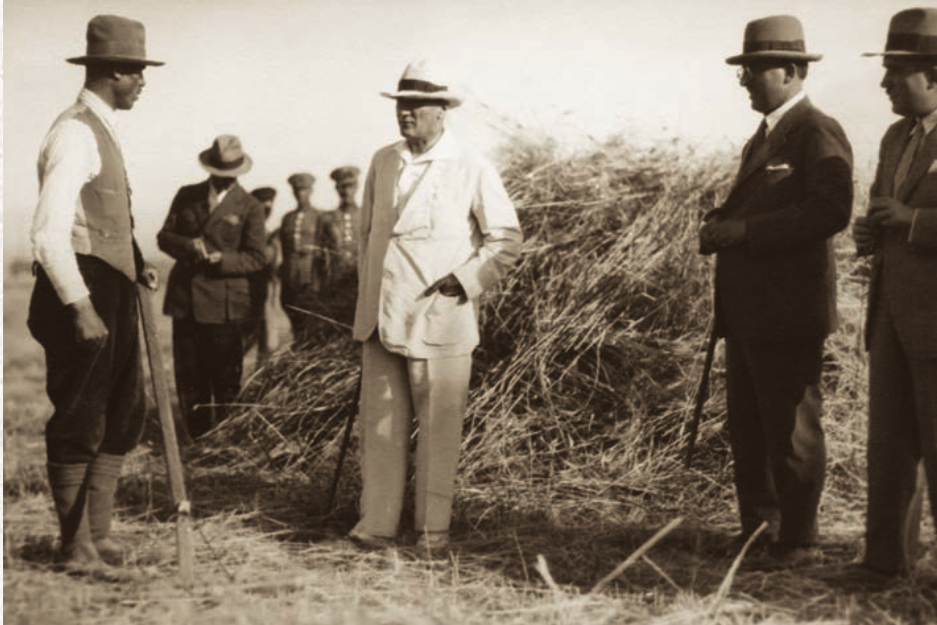
Cumhuriyet Atlas
Continue the story here

1933—1938
Industrial plans, factories and production towns
From Sümerbank to Nazilli: textiles, paper, glass, mining and energy in planned industrialization.
Explore →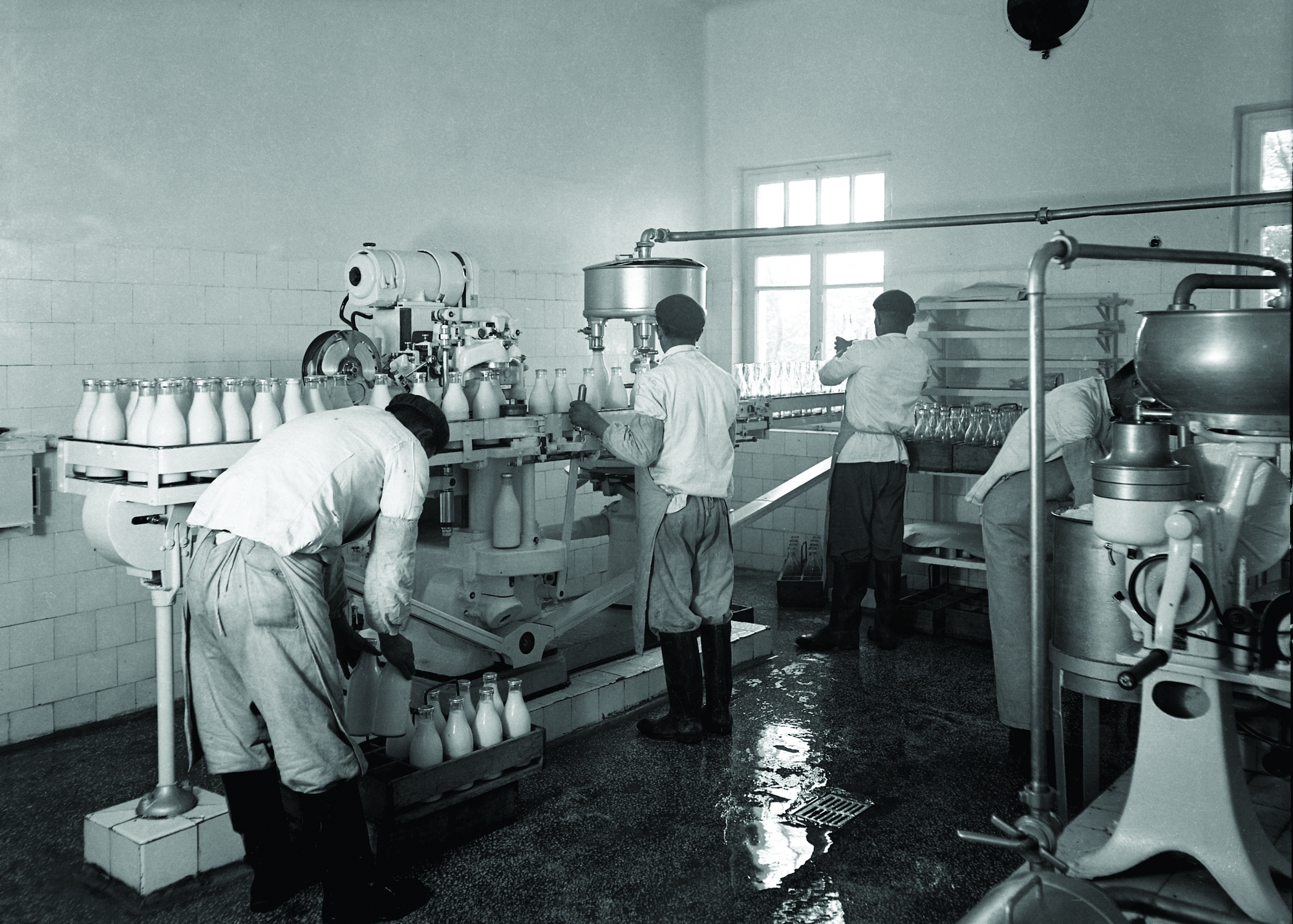
17 February 1925—1937
Agriculture: tax, science, farms and cooperatives
Abolition of the tithe, model farms, scientific education, seed and animal breeding, and the search for credit.
Explore →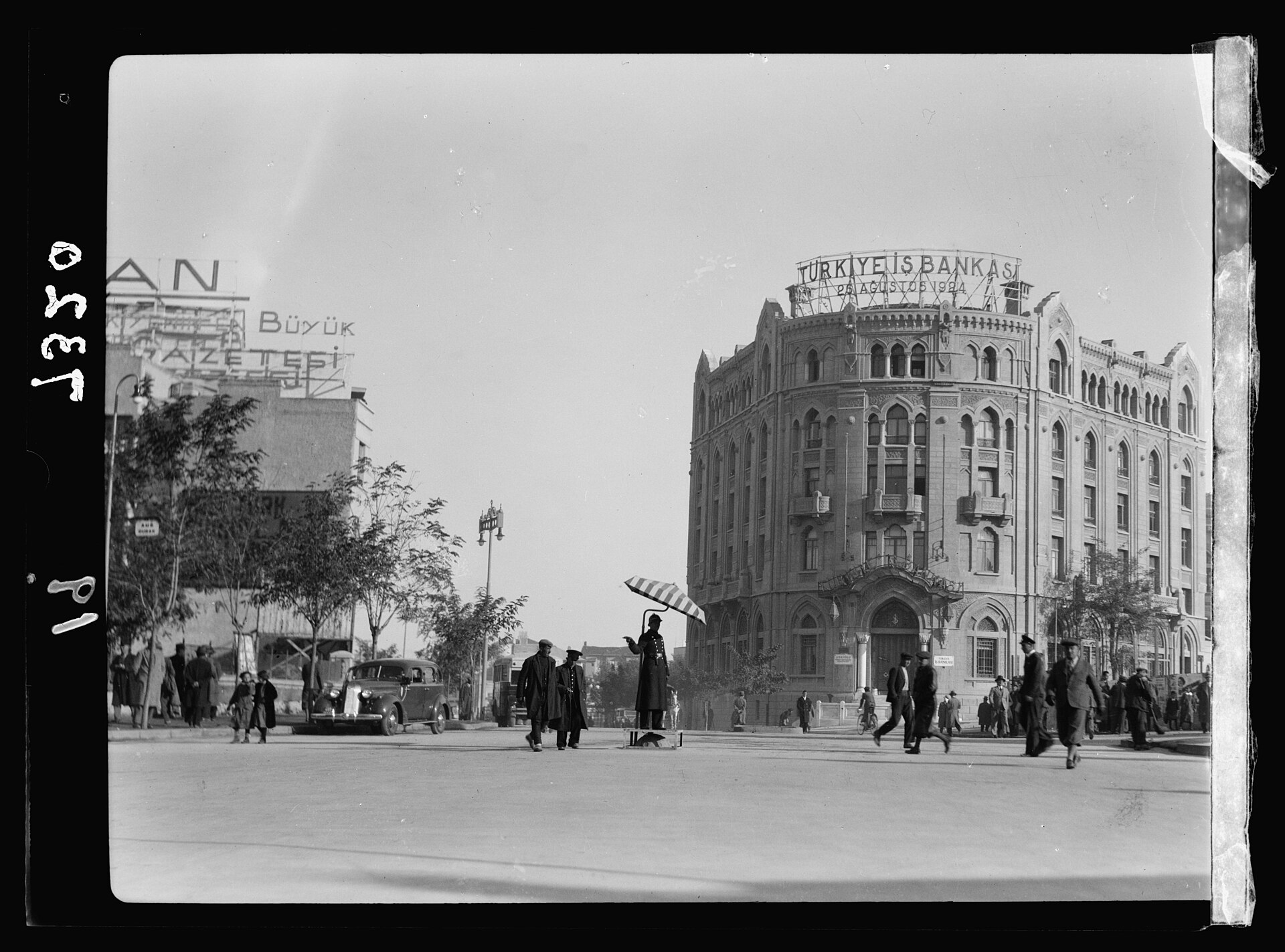
26 August 1924—1938
National banks, credit and monetary sovereignty
The distinct roles of İş Bankası, the Central Bank, Sümerbank, Etibank, Halkbank and a reorganized Ziraat Bankası.
Explore →Cumhuriyet
See the story in motion
Selections from our channel. Watch, open a related dossier and keep exploring.
Explore the video library → 0:56
Culture & shared memory
The Student Oath: a voice in shared memory
A short Cumhuriyet channel video centred on the shared memory surrounding the Student Oath.
Watch & explore → 1:22
Industry & science
Canan Dağdeviren: a window onto science
A short channel video about Canan Dağdeviren, opening a route into education and science stories.
Watch & explore → 1:14
Culture & shared memory
The Student Oath: a short recording
Another short recording published under the Student Oath title, part of the education and shared-memory selection.
Watch & explore →Documents and sources13 sources
Official reference points used to verify the chronology and interpretive frame on this page.
- Ministry of Education ↗ATATÜRK ANSİKLOPEDİSİ
Unification of education and organization of new educational institutions.
- Higher Institute of Agriculture ↗ATATÜRK ANSİKLOPEDİSİ
The scientific agricultural education and research institute opened in 1933.
- The university reform of 1933 ↗İstanbul Üniversitesi
Institutional reference verifying documents, institutions and event context.
- Health institutions in the republican period ↗Sağlık Bakanlığı
Institutional reference verifying documents, institutions and event context.
- History of the conservatory ↗Hacettepe Üniversitesi Ankara Devlet Konservatuvarı
Institutional reference verifying documents, institutions and event context.
- People's Houses ↗Atatürk Ansiklopedisi
Institutional reference verifying documents, institutions and event context.
- Atatürk's reforms ↗Atatürk Ansiklopedisi
Periodisation of legal, educational and political change.
- TBMM · 1267 sayılı kanun ↗www5.tbmm.gov.tr
- Sağlık Bakanlığı · Aşı tarihçesi ↗covid19asi.saglik.gov.tr
- Alim Arlı · Üniversite Reformu (1933) ↗turkmaarifansiklopedisi.org.tr
- İÜ Fen Fakültesi · 2013, s. 60–61 ↗cdn.istanbul.edu.tr
- MEB · Devlet Konservatuvarı ↗www.meb.gov.tr
- İTÜ Altar Arşivi · Ebert mektubu ↗cevadmemduhaltar.itu.edu.tr