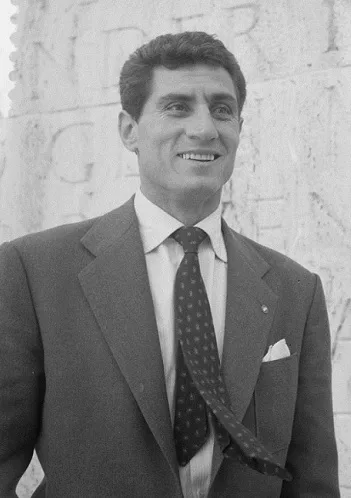
Halil Mutlu’s career is more than a row of three gold medals. He competed at 54kg in Atlanta and at 56kg in Sydney and Athens, while world championships followed a separate calendar. Reading those results alongside his early development and later interruption gives a fuller account of his place in Türkiye’s lightweight lifting tradition. The distinctions between divisions, lifts and kinds of championship matter as much as the headline numbers.
- Born
- 14 July 1973 · Bulgaria
- Olympic golds
- Atlanta 1996 · Sydney 2000 · Athens 2004
- World total titles
- 1994 · 1998 · 1999 · 2001 · 2003
From Bulgaria to Türkiye: an inspiration, not an identical career
Born in Bulgaria on 14 July 1973, Mutlu began weightlifting at ten under İbrahim Elmalı, according to the Turkish Weightlifting Federation’s biography. He arrived in Türkiye in December 1989 and looked to Naim Süleymanoğlu as an example. Their shared background should not collapse two different sporting lives into one. Mutlu’s own first Olympic appearance came at Barcelona 1992, where he placed fifth in the men’s 52kg division.
That fifth place makes the subsequent progression more meaningful than a story of instant success. Learning to produce a valid total in both lifts, preparing for a particular bodyweight division and gaining experience in a major international event are distinct challenges. Migration and national representation form the historical setting; they do not substitute for explaining the work and competitive development that took place on the platform.
Back to contentsAtlanta 1996: what the first gold measured
At Atlanta, Mutlu competed in the men’s 54kg event. His 132.5kg snatch and 155kg clean and jerk combined for a 287.5kg total. It was this combined result that determined the Olympic medal. An impressive isolated lift cannot stand in for the whole championship, because the athlete must establish a valid result in both disciplines.
The snatch takes the bar overhead in one continuous movement; the clean and jerk moves it first to the shoulders and then overhead. Watching the timing of getting beneath the bar and the final stabilisation adds meaning to the weight on the screen. Atlanta represented a clear change from Barcelona: Mutlu was no longer a promising fifth-placed Olympian but the winner of the Olympic total.
Back to contentsSydney and Athens: a different division, sustained success
At Sydney 2000, competing at 56kg, he lifted 137.5kg in the snatch and 167.5kg in the clean and jerk for a 305kg total. Athens 2004 brought 135kg and 160kg, a 295kg total, in the same bodyweight division. Both competitions ended with gold. A lower total winning a later event is not a contradiction: medals depend on the valid results produced by that particular field on that day.
Nor do these three totals form a simple graph of increasing or declining strength. Atlanta’s 54kg division differed from the later 56kg class, and opponents and competitive circumstances changed. Winning three consecutive Games is an achievement of repeated preparation across Olympic cycles, different from recording the heaviest single total in a career.
Back to contentsWorld championships and the meaning of the record book
IWF’s historical account records world total titles in 1994, 1998, 1999, 2001 and 2003, alongside 21 career world records. Snatch records, clean-and-jerk records and total records describe different achievements. World championships can also award medals in individual lifts, so a count of total titles is not interchangeable with a count of every medal an athlete received.
Mutlu competed in 52kg, 54kg, 56kg and 62kg divisions during different periods. A record in one class should therefore not be presented automatically as his all-career maximum in every class. IronMind’s film from Lahti 1998 supplies a specific competition setting for the viewer. It is valuable precisely because it is identifiable footage, not a generic clip relabelled as Atlanta or Athens.
Back to contentsA sporting legacy that includes the interruption
The disciplinary part of the career must also remain visible. IWF’s 2005 Doping Hearing Panel announcement recorded a two-year period of ineligibility under Article 2.1 of its anti-doping rules. That is the scope of the cited decision. It does not justify saying that Mutlu’s three Olympic golds were withdrawn or that the announced suspension remains in effect today.
The federation biography dates the end of his competitive career to 31 October 2008. A responsible account keeps Olympic titles, world total championships and the official disciplinary decision within the same chronology without treating them as the same kind of record. The linked biographies of Süleymanoğlu and Nurcan Taylan offer other perspectives on Türkiye’s lifting history, including the distinct development of women’s Olympic achievement.
Back to contentsA timeline of life, work and history
- 1973–1989
Early life and the move to Türkiye
Born in Bulgaria; the federation records a start in lifting at ten and his arrival in Türkiye in December 1989.
- 1992
Fifth at Barcelona
The men’s 52kg event was his first Olympic appearance.
- 1996
Atlanta champion
A 132.5kg snatch and 155kg clean and jerk produced the winning 287.5kg total at 54kg.
- 2000–2004
Two more Olympic golds
At 56kg, totals of 305kg in Sydney and 295kg in Athens completed three consecutive Olympic titles.
- 2005–2008
Official decision and retirement
IWF announced two years of ineligibility in 2005; the federation dates the end of his competitive career to 31 October 2008.
Watch and listen: a visual reading path
Use this selection alongside the analysis above. Supported YouTube publications can be watched on this page after you choose to load their player. The publisher’s rights and availability conditions apply; the player does not load or start automatically. Official publication links remain available as an alternative.
IronMind
IronMind · Halil Mutlu’s clean and jerk at Lahti 1998
Watch the rights holder’s film of the 160kg clean-and-jerk attempt at the 1998 World Championships. This is not footage from Atlanta 1996 or Athens 2004.
Choosing to load the player connects to YouTube and shares technical data such as your IP address with Google. Autoplay is off. This choice does not change your cookie preferences. The publisher may restrict regional access or embedding; the official link below provides an alternative.
Questions and explanations
Why are the three Olympic totals not in one identical division?
Mutlu competed at 54kg in Atlanta and at 56kg in Sydney and Athens. Category boundaries and competition dates belong to the result. Placing the numbers together is informative, but ranking them as if they came from one unchanged record contest would lose important context.
Does five world titles mean five medals of every kind?
No. The figure here refers to world total championships. World events may award separate snatch and clean-and-jerk medals, whereas Olympic medals are awarded on the total. Keeping those categories separate explains why different summaries of the same career use different counts.
How is the disciplinary decision handled?
The announced two-year ineligibility is identified by date and rule provision. It is not turned into a judgement of character or a claim about uncited events or current eligibility. Sporting results and the official sanction are preserved as separate kinds of evidence.
Sources, image rights and research method
This is original explanatory and analytical writing informed by the sources below. AI assisted research and drafting. Awards for people, teams and institutions are distinguished; dated results are not current rankings. Media links do not claim a licence to republish a video here. Use the publisher’s correction process if a fact is wrong.
- Türkiye Halter Federasyonu · Halil Mutlu biyografisi ↗ Source check: 2026-10-03
- IWF · Three Olympic titles and historical record categories ↗ Source check: 2026-10-03
- TMOK · Olimpiyat Dünyası, Atlanta 1996 sonuçları ↗ Source check: 2026-10-03
- IWF · 2005 Doping Hearing Panel decision ↗ Source check: 2026-10-03
- IWF · The two lifts ↗ Source check: 2026-10-03
- IronMind · 1998 Lahti competition film ↗ Source check: 2026-10-03