İbrahim Çolak’s world championship opened a new milestone for Turkish artistic gymnastics. Yet watching rings only as a display of muscular strength misses the event’s complexity. Holds, swings, transitions and a dismount must be connected within one routine. This biography presents verified career landmarks alongside the distinctions a spectator needs to understand how movement and scoring relate.
- Apparatus
- Still rings
- World title
- Stuttgart 2019
- Technical legacy
- The Çolak element in FIG’s rules
Specialisation within a wider discipline
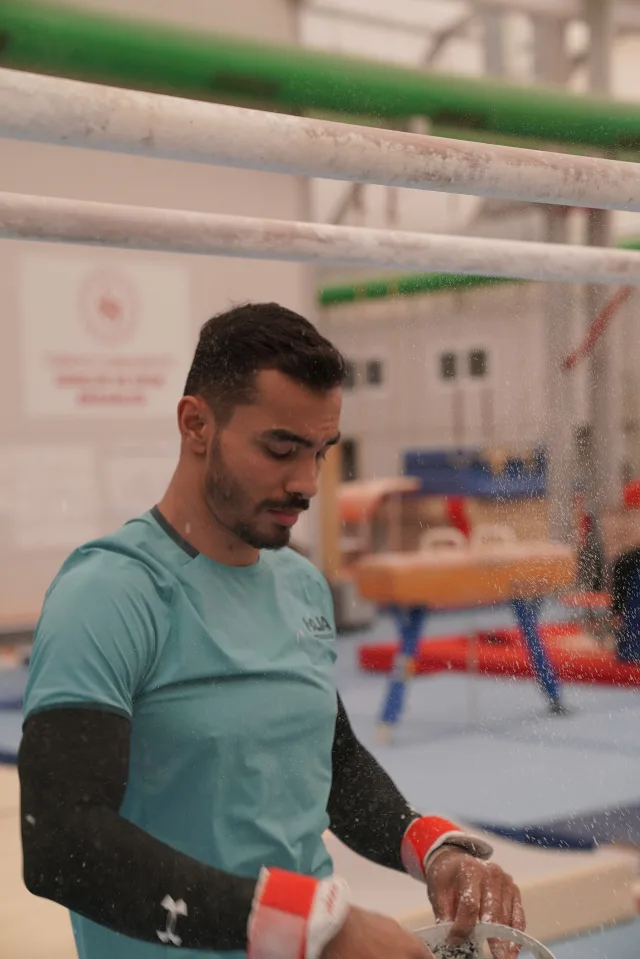
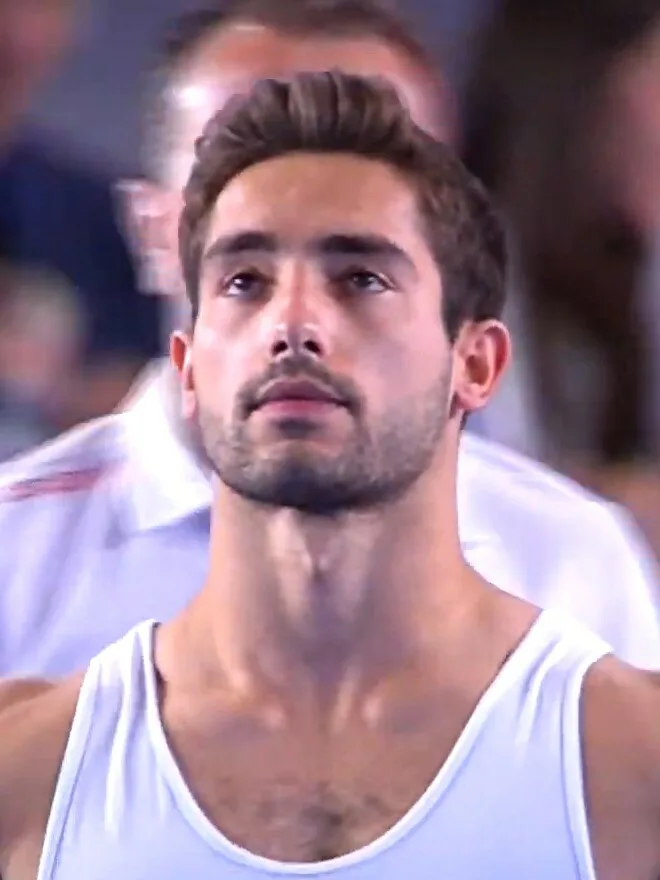
Born in 1995, Çolak began gymnastics as a young child in Bornova, İzmir. Artistic gymnastics contains several apparatus, and rings became his particularly prominent event. A world title on rings is separate from the all-around competition combining apparatus scores. Making that distinction explains the achievement precisely without diminishing its importance.
A career cannot be reduced to a medal ceremony without losing the learning and work across apparatus that preceded it. An athlete may also compete elsewhere within gymnastics. Do not extend a specialist result to every event; check the apparatus, competition stage and score together each time a result appears in the biography.
Back to contentsThe structure of a rings routine
A strength position can produce a striking photograph, but one frame cannot explain a routine. Entry, required stability, transition into the next movement and the landing belong to the performance together. The gymnast controls the body while also managing unwanted ring movement. Action and stillness form parts of the same technical sequence.
Read difficulty and execution separately. Selecting a difficult element does not mean it was perfectly performed, while a clean routine does not necessarily contain the highest difficulty. Watching the footage alongside the score display is a useful starting point for understanding how these components combine within competition rather than judging only visual impact.
Back to contentsA name in the movement vocabulary
In 2017, FIG added an element bearing Çolak’s name to the rings Code of Points. His official profile describes a straight-arm vertical pull into a V-cross. A name retained within the rules constitutes a different kind of technical legacy from adding another trophy to a honours list.
To recognise the element, watch the beginning and end of the movement carefully. Photographic resemblance is insufficient to identify a complete technical action. Rules define movement groups and execution conditions in detail; not every powerful-looking hold in a routine is automatically the named Çolak element. The distinction rewards careful rather than merely admiring viewing.
Back to contentsStuttgart and Mersin
Çolak won rings gold at the 2019 Stuttgart World Championships, becoming Türkiye’s first artistic gymnastics world medallist and world champion. His 2020 rings gold in Mersin is recorded in the official profile as the country’s first European artistic gymnastics title; Ferhat Arıcan won parallel-bars gold later the same day.
A national first can illuminate the growth of a discipline rather than serve only as an individual slogan. Teammates, coaches and results across other apparatus add context. University Games and World Championships should remain distinct competitions within the record: their relationship is informative precisely because they offer different competitive settings.
Back to contentsAn Olympic final beyond the podium
Çolak finished fifth in the rings final at the Tokyo 2020 Games held in 2021. A world title and a later Olympic placing are different competitions; neither invalidates the other. Routine choice, execution and opponents’ performances come together afresh. A career’s development is therefore richer than the question of whether every appearance ended in gold.
Watch the whole official final sequence, following the relationship between the opening hold, transitions and landing. Then compare Gazoz’s repeated shot routine and Süleymanoğlu’s bar control. This reading route reveals how a brief performance emerges from long technical preparation in different sports. It is a guide for understanding, not unsupervised instructions for imitating specialist movements.
Back to contentsA timeline of life, work and history
- 2017
The Çolak element
His named technical element entered FIG’s rings rules.
- 2019
Stuttgart world gold
Türkiye’s first artistic gymnastics world medal and gold.
- 2020
Mersin European gold
European champion on rings.
- 2021
Tokyo 2020 final
Fifth in the Olympic rings final.
Watch and listen: a visual reading path
Use this selection alongside the analysis above. Supported YouTube publications can be watched on this page after you choose to load their player. The publisher’s rights and availability conditions apply; the player does not load or start automatically. Official publication links remain available as an alternative.
NOS Sport
NOS Sport · Çolak’s Stuttgart 2019 world gold
Watch strength, swing and dismount phases together in the broadcaster’s world-final recording.
Watch the official publication ↗Questions and explanations
Is a rings title an all-around title?
No. Rings is one apparatus, whereas all-around combines results across apparatus. Naming the event precisely establishes the championship’s actual scope.
Why distinguish difficulty from execution?
How demanding an element is and how cleanly it is performed are separate dimensions. Counting spectacular holds or watching only the landing cannot explain the routine’s complete score.
Can a photograph identify the Çolak element?
A still image does not reveal entry, transition or hold duration. Compare the official definition with complete footage; resemblance alone does not establish the identity of a technical element.
Sources, image rights and research method
This is original explanatory and analytical writing informed by the sources below. AI assisted research and drafting. Awards for people, teams and institutions are distinguished; dated results are not current rankings. Media links do not claim a licence to republish a video here. Use the publisher’s correction process if a fact is wrong.
- World Gymnastics · İbrahim Çolak athlete profile ↗ Source check: 2026-10-03
- Türkiye Cimnastik Federasyonu · Mersin 2018 results ↗ Source check: 2026-10-03
- FISU · World University Games statistics ↗ Source check: 2026-10-03