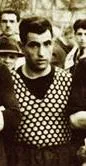
Yaşar Doğu's name belongs to a wider memory than a medal table: it appears on sports halls, memorial tournaments and accounts told by later generations of wrestlers. Born in Karlı village in Samsun's Kavak district in 1913, he won the men's freestyle 73kg Olympic title in London in 1948. Describing him only as a powerful champion would miss his transition into a national-team coach. This dossier keeps achievements connected to their period, weight category and wrestling style.
- Life dates
- 1913–1961
- Birthplace
- Karlı village · Kavak · Samsun
- Olympic gold
- London 1948 · freestyle · 73kg
- World gold
- Helsinki 1951 · freestyle · 87kg
From Karlı and Emirli to the national team
The provincial culture directorate and the General Directorate of Sports Services record Doğu's upbringing in Emirli and his introduction to wrestling there. His passage from a local karakucak environment to mat wrestling illustrates a bridge between regional pehlivan traditions and international sports organisation. Early accounts differ on some details of the transition, so this dossier uses the mutually documented 1939 national-team starting point rather than imposing a spurious exact date.
He won European silver in Oslo in 1939. The Second World War then interrupted the international calendar. Reading this career as if it unfolded within today's uninterrupted yearly programme would distort its circumstances. Athletes had to develop through domestic competition while preparing for a world stage that was no longer continuously available. Doğu's post-war achievements should be understood against that interruption, not treated as a sequence without historical context.
Back to contentsLondon 1948: a champion at the post-war Games
The 1946 European freestyle 73kg title in Stockholm and the 1947 European Greco-Roman 73kg title in Prague were important steps before London. In 1948 he won Olympic gold in freestyle at 73kg. The same weight number does not mean the same wrestling style at every event. Keeping the labels separate reveals a competitor able to succeed in two different versions of international mat wrestling.
The Turkish Olympic Committee's London account documents victories both by fall and on points. That variety makes a purely strength-based description insufficient. A fall ends the contest through decisive control, whereas a points result reflects scored actions during the bout. Choosing one spectacular archive throw and imagining that every match was won through that single movement would not be sound analysis. Olympic gold belongs to a competition campaign, not merely its best-known photograph.
Back to contentsTwo styles and different technical problems
Greco-Roman forbids grasping an opponent below the belt and actively using the legs against the opponent; freestyle permits leg-related actions. This basic distinction is stated in UWW's 2026 rules. Doğu's titles in both styles therefore should not be collapsed into one technical category. Before interpreting archive footage, identify which style is being contested rather than treating all wrestling sequences as interchangeable.
Weight categories also matter. His Olympic 73kg entry in 1948, European title at 79kg in 1949 and world title at 87kg in 1951 belong to different competition records. Flattening them into one permanent weight hides the breadth of the career. Historical bout durations and judging should not be casually compared with a modern electronic scoreboard. A more reliable approach asks how each result was established within the rules and record of its own period.
Back to contentsThe 1951 world title and the role of a coach
At Helsinki in 1951 he became the freestyle 87kg world champion. The culture directorate records a farewell event in 1955, subsequent national-team coaching and his death in Ankara on 8 January 1961. That later period should not be reduced to an empty retirement line. Transferring knowledge and contributing to younger wrestlers' development formed a second stage in his place within Turkish sporting history.
Official commemorative accounts refer to 46 victories in 47 contests under the national colours. This dossier treats those figures as a defined international record, not a complete count of every match, local contest or training bout in his life. Knowing the scope of a statistic strengthens rather than weakens a historical account. The same care applies to coaching anecdotes: unverified sayings should not be converted into confident direct quotations merely because they are widely repeated.
Back to contentsTurning a remembered name into living sporting history
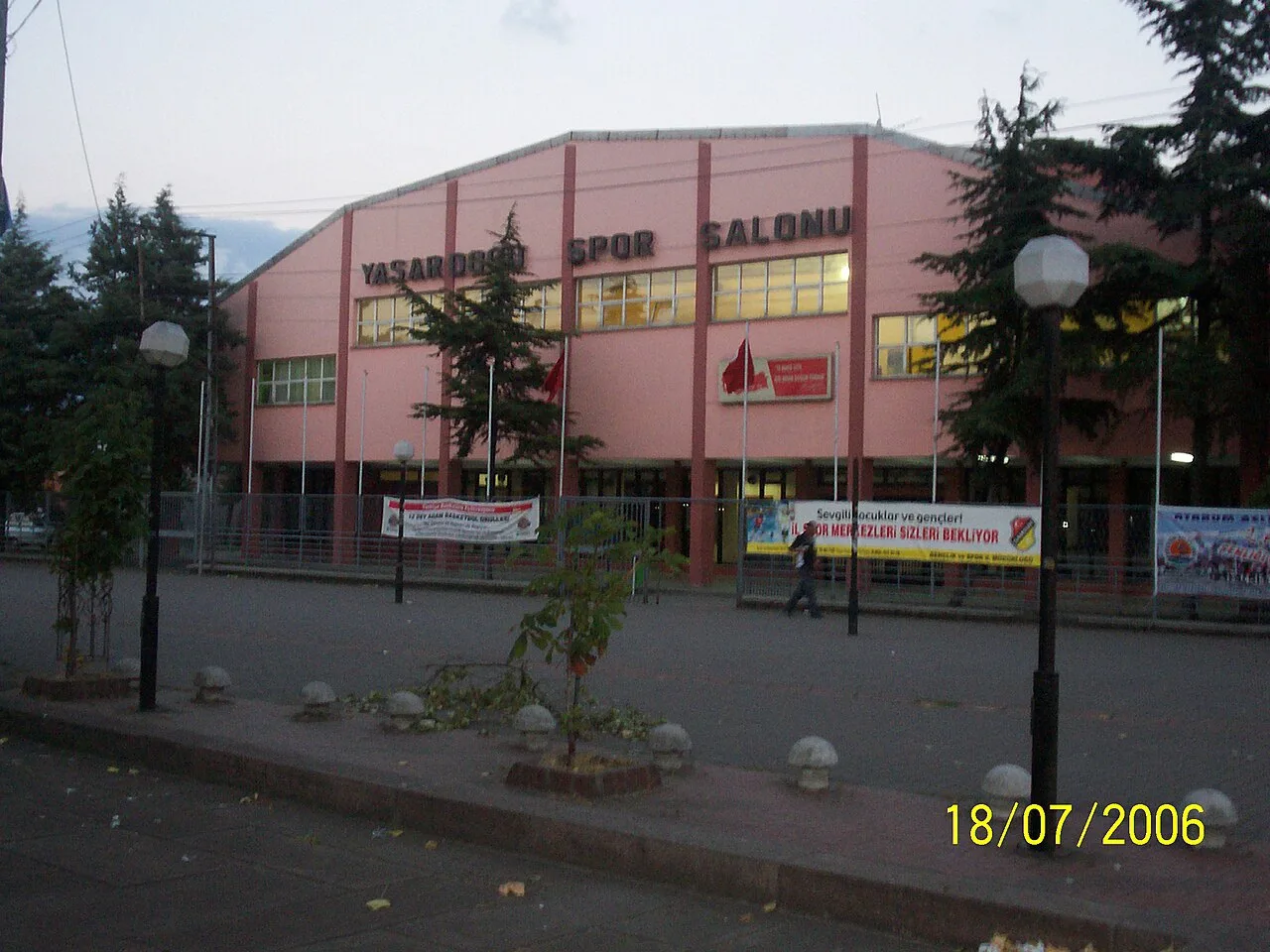
The Turkish Olympic Committee records an international tournament in his name from 1962. UWW's Kocaeli 2025 event documents the continuing competition tradition under the combined names of Yaşar Doğu, Vehbi Emre and Hamit Kaplan. Commemoration is therefore not only nostalgia; it also takes the form of a setting where new athletes compete. The accompanying 2006 hall photograph is dated memorial context, not a portrait or a current view of a modern venue.
The Kavak Yaşar Doğu House Museum uses his restored home to present personal belongings and achievements. Verify current access before travelling; archive opening hours are not reproduced here as a guaranteed booking arrangement. Watch the TRT archive programme, then continue to Hamza Yerlikaya and Yasemin Adar. Their dossiers offer a route into how Turkish wrestling has developed across different generations, styles and participants without making every athlete a copy of one historical model.
Back to contentsA timeline of life, work and history
- 1939
European silver
He finished second at 66kg in Oslo, an early landmark of his international career.
- 1946
A European freestyle title
He won European gold at 73kg in Stockholm.
- 1947
A European Greco-Roman title
He became the 73kg Greco-Roman European champion in Prague.
- 1948
Olympic gold in London
He won the Olympic freestyle 73kg title at the post-war Games.
- 1951
A world title in Helsinki
Freestyle gold at 87kg extended his documented success across different weight categories.
- 1961–1962
A legacy continued
He died on 8 January 1961; the Olympic Committee dates the international memorial tournament's beginning to 1962.
Watch and listen: a visual reading path
Use this selection alongside the analysis above. Supported YouTube publications can be watched on this page after you choose to load their player. The publisher’s rights and availability conditions apply; the player does not load or start automatically. Official publication links remain available as an alternative.
TRT Arşiv
Leaving a Legacy: Yaşar Doğu
TRT's public archive programme adds footage and narration to the athlete's historical legacy. Read its documentary account alongside official championship records; do not mistake period rules for present-day scoring.
Choosing to load the player connects to YouTube and shares technical data such as your IP address with Google. Autoplay is off. This choice does not change your cookie preferences. The publisher may restrict regional access or embedding; the official link below provides an alternative.
Questions and explanations
Was Doğu exclusively a freestyle wrestler?
No. His Olympic and world titles were in freestyle, while his 1947 European title was in Greco-Roman. Each achievement needs its own style label. The styles permit different actions, so they are not simply alternative names for the same competition.
Do 46 victories count every bout of his lifetime?
This dossier makes no such claim. Official commemorative accounts describe 47 contests and 46 victories under the national colours. Those numbers should not be expanded into an exhaustive count of local wrestling, training or all club matches without the necessary records.
Are the museum, photographed hall and memorial tournament the same place?
No. The house museum in Kavak is a biographical visitor site; the image shows a Samsun hall exterior in 2006; the international tournament is a competition for later athletes. Distinguishing those contexts prevents a commemorative name from being confused with the person or a current venue.
Sources, image rights and research method
This is original explanatory and analytical writing informed by the sources below. AI assisted research and drafting. Awards for people, teams and institutions are distinguished; dated results are not current rankings. Media links do not claim a licence to republish a video here. Use the publisher’s correction process if a fact is wrong.
- Samsun İl Kültür ve Turizm Müdürlüğü: Yaşar Doğu yaşamı ve şampiyonaları ↗ Source check: 2026-10-03
- Spor Hizmetleri Genel Müdürlüğü: 53. ölüm yıldönümü anması ve biyografi ↗ Source check: 2026-10-03
- TMOK Olimpiyat Dünyası: Londra 1948 güreş anlatısı, sayfa 86 ↗ Source check: 2026-10-03
- TMOK Olimpiyat Dünyası: şampiyonluklar, antrenörlük ve 1962 turnuva başlangıcı ↗ Source check: 2026-10-03
- Samsun İl Kültür ve Turizm Müdürlüğü: Kavak Yaşar Doğu Evi Müzesi ↗ Source check: 2026-10-03
- United World Wrestling: 2025 Yaşar Doğu, Vehbi Emre ve Hamit Kaplan turnuvası ↗ Source check: 2026-10-03
- United World Wrestling: Ocak 2026 uluslararası güreş kuralları ↗ Source check: 2026-10-03
- TMOK Olimpiyat Dünyası: 2013 yüzüncü doğum yılı posta pulu kaydı ↗ Source check: 2026-10-03