Yaşar Erkan's Greco-Roman 61kg gold at Berlin 1936 was Türkiye's first Olympic championship. The word 'first' alone cannot explain its significance. His Istanbul club environment, Balkan competition, mat-wrestling rules and the Games' political setting need to be read together. His career illuminates the way international sporting recognition became part of the early Republic's public life. It also shows why a medal record, a personal recollection and a later representation of that moment are different kinds of historical evidence.
- Historical milestone
- Türkiye's first Olympic gold · Berlin 1936
- Gold-medal category
- Greco-Roman wrestling · 61kg
- Balkan years
- TMOK record: 1933, 1934, 1935, 1937
From Refahiye to the Kumkapı club: the local foundations
The Turkish Olympic Committee's Olimpiyat Dünyası account identifies him as born in Refahiye, Erzincan, in 1911 and developed at Istanbul's Kumkapı Wrestling Club. His sporting formation therefore connects an Anatolian origin with an organised Istanbul club environment. Treating him exclusively as a symbol of his birthplace or solely as the product of a big city leaves one of those settings out.
The club name is not decorative biography. Mat wrestling requires a shared environment for working with opponents, coaching and experience under competition rules. TMOK's separate wrestling history places Kumkapı within a wider Istanbul club network. Reading Erkan within that network explains more than attributing his championship to an isolated individual's natural talent.
Back to contentsBalkan titles: experience before and after Berlin
TMOK records Balkan championships in 1933, 1934, 1935 and 1937. These dates need care: the first three precede Berlin; the 1937 achievement follows it. Placing all four before the Olympic title distorts the chronology. Repeated international competition also demonstrates that the breakthrough did not arise from nowhere.
A Balkan championship is not the same competitive scale as an Olympic title. Regional competition provides its own opponents and calendar; the Olympics offer a broader stage. Keeping both achievements in the biography recognises earlier experience without diminishing Berlin's distinct significance or inflating one event into another.
Back to contentsGreco-Roman 61kg: identify the title correctly
The Ministry of Youth and Sports gold-medal table records the Berlin 1936 title as Greco-Roman, 61kg. Erkan also wrestled freestyle at the same Games, but his gold did not come from freestyle. Ahmet Kireççi's freestyle bronze belongs to another athlete and another weight category.
Greco-Roman prohibits holds below the waist and attacks using the legs, making upper-body control, grips and lifts important to the spectator's understanding. TMOK's account of Erkan emphasises wins by fall and his lifting technique. A historical technique should not automatically be assigned today's points: it belongs within the rules and tournament structure of its period. The 1936 bad-points system cannot be narrated as though it were a modern single knockout final.
Back to contentsThe first gold in Republican sporting memory
Türkiye's first Olympic medals came in Berlin through Erkan and Kireççi; the first gold belonged to Erkan. 'First medal' and 'first gold' are not interchangeable phrases. TMOK recounts Atatürk's congratulatory telegram through Erkan's memories. This is an important account of the result's reception in Türkiye, but it is a different kind of document from the official results table.
Later generations of Turkish wrestlers earned titles across different styles and weight categories. Erkan's pioneering position does not mean their methods were copies of his. Comparing Yaşar Doğu's freestyle career with Hamza Yerlikaya's Greco-Roman career reveals differences within a continuing tradition. A historical first can establish a reference point without erasing the individual work of those who follow.
Back to contentsThe setting of 1936: achievement is not endorsement of propaganda
The Games took place in Nazi Germany. The United States Holocaust Memorial Museum explains their place within the regime's propaganda effort and discriminatory setting. Documenting a Turkish athlete's achievement does not endorse the host regime or the political messages of the ceremonies. Keeping that distinction visible prevents sporting excitement from obscuring the historical context.
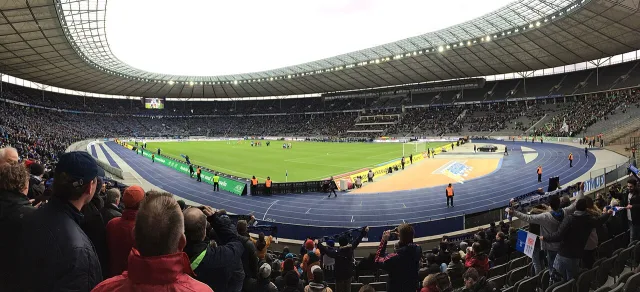
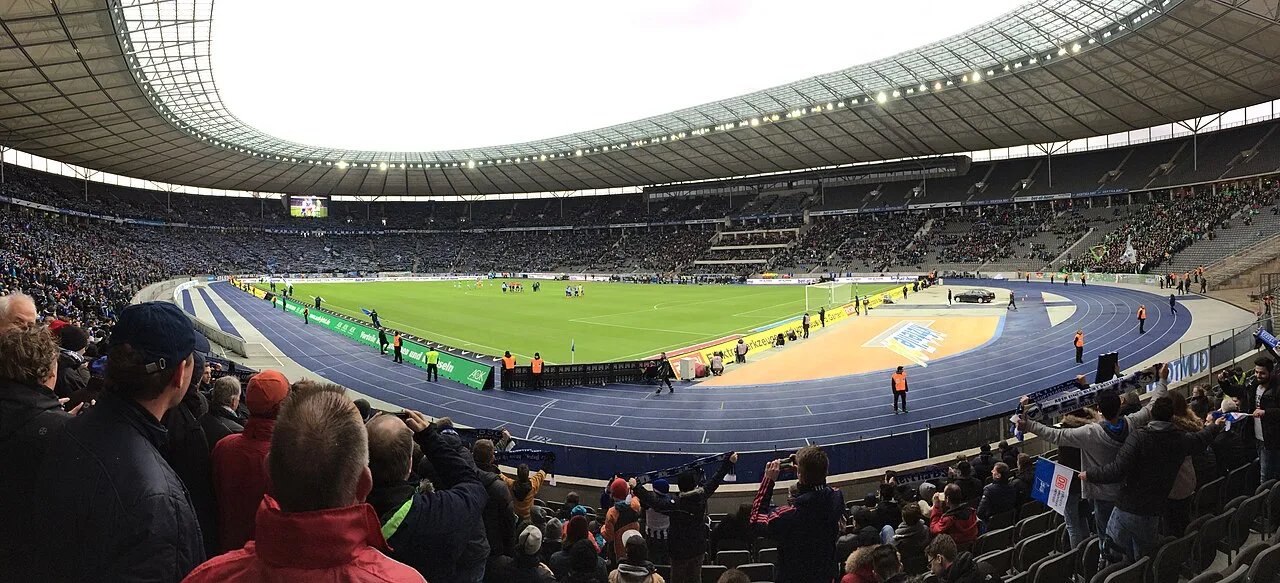
The official IOC film on this page depicts Jesse Owens's 100m race, not Erkan wrestling. Footage from the same Games can illuminate the period's broadcasting and atmosphere without proving an action from a different sport. Likewise, the 2016 stadium photograph shows a later architectural legacy, not the Deutschlandhalle wrestling venue or the 1936 medal podium.
Back to contentsFrom athlete to remembrance: keep comparing the records
Anadolu Agency's centenary portrait records that Erkan also coached the national wrestling team and died in 1986. The UWW calendar lists an international tournament named for Mahmut Atalay and Yaşar Erkan in İzmir on 29–31 May 2015. Remembrance can continue through the events in which subsequent athletes compete, not only through monuments or anniversaries.
Later accounts do not agree on every exact biographical date. This dossier follows TMOK's 1911 birth year without adding a precise birthday from another account or an unverified retirement day. Start with the official table identifying style and weight, then read the club history and recollection. The biography remains intelligible without manufacturing precision beyond what the consulted records securely establish.
Back to contentsA timeline of life, work and history
- 1911
Origins in Refahiye
TMOK's biography gives 1911 and Refahiye, Erzincan. This dossier does not assign an exact birthday.
- 1933–1935
Balkan titles before Berlin
The first three Balkan championships in the TMOK list document his international experience before Olympic gold.
- 1936
Berlin: Greco-Roman 61kg gold
He won Türkiye's first Olympic gold. His freestyle participation and Kireççi's bronze remain separate results.
- 1937
A later Balkan title
The TMOK list also records 1937; this championship should not be moved into the pre-Berlin period.
- 1986
Death
Anadolu Agency's retrospective records the year of his death and recalls his contribution as a coach.
- 2015
29–31 May: a tournament bears his name
UWW lists the Mahmut Atalay and Yaşar Erkan international tournament in İzmir.
Watch and listen: a visual reading path
Use this selection alongside the analysis above. Supported YouTube publications can be watched on this page after you choose to load their player. The publisher’s rights and availability conditions apply; the player does not load or start automatically. Official publication links remain available as an alternative.
Olympic Games
Berlin 1936 context: Jesse Owens wins 100m gold
The IOC's official archive film shows athletics at the same Games: Jesse Owens's 100m race. It does not depict Erkan wrestling. Watch to distinguish the period's visual presentation, an athlete's achievement and the political setting of the Games.
Choosing to load the player connects to YouTube and shares technical data such as your IP address with Google. Autoplay is off. This choice does not change your cookie preferences. The publisher may restrict regional access or embedding; the official link below provides an alternative.
Questions and explanations
Was the gold won in freestyle wrestling?
No. The ministry's official table identifies Greco-Roman 61kg. His participation in freestyle does not justify combining two distinct outcomes. Kireççi's bronze also belongs to a separate athlete and weight-class story.
Why omit an exact birthday or final date?
Consulted retrospective accounts disagree on some precise dates. This dossier uses the securely documented year, style and weight rather than concealing uncertainty to generate extra detail. Its choice of 1911 is explicitly tied to the TMOK account.
Do the video and photograph show Erkan?
No. The official IOC archive video depicts Jesse Owens's Berlin 1936 athletics race; the photograph shows the Olympiastadion in 2016. Both are clearly labelled contextual media, not an Erkan portrait, wrestling technique or gold-medal match.
Sources, image rights and research method
This is original explanatory and analytical writing informed by the sources below. AI assisted research and drafting. Awards for people, teams and institutions are distinguished; dated results are not current rankings. Media links do not claim a licence to republish a video here. Use the publisher’s correction process if a fact is wrong.
- TMOK Olimpiyat Dünyası 52: Yaşar Erkan'ın kökeni ve Balkan şampiyonlukları ↗ Source check: 2026-10-03
- TMOK Olimpiyat Dünyası 54: iki stilin kurumsal gelişimi ↗ Source check: 2026-10-03
- GSB: Olimpiyat altın madalya kayıtları, stil ve sıklet ↗ Source check: 2026-10-03
- Anadolu Ajansı: 2023 Cumhuriyet yüzüncü yıl portresi ve antrenörlük ↗ Source check: 2026-10-03
- UWW: 29–31 Mayıs 2015 Mahmut Atalay ve Yaşar Erkan turnuvası ↗ Source check: 2026-10-03
- Olympiastadion Berlin: 1936 oyunları ve mekân tarihi ↗ Source check: 2026-10-03
- United States Holocaust Memorial Museum: Nazi Olympics, Berlin 1936 ↗ Source check: 2026-10-03