Calling Ahmed Adnan Saygun simply a bridge between East and West can conceal the detail of his choices. His life, from 1907 to 1991, combined composition, musical research, teaching and writing. This guide considers forms and ways of listening without reducing national identity to one sound formula. His relationship with Republican cultural institutions matters, but every composition should not be treated as a direct illustration of a political programme.
- Life dates
- 1907–1991
- Fields
- Composition, musical research and education
- Entry works
- Özsoy • Yunus Emre Oratorio • selections from Op. 45 preludes
From İzmir to Paris, education to composition
Saygun began musical study in İzmir, went to Paris on a state scholarship in 1928 and worked in music-education institutions after returning. The sequence shows that training and composition were not isolated worlds. Technical study offered ways of combining voices, developing larger forms and working with notation. Treating the scholarship as the single beginning of all Turkish music history would hide earlier and simultaneous traditions.
Membership of the generation known as the Turkish Five does not mean that five composers wrote in an identical style. After encountering the collective label, return to a specific Saygun work. Choir, piano, orchestra and music for the stage raise different listening questions. Remembering only the most familiar title also leaves the educator and researcher partly out of view.
Back to contentsÖzsoy in 1934 and the Republic’s stage language
Özsoy was prepared at Atatürk’s request in the context of the Iranian Shah Reza Pahlavi’s visit and was staged on 19 June 1934. It can be considered a theatrical initiative within Republican cultural and diplomatic history. This page does not declare it the uncontested first and only origin of every Turkish-language opera tradition; different definitions of a first depend on different historical criteria.
When hearing opera, follow characters meeting, the movement of the orchestra and words becoming stage action, not only passages that resemble standalone songs. The occasion for commissioning a work is not the sole key to every subsequent interpretation. Diplomacy supplies historical context, while musical structure, drama and the institutional conditions of a new production remain additional subjects.
Back to contentsCollecting with Bartók is not identical to composing
Saygun’s 1936 Anatolian folk-music research with Béla Bartók is connected especially with collecting around Osmaniye. Recording or notating a melody for research is different from using it in a new concert work. The source performer’s example, a researcher’s notation and a later composition are separate objects that should not be collapsed into one.
Ask from whom, where and under what circumstances an example was collected. A score may preserve important aspects of performance without automatically carrying the whole timbre and social context. Relationships between traditional melody and composed orchestral texture can be examined, but a resemblance does not establish a direct quotation from a particular source. Interpretation and documented transmission need to be distinguished.
Back to contentsThe Yunus Emre Oratorio and a piano entry point
The Yunus Emre Oratorio was completed in 1942 and first performed in Ankara in 1946. An oratorio is a large musical form combining vocal and instrumental forces without necessarily depending on staged action as opera does. Following the contrast between several simultaneous voices and a foregrounded soloist helps make its broader architecture audible.
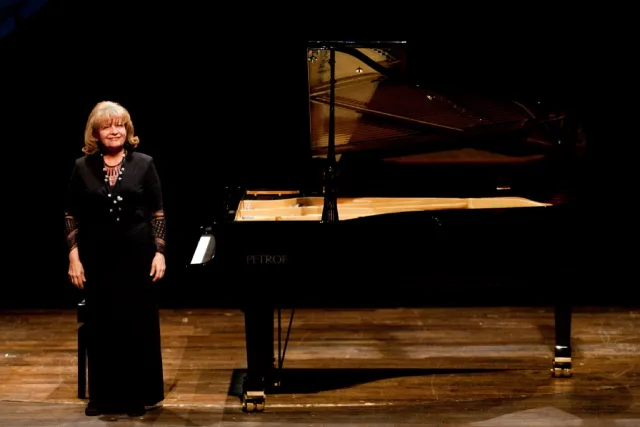
Piano repertoire offers a shorter entry point. Mezzo’s documentation for İdil Biret’s 2020 concert includes selections from the Op. 45 preludes on aksak rhythms. Aksak does not mean that the player is making errors: it refers to organization through pulse groups of differing lengths. Counting small recurring groups in a passage can help explain why a melodic sentence turns at particular moments.
Back to contentsAn archive, an interview and a place of remembrance
Established in 1994, the Bilkent Saygun Centre preserves manuscript scores, sketches, correspondence and materials from the composer’s personal library. A recording and a manuscript are different kinds of evidence: one documents performance, the other traces of writing and revision. Archive research can deepen interpretation, but archival custody does not automatically grant unrestricted reuse of everything preserved.
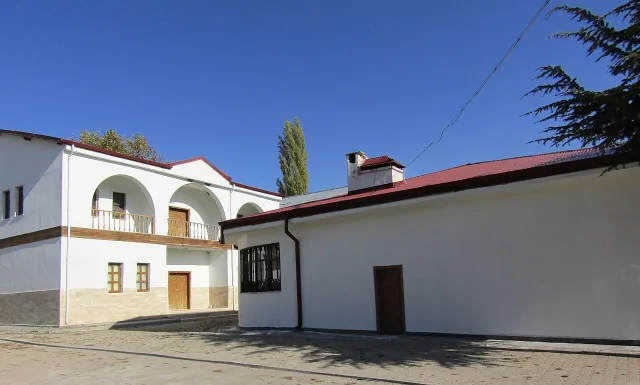
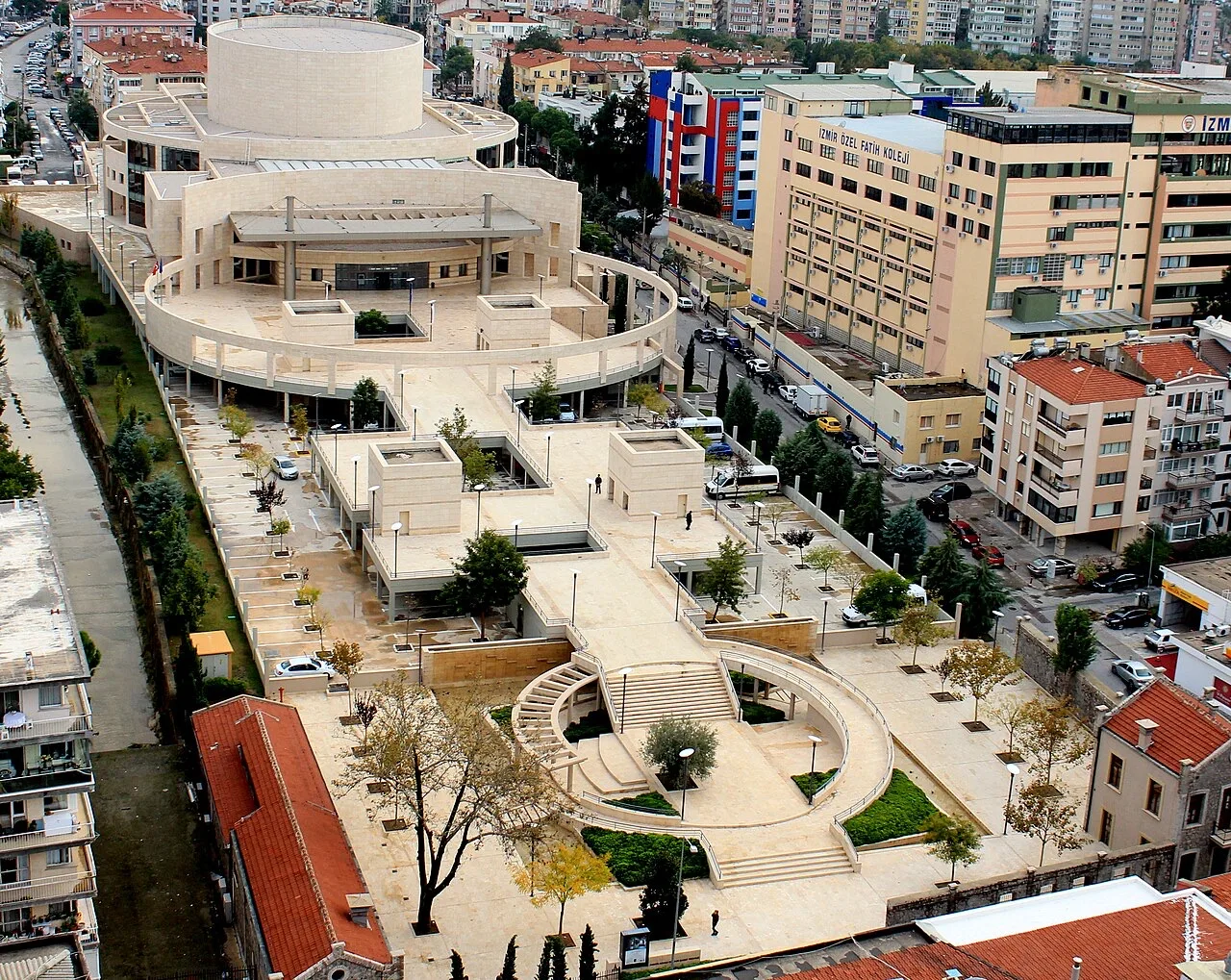
TRT Arşiv dates its linked interview programme to 1968, offering a chance to see Saygun discuss his artistic life. Testimony matters, while particular memories can also be compared with other documents. The 2013 photograph of İzmir’s Ahmed Adnan Saygun Arts Centre shows his name within the city’s cultural landscape; it is neither a portrait nor a venue image from his lifetime. Biography, listening and public remembrance consequently remain distinct layers.
Back to contentsA timeline of life, work and history
- 1928
Study in Paris
State-supported education marks a point in Saygun’s technical study and movement between institutions.
- 1934
Özsoy staged
The 19 June performance took place in the context of the Shah’s visit and Atatürk’s request.
- 1936
Research with Bartók
Anatolian folk-music collecting provides a concrete point in the composer’s research activity.
- 1946
Yunus Emre Oratorio
The work completed in 1942 received its first Ankara performance in this year.
- 1994
Bilkent Saygun Centre
The centre was established to preserve the composer’s archival and educational legacy.
Watch and listen: a visual reading path
Use this selection alongside the analysis above. Supported YouTube publications can be watched on this page after you choose to load their player. The publisher’s rights and availability conditions apply; the player does not load or start automatically. Official publication links remain available as an alternative.
TRT Arşiv
Ahmed Adnan Saygun — TRT archival interview
Hear the composer discuss his work in a programme dated 1968 by TRT; the upload year is distinct from the programme year.
Choosing to load the player connects to YouTube and shares technical data such as your IP address with Google. Autoplay is off. This choice does not change your cookie preferences. The publisher may restrict regional access or embedding; the official link below provides an alternative.
Questions and explanations
Are oratorio and opera the same form?
Both can use voices and instruments, but an oratorio is not defined by a requirement for stage action, sets and costumes. The performance format of a particular work should still be checked.
Does aksak rhythm mean irregular or mistaken playing?
No. It concerns pulse organized in groups of differing lengths. Following recurring small groupings can make the musical structure easier to hear.
May I freely share archived scores and concert recordings?
No. Archive access and reproduction permission are different. Composition, score edition and recording can each involve separate rights; this page links sources rather than copying complete works.
Sources, image rights and research method
This is original explanatory and analytical writing informed by the sources below. AI assisted research and drafting. Awards for people, teams and institutions are distinguished; dated results are not current rankings. Media links do not claim a licence to republish a video here. Use the publisher’s correction process if a fact is wrong.
- Bilkent — Saygun Merkezi, biyografi ve arşiv koleksiyonu ↗ Source check: 2026-10-03
- İzmir Ahmed Adnan Saygun Sanat Merkezi — besteci tarihçesi ↗ Source check: 2026-10-03
- Mezzo — İdil Biret’in Saygun prelüdleri içeren 2020 konser künyesi ↗ Source check: 2026-10-03
- TRT Arşiv — Saygun ile 1968 söyleşi programı ↗ Source check: 2026-10-03