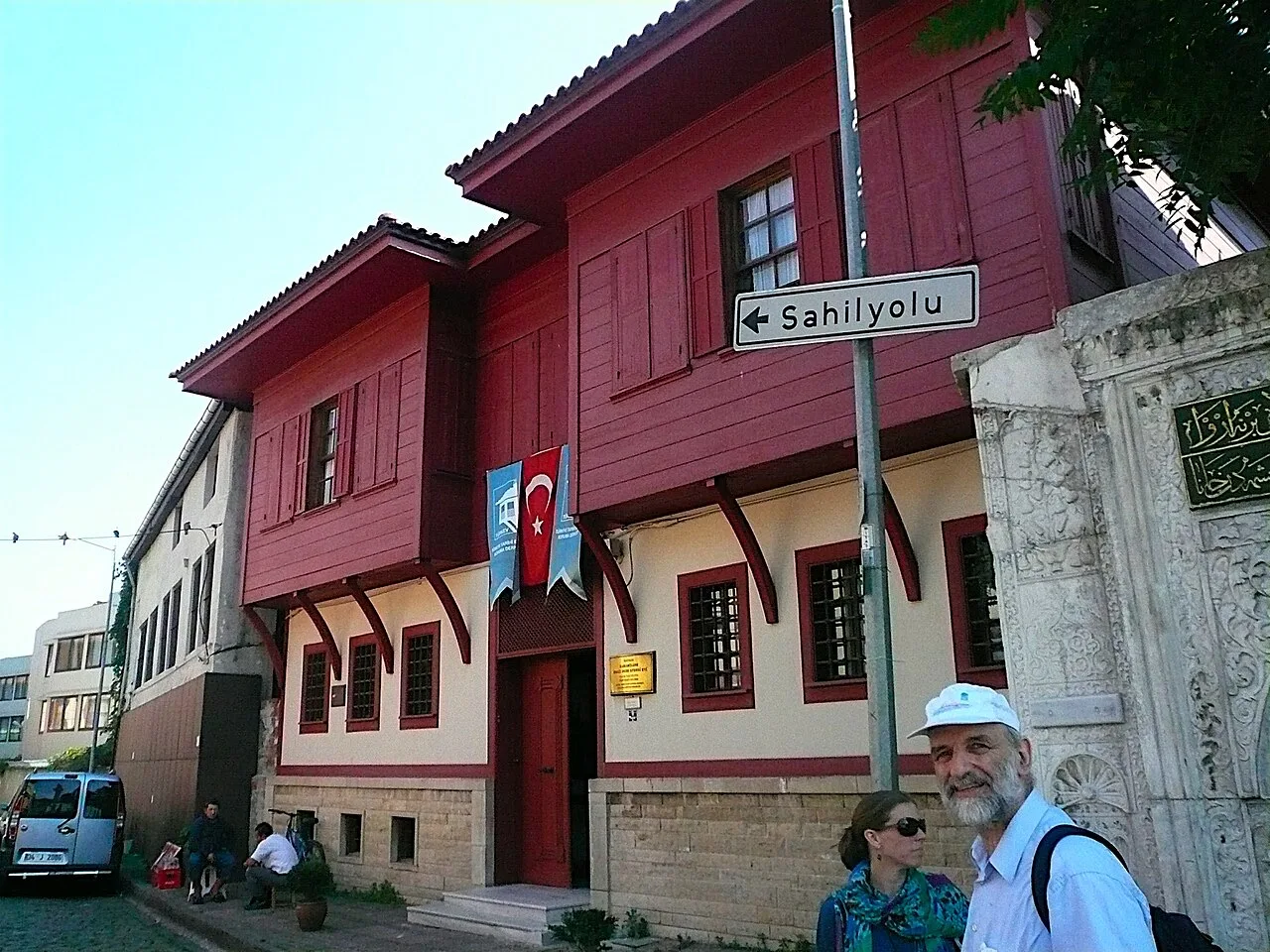
Hamâmîzâde İsmâil Dede Efendi offers a route into nineteenth-century musical life through works still performed today. An Istanbul composer and singer, he worked across religious and secular repertoire within a connected musical culture. Understanding that world requires distinguishing a song from an âyin, and makam from usul. These terms need not turn listening into an inaccessible specialist activity: they can help a listener notice what is happening. The aim of this dossier is therefore to introduce a way of hearing, alongside a brief biography and a path through different musical forms.
- Name
- Hamâmîzâde İsmâil Dede Efendi
- Practice
- Composition, singing and teaching
- Historical settings
- Istanbul · Yenikapı Mevlevî lodge and court
Learning and working in Istanbul
The Yenikapı Mevlevî lodge and court circles were important settings in Dede Efendi’s development. Religious service, teaching, patronage and ensemble performance had different purposes even when they overlapped socially. Meşk involves learning repertoire through repetition with a teacher and hearing a manner of performance. The existence of written notation does not make this process unnecessary. Phrase divisions, emphasis and the character of delivery are learned from sound as well as a page. Following these networks places individual talent within relationships that helped it develop, instead of imagining a composer working entirely alone.
Back to contentsDistinguishing makam from usul
Describing makam solely as a scale, or usul merely as a number of beats, leaves out much of their practical effect. In listening, follow the melody’s movement and resting points alongside the way musical time is organized. Pay separate attention to a song’s opening, higher region and close. Then notice how rhythmic accompaniment operates within those passages. Hearing these layers together prevents a composition from being reduced to its most recognizable tune. Beginners can start by distinguishing recurrent structure from changing melodic direction before trying to memorize every technical term.
Back to contentsSongs and the Mevlevî âyin
Placing a short work such as Yine Bir Gülnihal beside a full Mevlevî âyin reveals the different scales on which the composer worked. An âyin is not simply a long song: it has a ritual setting, sections and a performance organization. A complete, reliably identified performance gives a better introduction than a randomly cut social-media excerpt. Moving between shorter and larger forms shows how musical ideas operate over different spans of time. Learning the religious context also helps explain what the music was doing within the community that performed it.
Back to contentsTransmission and change
Dede Efendi belongs to music history through his compositions, pupils and chains of transmission. Accounts sometimes make tradition and innovation sound like absolute opposites. A more practical question asks what structure continues within a work and where a different movement appears. Later radio or stage recordings are interpretations, not recordings of the composer’s voice. A musician who died in 1846 could not have left modern sound recordings. Keep composer, performer and recording date separate in your notes: this is a simple but essential habit when approaching historical repertoire.
Back to contentsA practical route into the repertoire
First compare two performances of a short song, listening for changes in tempo and emphasis. Then read the section headings of an âyin and follow a complete performance. TRT’s radio drama Yine Bir Gülnihal offers another way to encounter the biography, but a dramatization should not be mistaken for an archival document. When researching historic musical places in Istanbul, distinguish an old building from its present use. Music history becomes richer when it includes how pieces are taught, performed and encountered, rather than remaining a table of birth and death dates.
Back to contentsA timeline of life, work and history
- 1778
Born in Istanbul
İsmâil was born in Şehzadebaşı and later became known as Dede Efendi.
- 1798
Mevlevî training
His training under Ali Nutkî Dede marks an important point in his musical and spiritual education.
- 1801
The title of dede
The TDV entry uses the Defter-i Dervîşân record to identify completion on 6 March 1801.
- 1846
Death during the pilgrimage journey
He died in Mina on 29 November; his works travelled through later teaching and repertoire.
Watch and listen: a visual reading path
Use this selection alongside the analysis above. Supported YouTube publications can be watched on this page after you choose to load their player. The publisher’s rights and availability conditions apply; the player does not load or start automatically. Official publication links remain available as an alternative.
TRT Dinle
Yine Bir Gülnihal — TRT radio drama
A dramatization of Dede Efendi's life, not historical recorded testimony; radio theatre accompanying the biography.
Watch the official publication ↗Questions and explanations
Is meşk just memorization?
Memory is important, but meşk also involves acquiring a manner of performance through hearing and repetition. Emphasis, breath and phrase structure belong to the process. Reading notation and learning an interpretive tradition are different skills that can complement each other.
Can I hear a recording of Dede Efendi himself?
No. His life ended before modern sound recording. Recordings available today are later performers’ interpretations. Composer, performer and release date should not be treated as interchangeable; an old composition can appear in a recent recording protected by separate rights.
Must I know makam names before listening?
No. Start by following where the melody begins, rises and comes to rest. Technical language becomes valuable when it sharpens what you hear. Comparing two reliably identified performances provides a more concrete starting point than memorizing a long glossary without sound.
Sources, image rights and research method
This is original explanatory and analytical writing informed by the sources below. AI assisted research and drafting. Awards for people, teams and institutions are distinguished; dated results are not current rankings. Media links do not claim a licence to republish a video here. Use the publisher’s correction process if a fact is wrong.
- Kültür Portalı · Osmanlı müzik kültürü ↗ Source check: 2026-10-03
- TDV İslâm Ansiklopedisi · Hamâmîzâde İsmâil Dede Efendi ↗ Source check: 2026-10-03