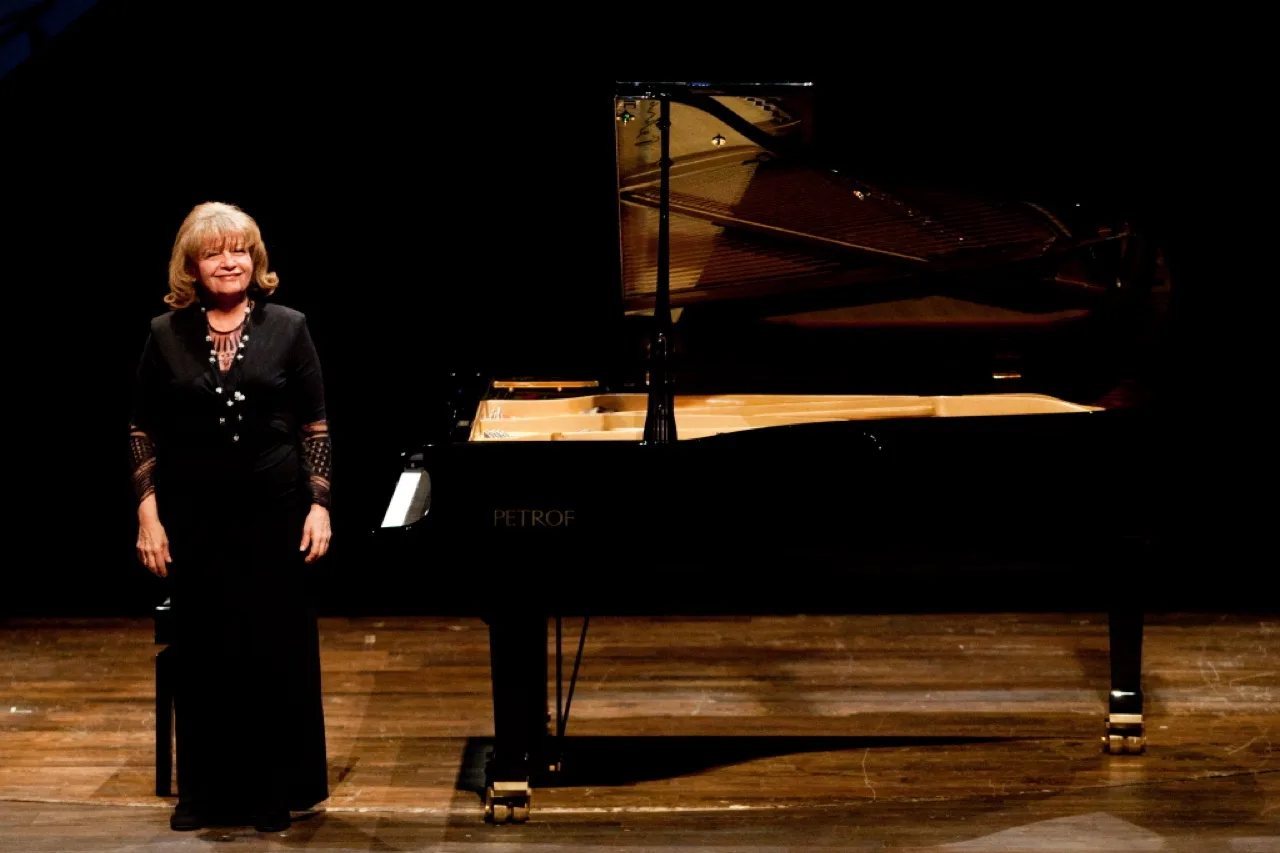
İdil Biret’s career helps connect early educational support with sustained work across a lifetime. Describing her only as a child prodigy diminishes the mature repertoire and recording labour that followed. This dossier places Beethoven and Chopin beside Boulez, Ligeti and Saygun. Familiarity with a composition should not be confused with the ease of interpreting it.
- Instrument
- Piano
- Study relationships
- Mithat Fenmen, Nadia Boulanger, Alfred Cortot, Wilhelm Kempff
- Repertoire route
- Beethoven / Chopin → Boulez / Ligeti → Saygun
Ankara, Paris and a tradition of study
Biret’s first teacher was Mithat Fenmen. Special educational support approved by the Turkish parliament in 1948 opened a route to study in Paris. Her official biography identifies work with Nadia Boulanger, Alfred Cortot and Wilhelm Kempff. The history therefore makes teachers and extended training relationships visible rather than relying solely on a narrative of natural talent.
Naming a mentor does not impose one identical interpretation on every later performance. A student develops technique, repertoire and habits of thought, then builds an individual relationship with compositions. Biret’s biography belongs within Republican cultural and educational history, but institutional support and the musician’s own continuing labour should not be substituted for one another.
Back to contentsMusic and history in the 1963 Boston broadcast
Biret’s American debut in Boston, playing Rachmaninov’s Third Piano Concerto, dates to 22 November 1963. The Naxos / Idil Biret Archive catalogue identifies the Boston Symphony Orchestra performance under Erich Leinsdorf and lists spoken portions separately. With news of Kennedy’s assassination within its concert context, the recording demonstrates how music and a historical event can coexist in one sound document.
Distinguish announcements from movements when approaching such an archive. A later album edition does not change the date of the original concert. Availability and regional distribution restrictions are also separate from historical importance; age does not automatically make a recording free to reproduce. We explain its documented context without copying the complete broadcast without permission.
Back to contentsBeyond the Romantic repertoire: Boulez and Ligeti
Biret’s recorded work is not confined to Romantic composers. Her official discography dates the Boulez sonatas to 1995 and Ligeti études to 2003, while Naxos’s twentieth-century piano edition also includes Saygun and other composers. This variety invites listeners to hear a pianist beyond the label of a specialist in one particular composer.
With unfamiliar music, try following the spacing of sounds, length of silences and rhythms moving simultaneously before searching for a familiar tune. An étude can be a concert work as well as a technical study; it is not merely a test of finger speed. Choosing one Chopin étude and one by Ligeti makes it possible to consider how the same form-name can encompass different musical worlds across periods.
Back to contentsA transcription and its performance are different roles
Biret’s repertoire includes Liszt’s piano transcriptions of Beethoven’s symphonies. Schott also publishes her own piano transcription of Brahms’s Fourth Symphony. In one case she interprets an arrangement made by another musician; in the other she is responsible for transferring the composition to a different instrumental medium. Those creative roles should not be conflated.
A symphony on piano is not simply a miniature replica of the orchestra. Register, density, articulation and the weight of different lines acquire importance in place of orchestral tone colours. Compare a short passage in orchestral and piano versions: where does the melody remain, what happens to accompaniment, and which inner line becomes newly prominent? The exercise explains transformation instead of merely counting things that seem absent.
Back to contentsFrom the Debussy video to a wider archive
The 2019 Clair de lune recording video linked by Biret’s official site offers a view of her at the keyboard. Do not treat hand movement only as an indicator of speed. Waiting between phrases and allowing a sound to continue can be just as significant. Camera angle and visible pedal movement may not explain all the technical conditions of the sound recording.
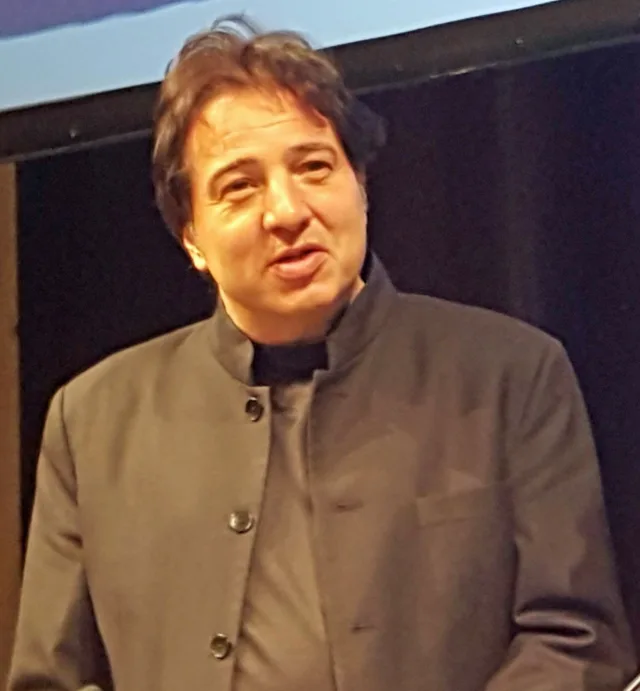
Next choose a Beethoven sonata movement, a Chopin étude and a twentieth-century work. Comparisons of the same composer across different recording dates can also be revealing. The extensive studio archive published in 2018 supplies a catalogue framework for that exploration without requiring it all to be heard in one sitting. Our photograph comes from the 2012 Küçükçekmece concert setting, not from the 2019 video.
Back to contentsA timeline of life, work and history
- 1948
Support for study abroad
A special parliamentary provision enabled Biret’s musical studies in Paris.
- 1963
American debut in Boston
The 22 November Rachmaninov broadcast is an archive connecting performance history with a historical event.
- 1995
Boulez sonatas
The official discography dates these recordings as a distinct point in her twentieth-century repertoire.
- 2018
Extensive studio archive
The 130-CD publication provides a framework for exploring composers and recording periods together.
Watch and listen: a visual reading path
Use this selection alongside the analysis above. Supported YouTube publications can be watched on this page after you choose to load their player. The publisher’s rights and availability conditions apply; the player does not load or start automatically. Official publication links remain available as an alternative.
İdil Biret — resmî sanatçı sitesinde bağlantılanan yayın
İdil Biret — recording Debussy’s Clair de lune
Watch the piano interpretation in the 2019 recording video, checked against the artist’s official news archive.
Watch the official publication ↗Questions and explanations
Why is the child-prodigy story insufficient?
It explains an early beginning, not the whole artistic life. Education, continuing practice, repertoire decisions and recording work deserve attention in the mature career.
Is performing a transcription the same as writing one?
No. A performer may interpret an existing arrangement; a transcriber adapts the composition to another instrumental setting. Those responsibilities are identified separately in Biret’s projects.
Do I need to read a score to hear new piano music?
No. Start with density, silences and repetitions. A score and accurate recording credits can subsequently deepen the same listening experience.
Sources, image rights and research method
This is original explanatory and analytical writing informed by the sources below. AI assisted research and drafting. Awards for people, teams and institutions are distinguished; dated results are not current rankings. Media links do not claim a licence to republish a video here. Use the publisher’s correction process if a fact is wrong.
- İdil Biret — resmî biyografi ↗ Source check: 2026-10-03
- İdil Biret — kariyer dönüm noktaları ↗ Source check: 2026-10-03
- Naxos / IBA — 1963 Boston kaydı künyesi ↗ Source check: 2026-10-03
- İdil Biret — yirminci yüzyıl kayıt diskografisi ↗ Source check: 2026-10-03
- Schott Music — Biret’in uyarlama ve yorum katalogları ↗ Source check: 2026-10-03
- İdil Biret — resmî video bağlantıları ↗ Source check: 2026-10-03