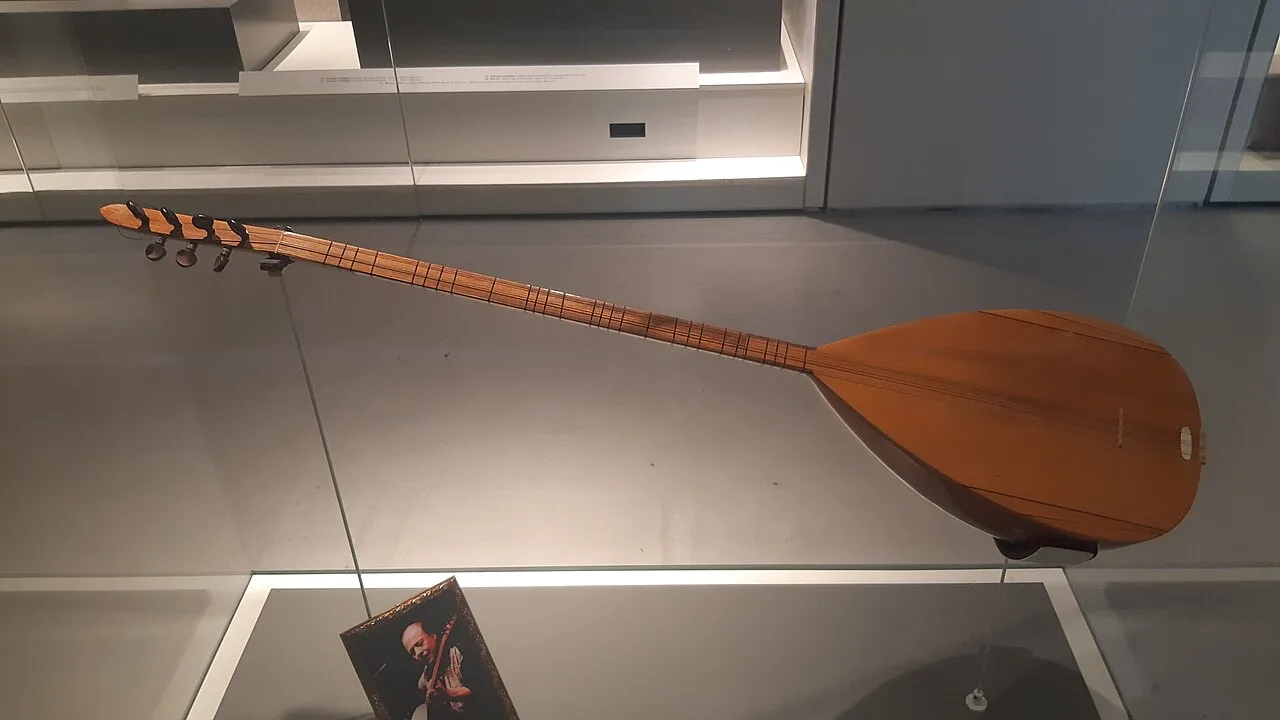
Neşet Ertaş’s music offers a way to hear both a regional tradition and the individual choices of a musician working within it. Born in Kırtıllar in Kırşehir, he grew up in the Abdal musical environment also represented by his father, Muharrem Ertaş. Describing him simply as a singer of sad songs misses too much. Bozlak, dance repertoire, the rhythmic force of the bağlama and an intimate, conversational delivery all belong to the picture. This dossier connects a short life history with practical ways to listen.
- Birthplace
- Kırtıllar · Kırşehir
- Tradition
- Abdal music and bozlak
- Principal instrument
- Bağlama
Growing within a musical community
In Abdal culture, musicianship is a working practice learned within families and social networks. Playing for weddings, celebrations and gatherings requires a broad repertoire, responses to requests and direct contact with listeners. Ertaş’s early work with his father belongs to that context. Learning does not become absent simply because it takes place outside a conservatory: imitation, repetition, memory and performance before a community can be demanding forms of training. Musical links across Kırşehir, Yozgat and Keskin also make this a landscape wider than the boundary of one province.
Back to contentsWhat distinguishes bozlak?
Bozlak belongs to the long-air repertoire and unfolds with a sense of time different from a regularly measured dance piece. Instead of counting an unchanging pulse, follow the voice’s rises, sustained syllables and phrases shaped by breath. In Ertaş’s performances, the bağlama is more than a background accompaniment: introductions, transitions and replies help direct the musical account. Not every slow folk song is a bozlak. Paying attention to form and regional manner prevents a varied repertoire from being reduced to a single label such as sadness.
Back to contentsRecords and the routes of migration
His first record in 1957 was an important point in the circulation of local performance beyond its immediate setting. Years in Germany later connected the music with the experience of living away from home. Migration is therefore both a subject listeners may hear in songs and a condition under which artist and audience met. The same recording can serve different purposes at home, on a journey or at a wedding. Record and cassette history should be considered alongside concert history, because music does not perform the same social function in every setting.
Back to contentsA listening route beyond slow songs
Gönül Dağı and Neredesin Sen provide accessible starting points for hearing conversational warmth and sustained emotional delivery. Afterwards, choose a dance tune and compare the way the bağlama carries rhythm. A selection made entirely of slow pieces can hide the musician’s rhythmic skill and relationship with communal entertainment. On a first hearing, follow the melody; on a second, the instrument’s brief replies; on a third, the stretching of syllables. Then try a later arrangement of the same song and identify what has survived and what has changed.
Back to contentsKırşehir, memory and living heritage
Explore Ertaş alongside other practitioners of the region rather than treating him as its only musician. Muharrem Ertaş’s recordings allow a useful comparison with the foundations from which his son worked. Inclusion in Türkiye’s national Living Human Treasures inventory draws attention to the transmission of community knowledge; it should not be confused with an international song-contest prize. A music visit becomes more meaningful when connected to local performers and current information about museums or commemorative spaces. Tradition is not simply a memory frozen in the past: it is something learned and performed again.
Back to contentsA timeline of life, work and history
- 1938
Born in Kırtıllar
The son of Muharrem Ertaş grew up within the Abdal musical community.
- 1957
First record
Neden Garip Garip Ötersin Bülbül became an early recorded vehicle for his local musical inheritance.
- 2000
An Istanbul concert
Kırşehir’s official account identifies this as an important return to the stage after his extended years in Germany.
- 2012
Death in İzmir
He died on 25 September; his bağlama manner and repertoire continued through later performances.
Watch and listen: a visual reading path
Use this selection alongside the analysis above. Supported YouTube publications can be watched on this page after you choose to load their player. The publisher’s rights and availability conditions apply; the player does not load or start automatically. Official publication links remain available as an alternative.
Kalan Müzik
Gönül Dağı — Kalan Music archive release
An official archive release for listening to the interplay of voice and bağlama; the 2020 release is not the date of the original performance.
Choosing to load the player connects to YouTube and shares technical data such as your IP address with Google. Autoplay is off. This choice does not change your cookie preferences. The publisher may restrict regional access or embedding; the official link below provides an alternative.
Questions and explanations
Is bozlak an instrument?
No. Bozlak is a domain of singing and repertoire; the bağlama is an instrument. They interact closely in Ertaş’s work, but identifying the instrument does not explain the form. Listen also to flexible musical time and the regional manner of shaping a vocal phrase.
Why listen to his father as well?
Comparing Muharrem Ertaş helps reveal how an inherited repertoire and manner became a personal interpretation. The point is not to rank father against son. Hear how related material changes with a different voice, recording environment and approach to instrumental accompaniment.
What is a useful route for a beginner?
Choose a slow song, a bozlak and a dance tune. In each, note how voice and bağlama share the work. This small comparison makes it easier to understand the movement and technical variety of the repertoire without defining the artist solely through melancholy or nostalgia.
Sources, image rights and research method
This is original explanatory and analytical writing informed by the sources below. AI assisted research and drafting. Awards for people, teams and institutions are distinguished; dated results are not current rankings. Media links do not claim a licence to republish a video here. Use the publisher’s correction process if a fact is wrong.
- Kırşehir İl Kültür ve Turizm Müdürlüğü · Neşet Ertaş ↗ Source check: 2026-10-03
- Yaşayan Miras · Neşet Ertaş ↗ Source check: 2026-10-03