
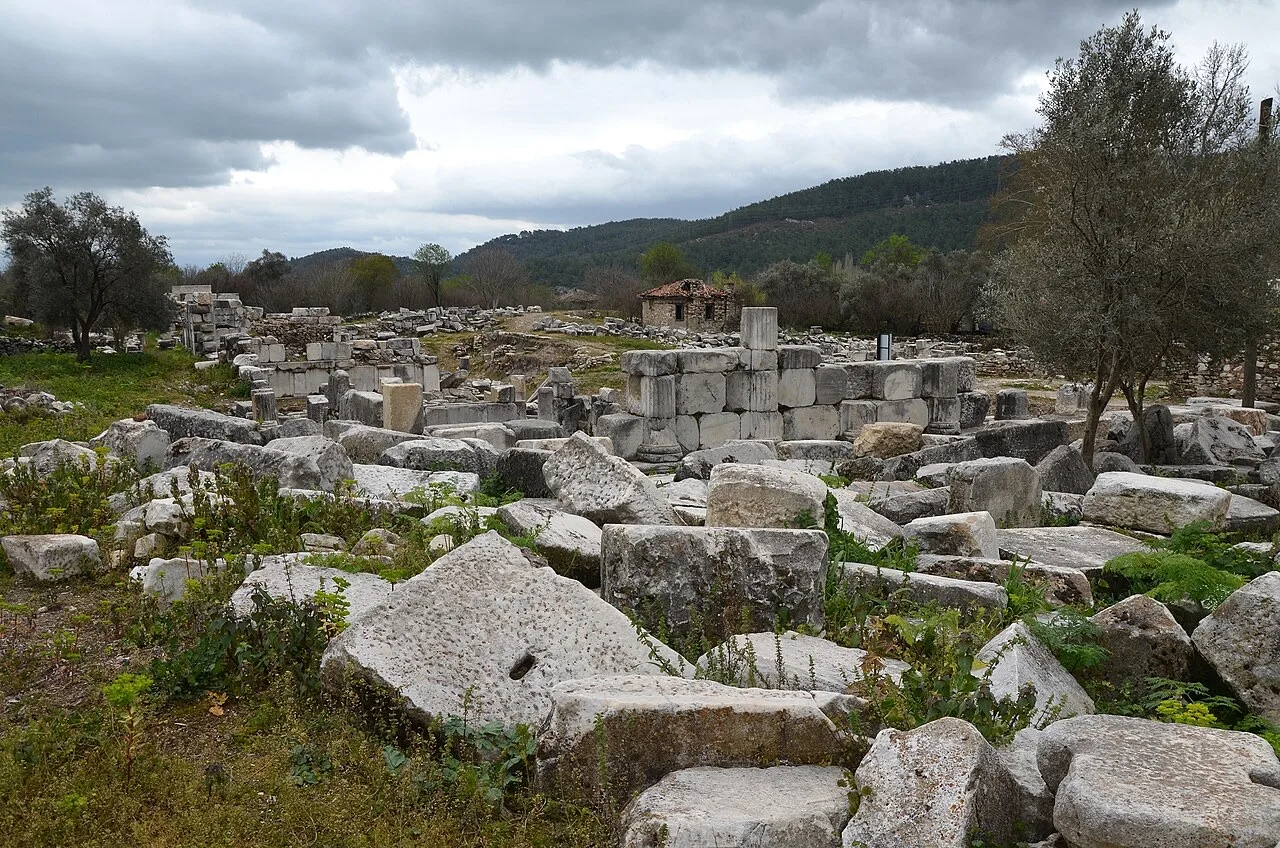
Bodrum and the Datça peninsula are not parts of one short coastal walk. Plan separate visits to compare maritime history through a museum and an archaeological landscape.
An AI-assisted synthesis of the sources below, with Atlas planning suggestions. This is not a first-hand visit report. Admission, transport and access conditions must be checked with operators before travel.
In this guide
Read the museum inside its castle
Bodrum Castle’s towers and defences have their own history. Underwater archaeological collections open another window onto voyages and shipwreck research. An object on display need not be contemporary with the building surrounding it.
Harbours and terraces at Knidos
At the end of Datça, the city rises from the coast on terraces. Harbour positions and the narrow land connection invite comparison between trade and defence. Read buildings within a plan adapted to slope, not simply as ruins in front of a sea view.
Take peninsula distances seriously
Confirm museum hours, current road conditions to Knidos and the return journey separately. Any sea transport depends on operating schedules and weather. Prepare for exposed ground and limited shade at the archaeological site. A two-part itinerary is stronger when transfers leave enough time to understand each setting.
Muğla city's museum is more than a pause on the way to the coast
Muğla's provincial centre is a cultural focus distinct from Bodrum and Fethiye. Archaeological, ethnographic and natural-history displays at Muğla Museum establish a broader provincial past than a single coastal photograph can offer. Gladiator funerary stelae from Stratonikeia alongside clothing or occupational tools do not make all those objects contemporary. Collection headings and findspot labels provide the starting point for comparison.
A subsequent walk around the Arasta can connect museum objects with the scale of a living city. Move from a woodworking tool in a case to the workmanship of a street doorway, without claiming they were made by the same craftsperson. A city-centre day can support its own questions instead of becoming only a rushed interval before reaching the beach. The contrast between collected evidence and ordinary streets is part of the experience.
Stratonikeia and Eskihisar place different layers beside one another
Stratonikeia brings the monumental remains of an ancient city into conversation with later houses at Eskihisar. Seeing ancient, Ottoman and Republican layers together does not mean they were built at the same time. The survival of buildings from different periods along a street invites attention to a lived neighbourhood as well as an archaeological excavation. Each layer adds a different kind of evidence about occupation.
Ask separate questions about the function of a theatre, council building and house. Compare a column's material with a domestic window arrangement, learning what each contributes rather than ranking one as inherently more valuable. The 2015 World Heritage Tentative List inclusion is not final inscription. Current accessible sections and walking boundaries depend on conservation guidance at the site. A mixed-period landscape becomes clearer when you keep dates and functions distinct.
Hecatomnus in Milas: tomb, sacred area and urban setting
The Mausoleum and Sacred Area of Hecatomnus near Hisarbaşı Hill opens a window onto Carian history in Milas. A monumental tomb is not interchangeable with a temple, museum building or an entire ancient city. Reading its position within the urban fabric reveals more than memorising a famous ruler's name. Do not present the Hecatomnus site in Milas and the Mausoleion in Bodrum as the same monument.
Distinguish externally visible portions of a protected burial site from controlled internal visiting arrangements. Admission does not automatically mean entry to every chamber. A Milas day can also include time for surrounding architecture, markets and settlement patterns. The name of a heritage list does not award an identical status to every nearby building. Understanding the defined area's extent produces a more accurate visit and prevents unrelated places from being treated as one site.
Build separate route clusters around Kaunos, Dalyan and Fethiye
Kaunos and the river-and-coast setting around Dalyan form a different visitor cluster from Fethiye's archaeological sites, coves and walking opportunities, or the Bodrum and Datça peninsulas. Consecutive entries in an official promotional list do not establish neighbouring stops for the same day. Boat journeys, road transfers and archaeological walking require different allocations of time and different assessments of mobility.
For a first journey, choose one cluster and add a nearby cultural or landscape focus. Ask a boat operator about the actual route, stops and return instead of assuming landing access to every place visible from the water. Follow marked boundaries around protected habitats and rock tombs. To see Muğla city too, allocate a deliberate day rather than leaving it as only the name of a capital passed between airport and resort. The province's breadth becomes easier to appreciate with fewer, coherent excursions.
Choose the visit that fits your question
Museum day
Separate castle history from collection history.
City day
Connect harbours with terraces at Knidos.
Transport
Do not underestimate travel between peninsulas.
Visual exploration before you travel
Fethiye promotional film · official directorate selection
See Fethiye's coastal and landscape setting; one district's footage does not represent Muğla city or every peninsula.
Muğla İl Kültür ve Turizm Müdürlüğü · Watch the official publication ↗
Practical questions before your visit
Is Muğla Museum inside Bodrum Castle?
No. The museum in Muğla city and the Museum of Underwater Archaeology inside Bodrum Castle are different institutions in different locations. Visiting one is not seeing the other's collection.
What does Stratonikeia's Tentative List entry mean?
It represents a stage in the World Heritage nomination process, not final inscription. The 2015 inclusion is described with that distinction rather than presented as an identical status.
Does the Fethiye film show an itinerary for all Muğla?
No. It is an official visual introduction to a district. Bodrum, Datça, Milas and Muğla city require their own travel and visiting decisions; an edited sequence is not a transport route.
Sources and scope of this guide
These primary sources support the historical and heritage background. Comparisons and suggested ways to organise a visit are Atlas editorial analysis, not instructions from the source institutions.
- Kültür Portalı · BODRUM SUALTI ARKEOLOJİ MÜZESİ (BODRUM KALESİ) ↗
- Kültür Portalı · KNİDOS ANTİK KENTİ ↗
- GoTürkiye · Muğla city, museum and inland heritage ↗
- GoTürkiye · Stratonikeia and Milas ↗
- GoTürkiye · Aegean UNESCO Tentative List places ↗
- Muğla Provincial Culture Directorate · Fethiye film ↗
- GoTürkiye · Muğla route families ↗