Türkan Şoray's career offers a way to understand the labour and audience relationships behind Turkish screen stardom. The popular nickname Sultan conveys enormous recognition, but cannot explain the variety of her characters. Women living with poverty, family obligations, migration and love need to be considered individually; directing also belongs beside acting in her biography. This is not a ranking of beauty or celebrity. It is a historical route into the work, with questions that make familiar titles more rewarding to revisit.
- Born
- 28 June 1945 · Istanbul
- Fields
- Acting, directing and television
- First Antalya award
- 1964 · Bitter Life · Best Actress
Reading a career that began in 1960
Born in Istanbul in 1945, Şoray entered cinema in 1960 and played leading roles throughout Yeşilçam's rapid production years. Her memoir Sinemam ve Ben provides an insider's account of that working environment. Reading recollections alongside institutional records is useful: a personal memory and a festival archive answer different questions, even when both concern the same film.
Audience affection cannot be explained only by a star's personal qualities. Directors, scripts, distribution and cinema-going habits also create that relationship. Recognising Şoray's face while discovering a different woman in each film exposes the tension between celebrity image and fictional character. That tension is one of the most useful ways into a long career, rather than assuming all those women are interchangeable.
Back to contentsBitter Life and Vesikalı Yarim: emotion has a social setting
Metin Erksan's Acı Hayat, or Bitter Life, invites viewers to consider romance alongside economic circumstances. Şoray's Best Actress award at Antalya's inaugural festival in 1964 recognised this performance. Keep a film's production or release date separate from the year of a festival award; they need not coincide.
Lütfi Ö. Akad's Vesikalı Yarim explores encounter, closeness and separation, with a lasting sense of the limits between two lives. Antalya records Şoray's Best Actress recognition in 1968. As a viewing exercise, attend not only to dramatic dialogue but to the duration of a look, a room's layout and shared silences. Those details prevent melodrama from being reduced to a synopsis of unhappy events.
Back to contentsDönüş: taking responsibility behind the camera
Dönüş in 1972 marked an important beginning in Şoray's work as a director. In her own account she emphasises the difficulty of making it with limited resources. Acting and directing are not simply two titles on one credit sheet. They require inhabiting an individual performance while also considering the rhythm, framing and coherence of the entire film.
It is therefore inadequate to describe her only as a face discovered by directors. The opposite claim, that she directed the films most closely associated with her, is also wrong. Atıf Yılmaz directed Selvi Boylum Al Yazmalım; Şoray played Asya. A biography makes artistic labour visible by distinguishing these contributions, not by awarding every responsibility to its central subject.
Back to contentsLove, responsibility and the television form
Selvi Boylum Al Yazmalım offers a powerful opportunity to think about affection together with everyday care. Reducing Asya to a choice between two men narrows her experience. Motherhood, a need for security and the effects of earlier events also shape the character. This is an editorial invitation to interpretation, not a claim that one reading exhausts the film.
The television worlds of İkinci Bahar with Şener Şen and Tatlı Hayat with Haluk Bilginer show that her career extends beyond cinema. A series allows an audience to encounter characters repeatedly over time. Compare a film's concentrated emotional arc with television's recurring family and neighbourhood relationships: the same familiar actor is being read within a different narrative structure.
Back to contentsAwards, international honours and a viewing route
Competitive acting awards in Türkiye differ from international career recognition. The Turkey / Germany Film Festival honoured Şoray in Nuremberg in 2013; TÜRKSOY presented its Medal of Honour during the Bishkek Film Festival in 2023. These acknowledge an artistic contribution. Describing either as a Cannes acting prize would create a false achievement record.
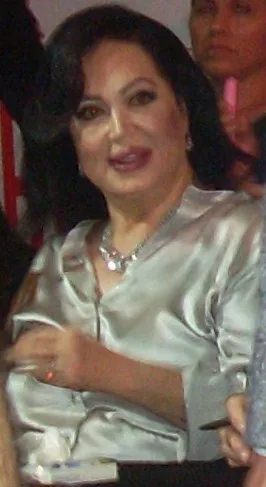
Try Bitter Life, Vesikalı Yarim, Dönüş and Selvi Boylum Al Yazmalım as an introductory sequence. First consider performance choices, then ask what conditions allow each woman to act or prevent her from doing so. The portrait shown here comes from a 2014 book signing, not a scene or an award ceremony. The archive video leads to its official broadcaster; this page does not copy complete films from their rights holders.
Back to contentsA timeline of life, work and history
- 1945–1960
From Istanbul to the screen
Born in Istanbul, she began a screen career in 1960 that would encompass women from markedly different social settings.
- 1964
Antalya's first Best Actress award
The inaugural Golden Orange festival recognised her Bitter Life performance. The record concerns a specific role and festival year.
- 1968
Vesikalı Yarim
Her acting in Akad's film received Antalya recognition; awards to the film itself belong to separate categories.
- 1972
Directing Dönüş
Dönüş added directing responsibility to her screen work, without making her the director of every film in which she appeared.
- 2013
A career honour in Nuremberg
The Turkey / Germany Film Festival honoured her contribution. This is not the same as winning a competitive international Best Actress category.
- 2023
TÜRKSOY Medal of Honour
Presented during the Bishkek Film Festival, the distinction recognised her contribution to culture and the arts in the Turkic world.
Watch and listen: a visual reading path
Use this selection alongside the analysis above. Supported YouTube publications can be watched on this page after you choose to load their player. The publisher’s rights and availability conditions apply; the player does not load or start automatically. Official publication links remain available as an alternative.
TRT Arşiv
Türkan Şoray as a director · TRT archive
An official public archive programme introducing her directing work alongside her familiar screen image.
Choosing to load the player connects to YouTube and shares technical data such as your IP address with Google. Autoplay is off. This choice does not change your cookie preferences. The publisher may restrict regional access or embedding; the official link below provides an alternative.
Questions and explanations
Is Sultan an official award?
No. It is a nickname within Turkish popular cinema culture, conveying her stature and audience recognition. It does not replace a festival prize. A biography should distinguish this cultural usage from an institution's dated award in a defined category.
Did she direct Selvi Boylum Al Yazmalım?
No. Atıf Yılmaz directed the film, while Şoray played Asya. Dönüş is one of her own directing projects. A powerful, enduring performance does not erase the contributions of a film's director and other collaborators.
Where should a new viewer begin?
Compare Bitter Life and Vesikalı Yarim to encounter two distinct directorial worlds, then consider her responsibilities behind the camera in Dönüş. Her memoir and official archive interview are useful companions to film and festival records. Together they offer more insight than a single, unchanging legend of stardom.
Sources, image rights and research method
This is original explanatory and analytical writing informed by the sources below. AI assisted research and drafting. Awards for people, teams and institutions are distinguished; dated results are not current rankings. Media links do not claim a licence to republish a video here. Use the publisher’s correction process if a fact is wrong.
- Antalya Altın Portakal · 1964 ve 1968 oyunculuk ödülleri ↗ Source check: 2026-10-03
- Anadolu Ajansı · Türkan Şoray'ın kendi sinema ve yönetmenlik anlatısı ↗ Source check: 2026-10-03
- Türkiye / Almanya Film Festivali · 2013 resmî arşiv ↗ Source check: 2026-10-03
- TÜRKSOY · Türkan Şoray'a 2023 Onur Nişanı ↗ Source check: 2026-10-03
- TRT Arşiv · Yönetmen Türkan Şoray ↗ Source check: 2026-10-03