Yıldız Kenter’s legacy reaches beyond the characters she played. Her teaching, directing and work to establish a permanent home for Kent Oyuncuları illuminate the practical foundations of independent theatre in Türkiye. To understand this career, look beyond the applause to the rehearsal room and classroom.
- Fields
- Theatre, cinema, directing and actor education
- Shared institution
- Kent Oyuncuları / Kenter Theatre
- Starting points
- Ben Anadolu, Wit and Hanım
Training as a continuing exchange
Kenter trained at the Ankara State Conservatory and worked at the State Theatre. A Rockefeller scholarship took her to the United States to study acting and approaches to teaching. İKSV’s biography links these international experiences with her educational work. The important connection is not the importation of a single fixed method, but an ongoing exchange between learning and performing.
Acting technique is more than volume or expressive gestures. Listening to a partner, tracing an argument through a text and sustaining a role across repeated performances are professional skills. Her educational contribution is best approached through these transferable practices, rather than the idea that students could simply imitate a celebrated teacher’s personality.
Back to contentsA company and a building are different achievements
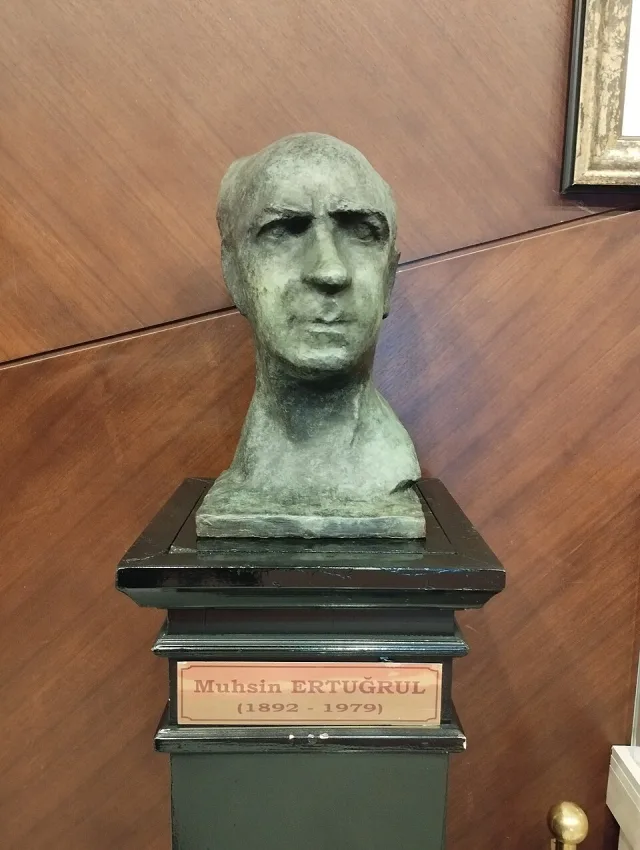
After leaving the State Theatre in 1959, she worked with Muhsin Ertuğrul. Her collaboration with Müşfik Kenter and Şükran Güngör developed into Kent Oyuncuları and the Kenter Theatre building, completed in 1968. Founding a company creates an artistic partnership; establishing a venue gives that partnership the infrastructure to maintain a repertory.
A permanent stage makes repeated encounters with an audience possible. Different playwrights performed by the same company allow spectators to recognise its developing artistic language. Kenter’s role as a founder can therefore be understood as an investment in independent theatre’s continuity, not merely another achievement in an individual celebrity’s biography.
Back to contentsBen Anadolu and the range of the repertory
Güngör Dilmen’s Ben Anadolu brings historical female voices together through one performer. It offers a useful starting question: who is speaking, whose experience is being represented and how does the actress signal a transition? Costume is only one possible means. The relationship between narration, body and text provides a richer introduction than a list of roles alone.
Wit, presented in Turkish as Nükte, The Seagull, The Gin Game and Queen Lear place different ages, vulnerabilities and speech patterns alongside one another. Her repertory should not be compressed into a single image of a strong woman. Comedy, illness, family conflict and reflection on the artistic profession require different performance scales and different relationships with an audience.
Back to contentsRecognised work in Türkiye and abroad
The official Afife record confirms the 1998 Muhsin Ertuğrul Special Award. İKSV also records acting awards for The Seagull in 1999 and Wit in 2000. International recognition includes the actress award for Hanım at the Bastia Film Festival in 1989. These are distinct achievements: an honorary award recognises a career, while an acting award concerns a particular performance.
The Istanbul Theatre Festival honour in 1997 and the Presidential Culture and Arts Grand Award in 1998 acknowledge a broader contribution. Rather than turn a prize tally into a ranking, ask which institution recognised which work and in what year. Her effects on stage performance, cinema and education cannot all be measured through the same award category.
Back to contentsHow to begin exploring her work
TRT’s 2001 interview offers an encounter with Kenter’s own account of her profession. Continue with the text of Ben Anadolu, the dramatic structure of Wit and the credits for Hanım. A recording cannot reproduce every aspect of live theatre’s relationship with a room, but it can help viewers consider voice, pacing and the interpretation of a role.
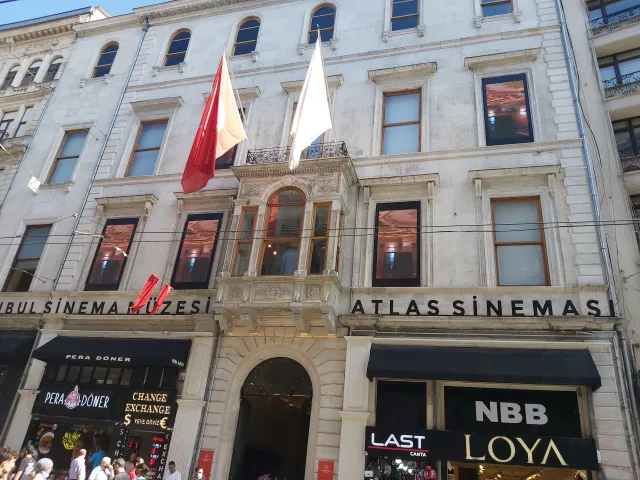
The contextual photograph on this page shows the Harbiye Muhsin Ertuğrul Stage, not Kenter’s own theatre. Accurate naming matters as much for visual evidence as it does for awards. Read the Müşfik Kenter dossier next to see how collaboration and training complicate the familiar story of individual stardom and reveal the shared labour behind a lasting theatrical institution.
Back to contentsA timeline of life, work and history
- 1928
Birth
Born in Istanbul.
- 1959
A new professional chapter
Left the State Theatre and worked with Muhsin Ertuğrul.
- 1968
Kenter Theatre
The company’s permanent Istanbul venue was completed.
- 1989
Bastia recognition
Her performance in Hanım received an actress award abroad.
- 1998–2000
Afife recognition
A special honour was followed by awards for The Seagull and Wit.
- 2019
Death
Died on 17 November.
Watch and listen: a visual reading path
Use this selection alongside the analysis above. Supported YouTube publications can be watched on this page after you choose to load their player. The publisher’s rights and availability conditions apply; the player does not load or start automatically. Official publication links remain available as an alternative.
TRT Arşiv
Yıldız Kenter discusses her artistic journey (2001)
The Başarı Basamakları interview lets viewers encounter her reflections on the profession in her own voice.
Choosing to load the player connects to YouTube and shares technical data such as your IP address with Google. Autoplay is off. This choice does not change your cookie preferences. The publisher may restrict regional access or embedding; the official link below provides an alternative.
Questions and explanations
Is her film career the whole story?
No. Repertory-building and conservatory teaching are central to her legacy. Cinema prizes reveal only one part of that wider contribution.
Are the Afife honour and acting prizes the same award?
No. The special honour in 1998 recognises a professional legacy, while the awards for The Seagull and Wit recognise particular stage performances.
Why begin with Ben Anadolu?
Its single performer moves between different female voices, making the relationship between speech, movement and narration especially clear. Reading the text helps viewers identify the choices made in performance.
Sources, image rights and research method
This is original explanatory and analytical writing informed by the sources below. AI assisted research and drafting. Awards for people, teams and institutions are distinguished; dated results are not current rankings. Media links do not claim a licence to republish a video here. Use the publisher’s correction process if a fact is wrong.
- İKSV İstanbul Tiyatro Festivali — Yıldız Kenter ↗ Source check: 2026-10-03
- Afife Tiyatro Ödülleri — Afife Jale’ye Saygı Sergisi ve ödül kaydı ↗ Source check: 2026-10-03
- TRT Arşiv — Yıldız Kenter, Başarı Basamakları (2001) ↗ Source check: 2026-10-03