Afife Jale deserves more than a sentence declaring her a first. Her story concerns an actress choosing her profession while institutions and social rules limited who could appear before an audience. The awards now bearing her name connect a short, difficult career to a much longer conversation about participation in theatre.
- Discipline
- Stage acting
- Landmark role
- Emel in Yamalar
- Historical contribution
- Access to professional theatre for Muslim Turkish women
Learning a profession without permission to practise it
Born in 1902, Afife entered Darülbedayi in 1918. Admission as a female student did not automatically bring permission to perform publicly. Rehearsing, prompting and acting occupied very different positions. Her experience makes an important distinction visible: passing an entrance examination could not by itself overcome restrictions on professional work.
Darülbedayi should not be treated merely as the backdrop to one heroic life. Its actors, backstage workers and rehearsals formed a shared theatrical environment, drawing on performers from different communities. Afife’s achievement emerged within that world. A responsible history recognises those earlier workers rather than inventing a theatrical landscape with no women before her.
Back to contentsYamalar, a stage name, and a careful definition of ‘first’
She played Emel in Hüseyin Suat’s Yamalar at the Apollon Theatre in Kadıköy, becoming known by the stage name Jale. The Afife Awards account places this breakthrough in 1920. Historical accounts differ about the precise day and some earlier small appearances, so this page does not present a disputed date as an uncontested starting point.
The useful description is her pioneering place among Muslim Turkish women on the professional stage. Calling her simply the first woman to act in Türkiye would erase earlier Armenian and other female performers. Precision does not diminish her courage. It explains the particular restriction she challenged and helps readers understand the diversity of late Ottoman theatre.
Back to contentsExclusion and the touring stage
Official correspondence in 1921 demonstrates pressure to prevent Muslim women from performing and to remove Afife from the company. She continued working with other companies and on Anatolian tours after leaving Darülbedayi. That movement also opens a wider view of theatre history: the profession depended on touring routes, not only prestigious buildings in Istanbul.
Illness and the pressure surrounding her work made a sustained career difficult. Her life should not become a sensational tale of downfall. Working conditions, the absence of professional security and fragile support networks provide a more revealing framework. She died in 1941, long before the modern awards and commemorations that introduced her name to later generations.
Back to contentsAn award in her memory is not an award she won
The Yapı Kredi Afife Theatre Awards began in 1997. They honour theatre practitioners in her memory; they are not a prize she received during her lifetime. The same distinction applies to venues and artistic works named after her. Commemoration is an important part of a legacy, but it must remain separate from the historical record of an artist’s own career.
The value of this legacy extends beyond a ceremony or monument. It keeps questions of casting, education, employment and backstage labour in public view. Remembering Afife also means judging women artists by the quality of their work rather than admiring sacrifice while leaving the conditions that made sacrifice necessary unexplored.
Back to contentsA practical way into the archive
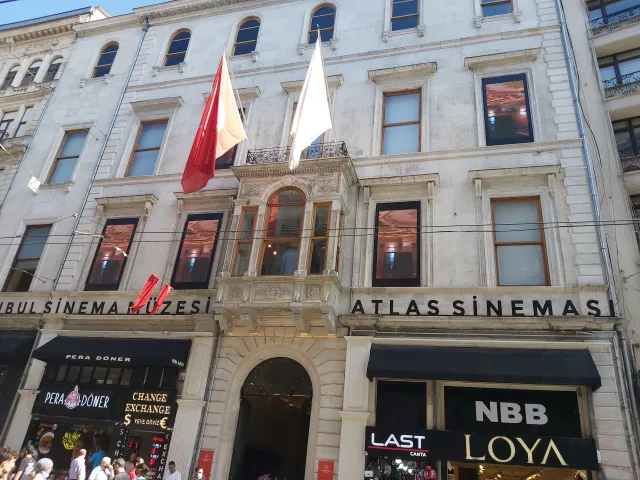
Begin with TRT’s short archive introduction, then follow the Darülbedayi and touring stages of the chronology. A photograph’s online upload date is not its date of creation. Likewise, a modern actress portraying Afife in a film is not historical footage of Afife herself. The image on this page shows a theatre hall named in her honour, not the actress.
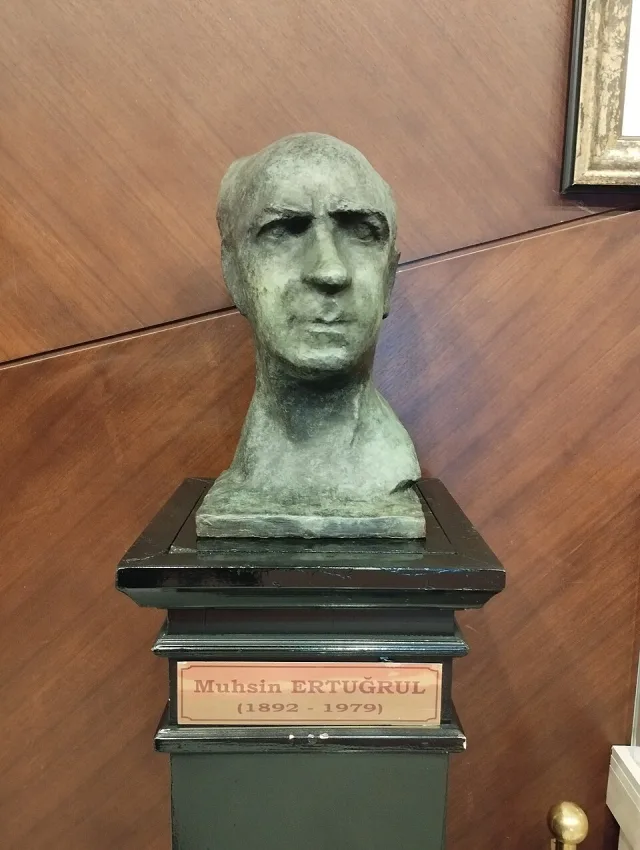
Next, explore Muhsin Ertuğrul’s institution-building and the Kenter generation’s approach to training. These connections explain how individual determination needs lasting venues, education and repertory structures. Afife’s story is not a closed trivia answer about a first: it is a starting point for thinking about who has the right to make theatre and who gets remembered afterward.
Back to contentsA timeline of life, work and history
- 1902
Birth
Born in Istanbul; accounts differ on the precise district.
- 1918
Darülbedayi
Entered the institution as a student and trainee.
- 1920
Yamalar
Her appearance as Emel became a landmark for Muslim Turkish women in professional theatre.
- 1921
Institutional exclusion
Official pressure led to her removal; she subsequently worked with other companies.
- 1941
Death
Died in Istanbul on 24 July.
- 1997
Awards in her memory
The Afife Theatre Awards began honouring theatre practitioners in her name.
Watch and listen: a visual reading path
Use this selection alongside the analysis above. Supported YouTube publications can be watched on this page after you choose to load their player. The publisher’s rights and availability conditions apply; the player does not load or start automatically. Official publication links remain available as an alternative.
TRT Arşiv
Afife Jale: a TRT archive portrait
An archive introduction to her struggle to perform, not a surviving complete recording of her own stage work.
Choosing to load the player connects to YouTube and shares technical data such as your IP address with Google. Autoplay is off. This choice does not change your cookie preferences. The publisher may restrict regional access or embedding; the official link below provides an alternative.
Questions and explanations
Was Afife the first woman ever to act in Türkiye?
No. The accurate description concerns Muslim Turkish women entering the professional stage. Women from other communities had already performed in Ottoman theatre and must not disappear from its history.
Did she win the Afife Awards?
No. The Turkish theatre awards were established in her memory decades after her death. They are neither lifetime wins by Afife nor evidence that she won an international acting competition.
Why look beyond the tragedy of her private life?
Training, paid employment and public performance were separate opportunities. Understanding institutional restrictions and touring conditions explains her artistic contribution more clearly than a biography focused only on personal suffering.
Sources, image rights and research method
This is original explanatory and analytical writing informed by the sources below. AI assisted research and drafting. Awards for people, teams and institutions are distinguished; dated results are not current rankings. Media links do not claim a licence to republish a video here. Use the publisher’s correction process if a fact is wrong.
- Atatürk Araştırma Merkezi — Afife Jale (1902–1941), Olcay Özkaya ↗ Source check: 2026-10-03
- Afife Tiyatro Ödülleri — Afife Jale’yi Tanımak ↗ Source check: 2026-10-03
- TRT Arşiv — Afife Jale ↗ Source check: 2026-10-03