Müşfik Kenter’s name often first evokes a voice. That voice cannot be separated from training, close work on texts, ensemble relationships and a repertory sustained over many years. Comparing poetry performance, dramatic character and camera work reveals more of his career than a single description of vocal distinction.
- Disciplines
- Theatre, cinema, voice work and education
- Long-running work
- Bir Garip Orhan Veli
- Shared institution
- Kent Oyuncuları / Kenter Theatre
From children’s theatre to professional training
Born in Istanbul in 1932, Kenter worked in children’s theatre before studying at the Ankara State Conservatory, graduating in 1955. State Theatre work preceded his independent theatre experience in Istanbul. His development therefore involved both formal education and learning within a company; these need not be presented as opposing paths to the profession.
A diploma is only one part of an actor’s training. Dividing a text into units of thought, listening to a partner and maintaining a scene’s momentum are practices that can underlie what an audience calls natural acting. Watching his work across different media helps bring that often invisible labour into view.
Back to contentsA theatre built through collaboration
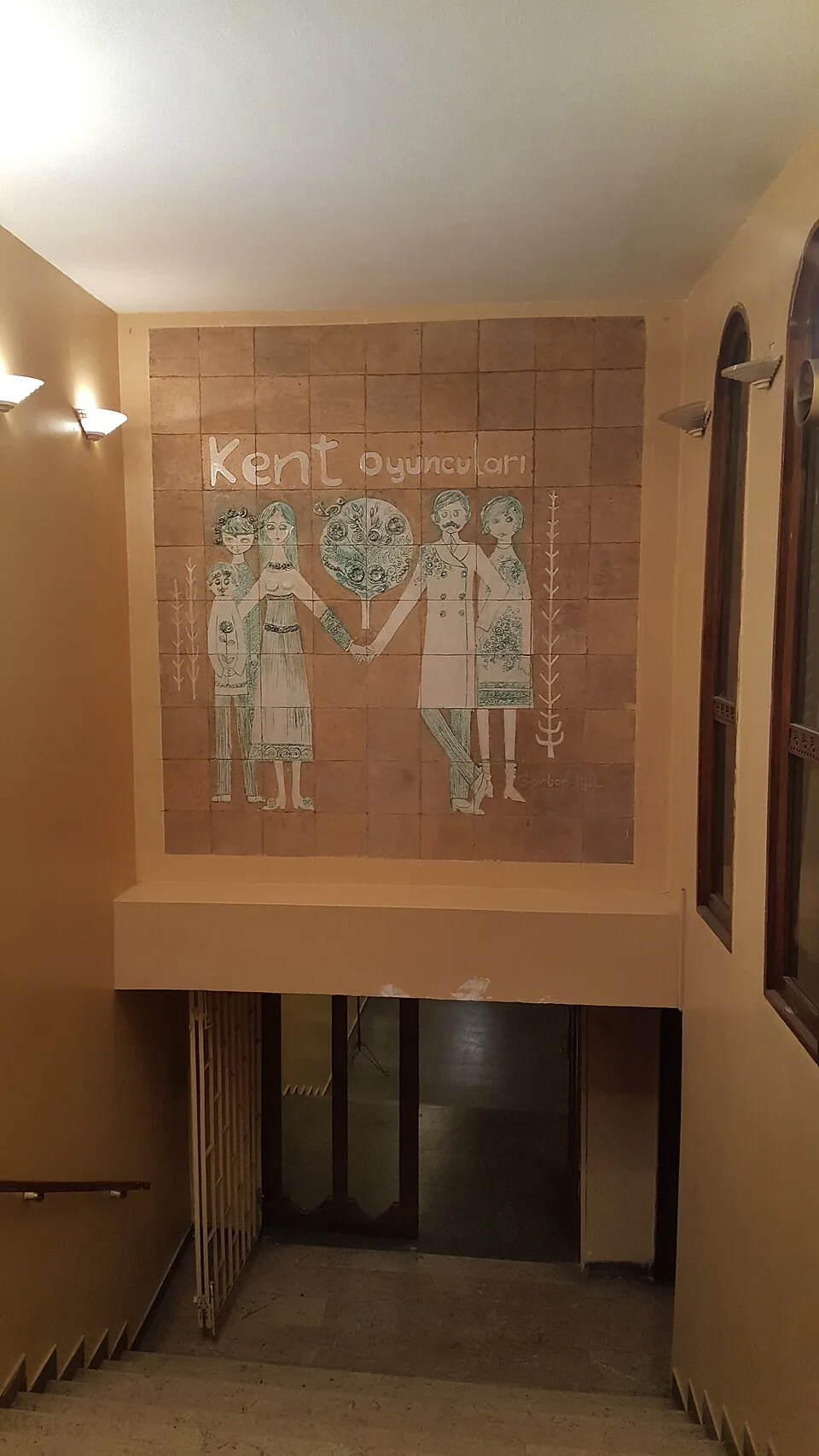
His partnership with Yıldız Kenter, Şükran Güngör and other colleagues developed into Kent Oyuncuları. The Kenter Theatre building was completed in 1968. İKSV’s account also records touring and audience support for the venue. Establishing a permanent theatre requires shared responsibility beyond the immediate artistic success of a production.
This story is more than two siblings’ names written together. Performance, management, premises and finance contribute to the same activity. A theatre also takes time to become part of an audience’s memory: spectators encounter different texts there, recognise the company’s developing language and watch new performers enter an established working environment.
Back to contentsWhen a sequence of poems becomes theatre
Bir Garip Orhan Veli, arranged by Murathan Mungan and staged by Oğuz Aral, remained in Kenter’s repertory for many years. The poems are not confined to a book’s page sequence. Speech, posture and transitions construct another whole before an audience. Knowing the poet’s life is useful, but does not by itself explain the performer’s contribution.
Listen for a change of thought before looking for punctuation. A pause can separate two poems, but it can also establish the rhythm of an ordinary conversation. This way of approaching the show avoids reducing it to beautiful recitation. It asks how choices between text and voice acquire dramatic significance when made in the presence of spectators.
Back to contentsScreen work, dubbing and recognised contributions
Sevmek Zamanı, Rumuz Goncagül and Piano Piano Bacaksız offer different routes into his screen work. A camera can register small changes of face and body that do not need projection across a large auditorium. Voice work places different demands on timing alongside images. All these practices deserve separate consideration rather than being merged under a general reputation for a powerful voice.
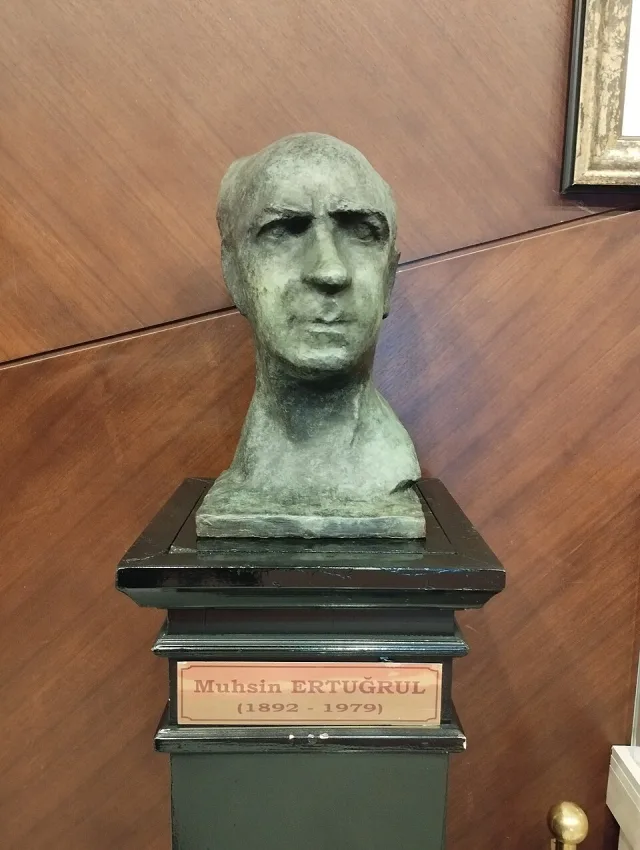
The first-season Afife list records his 1997 Muhsin Ertuğrul Special Award. İKSV also records a supporting male acting award for Çözüm in 2002. One acknowledges a sustained contribution; the other recognises a particular performance. Research and performances overseas form his international activity, but should not be transformed into claims of foreign festival wins without appropriate evidence.
Back to contentsArchive testimony and the live stage
TRT’s archive documentary combines the actor’s own account with recollections by family and colleagues. Such testimony shows how a person is remembered; it is not automatically definitive evidence for every historical detail. Institutional records and production credits provide a useful companion when building a more reliable picture of a career.
Kenter died on 15 August 2012. The 2018 photograph here shows the theatre’s continuing memory, not an event he attended. Explore the structure of the poetry performance before comparing a screen role. Reading this page alongside Yıldız Kenter’s dossier shows how two individual artists could share an institution while sustaining distinct performance identities.
Back to contentsA timeline of life, work and history
- 1932
Birth
Born in Istanbul.
- 1955
Conservatory graduation
Completed his Ankara theatre education and worked at the State Theatre.
- 1959–1962
Istanbul collaboration
The Kenters and their colleagues developed the independent company known as Kent Oyuncuları.
- 1968
A permanent venue
The Kenter Theatre building was completed.
- 1997 / 2002
Afife recognition
Received a special honour and later a supporting acting award for Çözüm.
- 2012
Death
Died on 15 August.
Watch and listen: a visual reading path
Use this selection alongside the analysis above. Supported YouTube publications can be watched on this page after you choose to load their player. The publisher’s rights and availability conditions apply; the player does not load or start automatically. Official publication links remain available as an alternative.
TRT Arşiv
Müşfik Kenter’s life and artistic work
The actor’s own account is joined by recollections from Yıldız and Kadriye Kenter and professional colleagues.
Choosing to load the player connects to YouTube and shares technical data such as your IP address with Google. Autoplay is off. This choice does not change your cookie preferences. The publisher may restrict regional access or embedding; the official link below provides an alternative.
Questions and explanations
Is a poetry show the same as simply reading a poem?
Not always. Selection, transitions and the performer’s relationship with an audience create a new structure. The dramaturgy deserves attention alongside the qualities of the voice.
Can every past production in a biography be watched today?
No. Live runs may have ended, and recordings differ in availability and rights. The existence of an official record does not make every version freely accessible online.
Why include the company’s history?
A performer’s ability to develop work over many years depends on the continuity of a venue and colleagues. The shared institution is therefore an essential part of explaining Kenter’s individual legacy.
Sources, image rights and research method
This is original explanatory and analytical writing informed by the sources below. AI assisted research and drafting. Awards for people, teams and institutions are distinguished; dated results are not current rankings. Media links do not claim a licence to republish a video here. Use the publisher’s correction process if a fact is wrong.
- İKSV — Müşfik Kenter ↗ Source check: 2026-10-03
- Afife Ödülleri — Birinci sezon, Muhsin Ertuğrul Özel Ödülü ↗ Source check: 2026-10-03
- Kültür İstanbul — Müşfik Kenter ↗ Source check: 2026-10-03
- TRT Arşiv — Müşfik Kenter’in sanat yaşamı ↗ Source check: 2026-10-03